

If your car slides into oncoming traffic, and you die listening to the Archies sing “Sugar Sugar,” it’s your own damn laziness.
– Chuck Palahniuk
Although she had no experience to compare it to, she was both surprised and relieved that her brother’s apartment was cleaner than she assumed a recent suicide’s apartment might be.
On the faded beige carpet in a corner of the tiny living room there was a pool of congealed blood. She guessed that’s where her brother’s head had fallen after he had shot himself. She reflexively looked at the wall beyond it for… What? Blood “spatter”? Wasn’t that what they called it on the police procedurals their parents watched? Shouldn’t there be brain matter? She had been shown photos of the scene for identification purposes at the police station when she arrived in town, but they raised more questions than answers. Television and movies had colored her idea of crime scene photos. She expected to see something black and white, noir with heavy shadows and harsh flash, like something out of a Weegee photo book she had seen once. The sharp digital images were almost disappointing in their ordinariness, like a bland realtor listing with her brother’s corpse in place of a settee. Perhaps he had been kneeling or lying on the floor when it happened. She was still having a difficult time with the mechanics of the act. How else could you account for the lack of mess? It didn’t make a lot of sense. She assumed the coroner would eventually have some kind of theory to explain it.
A few feet away from the blood sat a discarded pair of latex gloves, undoubtedly left behind by the EMS (didn’t they pick up after themselves, she wondered, although with everything they had to endure in the course of a day, when would they have time?) Other than these two incongruous items—the blood and the gloves—the apartment (or, as her mind was beginning to frame it, “the scene”) was surprisingly tidy and organized.
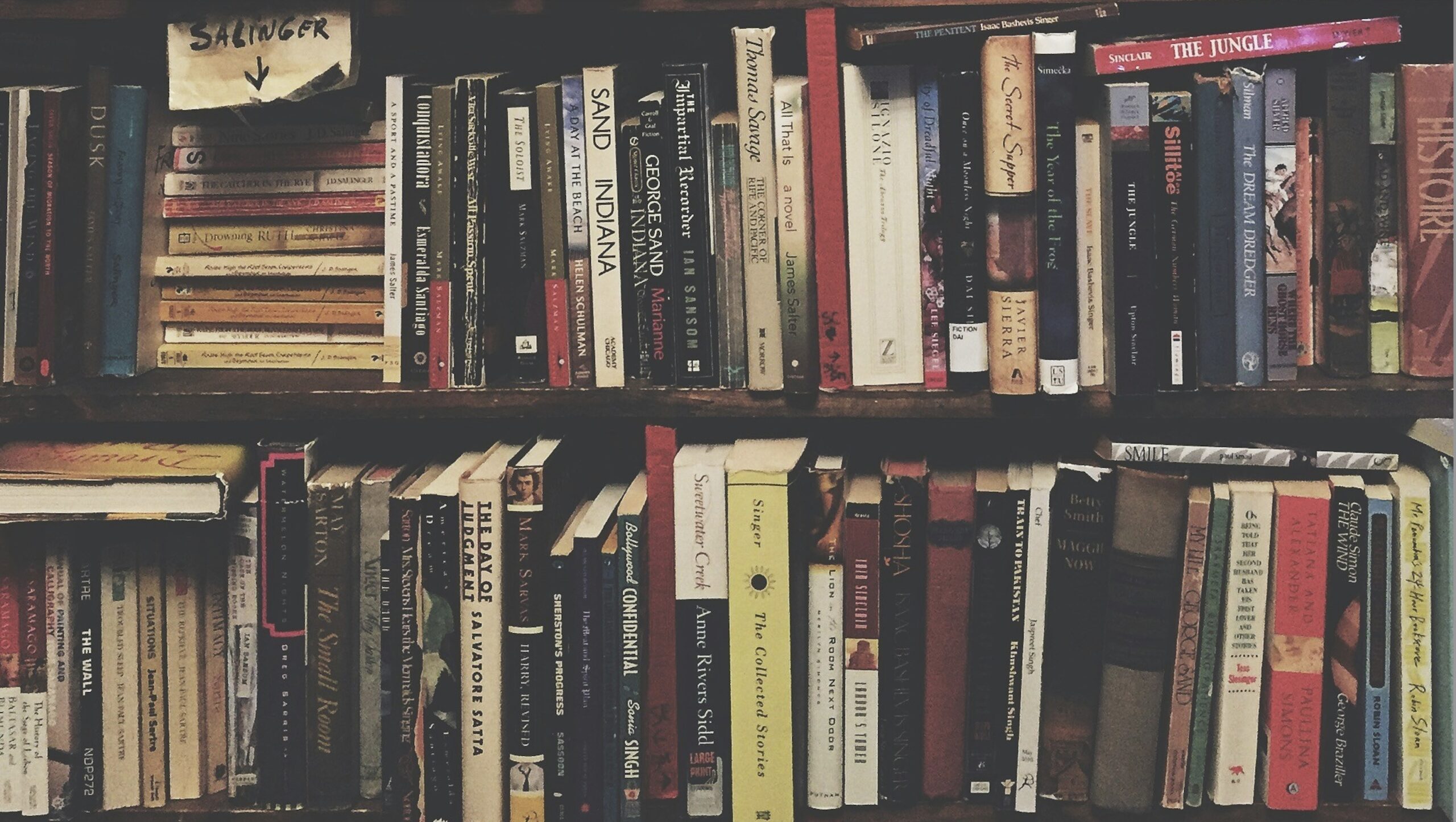
Beyond the blood was a large bookcase, and she recognized many of the authors’ names from when they were younger. Her brother’s taste hadn’t changed much, she thought (then: because he never grew up, and she was momentarily surprised at her callousness toward him). Still, all the macho, gun-eating authors he’d always idolized were present: Hemingway, Hunter Thompson, Brautigan, Bukowski (she knew Bukowski hadn’t committed suicide, but she wished that he had). She knew she would probably be the one stuck packing his books up and dropping them off at the Goodwill. Maybe she could bundle them to sell on eBay: Toxic Masculinity Starter Kit, suicidal ideation and firearm sold separately!
On a small table next to the bookcase was a cheap stereo. She stared at it blankly for a moment, not really registering it until she noticed that it was turned on. Examining it closer she saw that it was set to the turntable setting. She looked behind the unit to see where it was plugged in, then scanned the wall looking for a light switch. There wasn’t a light switch on that wall, so it probably hadn’t been accidentally turned on by the responders when they arrived on the scene. Had her brother been listening to music when he did it?
She leaned closer and examined the record on the turntable. She vaguely recognized the artist’s name but knew nothing about him (they had never liked the same kind of music). Was it significant? she wondered. Probably. Her brother often spoke in a code only he understood, a stream of odd, cryptic sayings and non sequiturs that he spouted for his own amusement. It was his way of proving that he was smarter than you, and he never seemed to care that no one understood what he was talking about half the time. In fact she knew he was aware of how off-putting and frustrating this was to people, particularly his family, but that only made it funnier to him. The choice of music was a message, she decided. It had to be. One last fucked up riddle left to decode in lieu of a note. Typical.
Standing in the corner and looking down at the dried blood one last time, she remembered something he told her years earlier concerning Lester Bangs, a writer whose name she knew only from an R.E.M. song that had been popular when she was in college. Bangs, her brother claimed, had OD’d while listening to a Human League record. This was something her brother found extremely funny, or ironic, or some combination of the two, the kind of performative male death cult shit that would contain meaning only to someone like him. The information didn’t mean anything to her at the time, but she felt she understood it now.
Walking back to her car she vowed never to listen to the record. She would try to purge the name of the band and album from her memory if she could. This wasn’t something anyone needed to know about, she decided.
When asked, she would tell people her brother had left no note.

