

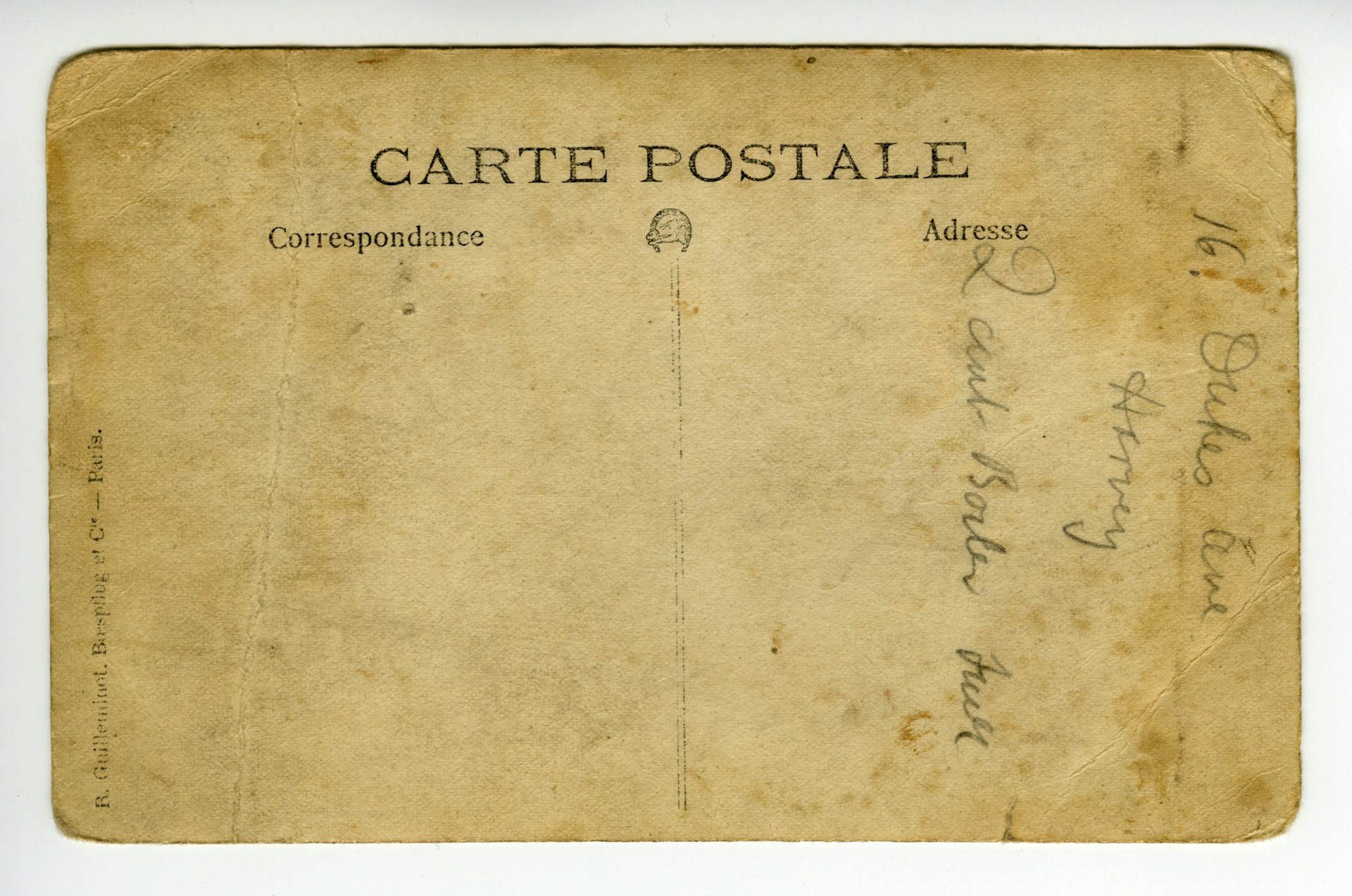
Chapter One
The church hall smelled faintly of hymn books and floor polish. After the service, the congregation spilled into the garden, where trestle tables groaned with sponge cake and pots of tea.
“Van Cleef is the only bachelor left in this town,” Aunt Marjorie announced, balancing her saucer in one hand as if it were a pulpit.
“Embarrassing, if you ask me,” Aunt Clara agreed, though her mouth was full of scone.
“Embarrassing for whom?” a neighbor asked. “He looks perfectly content to me.”
“Content?” Marjorie sniffed. “Forever the best man, never the groom. Forever the godfather, never the father. People are beginning to talk.”
Van Cleef”s mother set down her cup with a sigh. “I don’t know where I went wrong with that boy.”
Jane, waiting for her turn at the teapot, listened in silence. She had heard this chorus before. Every Sunday, the talk turned to Van Cleef.
“It isn’t you, dear,” Clara said, patting the mother’s arm. “It’s that job of his. He blames everything on it.”
“And what is this job, exactly?” Marjorie pressed. “Has anyone ever understood it?”
“He says he was born to do it,” his mother muttered.
“Born to do… what? He doesn’t make it sound like banking.”
“Or carpentry,” Marjorie added. “Though heaven knows we could use another carpenter.”
Laughter rippled across the group. Jane stirred her tea, then raised her head.
“If no one knows what he does,” she said, steadying her voice, “perhaps I should ask him myself.”
The table fell silent. Even the spoons paused.
“Ask him?” Marjorie repeated, scandalized.
Jane met her gaze without flinching. “Yes. Someone has to.”
By Friday evening, the church chatter had grown louder in Jane’s head than the tolling of the town clock. She walked into The Swan with a steady step and a thundering heart.
There he was. Van Cleef Fairchild. Standing at the bar as though the oak counter had been built for him alone. The suit was dark grey, the cut too fine for a village pub. He turned, and his blue eyes caught hers as if he had been expecting her.
“Fancy seeing you here,” Jane said, her voice lighter than she felt.
“And fancy seeing you,” Van Cleef replied with the faintest smile. He gestured to the stool beside him.
She sat, folding her hands on the counter. “I didn’t think your job allowed you any breathing space.”
“This too is work,” he said, tapping the rim of his glass. “The pub is on my rota. I”m here most nights.”
Jane raised her brows. “You mean to say drinking pints and throwing darts is part of your profession?”
“Precisely. Observation, conversation, recreation. Essential duties.”
“And does it pay well, this… occupation?”
“Immeasurably.”
She shook her head, half-amused, half-curious. “Then perhaps you’d better tell me the rest of your day. What exactly do you do?”
Van Cleef leaned back, as if preparing to recite a sacred text. “The alarm goes off at 9:25 sharp. I take a shower, brush my teeth, and brush my hair. Then I present myself for breakfast. There are discussions, mostly debates with the family. Afterwards, two hours in the library. Reading. It’s crucial work.”
“Reading is work?” Jane asked.
“Of course. Deeply taxing. I break for coffee at Café Rouge, then a drive, sometimes lunch with a friend. By three o’clock I”m home for a nap. The gym follows. More family debate at six. Dinner at seven—business over lamb cutlets. By nine, I’m back here, fulfilling my evening duties until midnight.”
Jane stared at him, somewhere between disbelief and laughter. “And you call that a job?”
Van Cleef lifted his pint with great solemnity. “I was born for it.”
Chapter Two
Jane folded her arms on the bar. “You make it sound as though living is labor.”
“It is,” Van Cleef replied. “Most people stumble through it without a plan. I treat it like a profession.”
“So, you’re not a lawyer, or a banker, or a doctor—”
“No,” he interrupted smoothly. “I’m a professional existence manager.”
Jane blinked. “That isn’t a real thing.”
“It is if you do it properly.”
She laughed, shaking her head. “And all those poor women who tried to get close to you? Did you tell them the same nonsense?”
“They asked the wrong questions.”
“What’s the right question, then?”
“Not what do you do? but how well do you do it?”
Jane leaned closer. “All right. How well do you do it?”
“Exceptionally. I’ve never missed a morning debate, never skipped a nap, and I play darts with great precision. Life requires consistency, Jane. That’s what unsettles people. They expect mystery. What they find is discipline.”
She laughed again, louder this time. “You’re telling me your routine is why no woman has managed to… keep you?”
“Keep me?” He smiled faintly. “I am not a stray cat, Jane. I simply cannot marry someone who does not respect the hours of my profession.”
“And what hours are those?”
“All of them.”
Jane nearly choked on her drink. “So, you’re on duty twenty-four hours a day?”
“Correct. And right now, so are you. By speaking to me, you’ve joined the shift.”
Jane set her glass down, eyes narrowing. “Then consider this my first official complaint: your working conditions are absurd.”
Van Cleef’s smile deepened. “And yet you’re still here.”
“Still here, yes,” she said, “but only because I want to know how long you can keep this nonsense up.”
“Nonsense?” His voice carried just far enough for the men at the dartboard to turn their heads.
“A profession of naps and pints. Who would take that seriously?”
“Anyone with sense,” Van Cleef replied. “Life is hard work if you do it well.”
One of the dart players called across the room. “He’s not wrong, you know. Hardest worker in town, Van Cleef.”
Laughter rolled through the pub. Jane blinked. “You’re all in on it?”
“Not in on it,” the barman said, polishing a glass. “We just let him believe it. Makes the evenings lively.”
Jane turned back to Van Cleef. “So, they humor you.”
“No,” he corrected. “They admire me.”
“For what, exactly?”
“For excellence in my field.”
“You realize most people’s fields involve actual labor, don’t you? Fields with soil. Or ledgers. Or patients.”
“And mine involves precision. Observation. Balance. Not everyone can keep it up. That’s why they falter. That’s why they leave shaken.”
“Shaken because you’re impossible.”
“Shaken because they glimpse the truth. That everything they call leisure is, in fact, duty. To live well is to work without end.”
The words landed heavier than she expected. For a moment, Jane didn’t answer. Around them, the pub buzzed with laughter, darts striking cork, and the steady clink of glasses.
Finally, she smiled wryly. “You’re absurd, Van Cleef.”
“And employed,” he said, raising his pint.
Jane left the pub that night with more questions than answers. The gossiping aunts had been right about one thing: Van Cleef was not like other men.
Chapter Three
They met again a week later in the same pub, though Jane had sworn she wouldn’t. Curiosity was stronger than resolve.
“So,” she began, stirring her glass of tonic, “how was work this week?”
Van Cleef’s eyes lit up as though she had asked about some great empire. “Exhausting. Monday’s debate ran into Tuesday. My mother was relentless about inheritance tax. I hardly had the strength for the gym afterwards.”
Jane tried to smile. “And the rest of the week?”
“Splendid. Wednesday, I tried a new nap position. Left side, not right. Transformative.”
She set down her glass. “Van Cleef, do you hear yourself?”
He blinked. “Of course. I’m meticulous in my reports.”
“Reports?”
“Daily journals. A good professional must keep records.”
Her hands were clenched on the bar. “You’re not a professional, Van Cleef. You’re—” She stopped herself, breath sharp.
“Go on,” he said gently.
Her restraint broke. The words tumbled out. “You’re an unemployed grown man still living with his mother! That’s what you are! You’ve turned idleness into a bloody job description and expected us all to clap along.”
The chatter in the pub dipped. Van Cleef didn’t move.
Jane pressed on, her cheeks hot. “Your mother still makes your dinners and pays for it. And you expect us to call that work?”
Van Cleef nodded and smiled.
“Don’t you see how pathetic it looks? They sent you to Oxford, for heaven’s sake! All that time, all that money—for this? For naps and debates?”
Silence fell heavily between them. The barman turned away, pretending to wipe the taps.
Jane’s voice wavered, but she didn’t stop. “For once in your life, Van Cleef, do something that makes your parents proud. Get a job. A real one. Or at least stop insulting the rest of us by calling your laziness work.”
Her chest rose and fell. She had never spoken to him like this, never spoken to anyone like this.
Van Cleef sat utterly still. His face betrayed no anger, only something quieter, astonishment, perhaps, or wonder. He looked at her as if she had unlocked a door no one else had touched.
“Jane,” he said at last, softly. “Do you know… no one has ever spoken to me like that?”
She shook her head. “I can’t imagine why.”
“It’s remarkable.” His lips curved, not quite into a smile. “You may be the first honest woman I’ve ever met.”
Jane pushed back her stool. “Or maybe just the first fool who believed there was something to find.”
And she walked out, leaving Van Cleef staring into the space she had occupied, as though he had only just discovered the meaning of absence.
Chapter Four
Jane dragged her pen across the manuscript.
“The first paragraph has teeth,” she said, tapping the margin, “but the second is all bluster. Let’s cut it.”
Her colleague looked worried. “But Jane, we’ll lose wordcount.”
“Then we lose it,” Jane replied crisply. “Better that than filling a chapter with nonsense.”
The colleague sighed, resigned. Jane leaned back, crossing out another florid sentence. It was the same every day: too many words trying to sound like sense.
And yet, even as she trimmed the excess, her mind strayed elsewhere. To a man who treated existence itself like a manuscript he refused to edit. Van Cleef.
A week later she found herself in the café by the square, book unopened, coffee cooling beside her. When the chair opposite scraped against the floor, she didn’t need to look up.
“You left me quite undone last time,” Van Cleef said. His tone wasn’t bitter. If anything, he sounded grateful.
“I only told you the truth,” Jane said.
“Yes.” He folded his hands on the table. “And truth is rare. It made me think.”
“About what?”
“About love.”
Her eyes flicked up. “Love?”
“I believe I may be in it.”
Jane stared. “With me?”
He nodded. “You spoke and the world shifted. No woman has ever managed that. Most left dazed. But you—” He paused, searching her face. “You clarified me.”
She laughed softly, though not kindly. “Clarified you? I called you an unemployed man still living with his parents.”
“Exactly,” he said, as if it were a compliment.
Jane shook her head. “You’re impossible.”
“Not impossible. Transformed. I’ve decided to change things.”
Her brows lifted. “Change how?”
“I’ll hand in my notice and go travelling.”
She blinked. “Hand in your notice? You mean you’ll finally leave this… profession of yours?”
“Exactly.” He straightened a cuff. “It’s time for new duties. Broader duties. Foreign debates, new cafés, libraries in languages I can’t yet read. Imagine the reports I’ll write.”
Jane gave a short laugh, brushing away a flicker of unease. “And what will you live on, may I ask?”
“I’ll manage. Travel is work, Jane. Hard work. But I was born for it.”
She smiled despite herself. “Then make sure you send postcards. Paris first, if you please.”
“Paris first,” he repeated, smiling.
Chapter Five
The Sunday after Van Cleef’s disappearance, the church garden buzzed with speculation. Sunlight fell across the trestle tables where teapots steamed, and sponge cakes sagged under the weight of cream.
“He’s gone to Paris,” Aunt Marjorie announced, balancing her saucer as though the entire garden were her courtroom.
His mother gave a wistful smile. “Paris has always meant something to us. He was conceived there during my honeymoon. That’s why I named him Van Cleef—after Alfred Van Cleef, the jeweler. I’ve always loved their jewelry. And I suppose I wanted him to carry a little of that elegance with him. His father would have been so proud… if only he’d lived to see it.”
For a moment, the table was quiet, the aunts shifting in their seats. Then Aunt Clara dabbed her eyes and forced a bright smile. “Oh, how thrilling. Postcards, Jane. He promised you postcards, didn’t he?”
Jane managed a faint smile. “Yes. He did.”
The neighbors leaned in. One said he had been spotted at the station with a valise; another swore he’d heard him humming La Vie en Rose. The talk was lively, merry even, as though Van Cleef’s “travelling” were a gift to the whole village.
Jane sipped her tea, but her chest tightened. Eccentric though he was, the silence troubled her.
By the time the cups were emptied and the hymnbooks packed away, Jane found herself walking beside his mother. The aunts led the way, chattering about timetables and ferry crossings. The rain held off, though the air was heavy, and the road home glistened faintly from the morning’s shower.
When they reached the house, the aunts made themselves comfortable at the kitchen table. Jane stayed standing, uneasy, until his mother spoke.
“When I woke up this morning,” she said, her voice thin, “he wasn’t in his room. His luggage was gone. He told me last night he would be travelling. ‘Time to broaden the duties,’ he said. I asked if he meant Paris. He only smiled, kissed my hand, and promised he would write. I thought he sounded happy.”
Aunt Clara brightened, clutching her handkerchief. “Then we must wait for his first postcard. Perhaps Paris, perhaps Rome. How exciting!”
“Wherever he’s gone,” Aunt Marjorie said, lifting her chin, “he’ll make an impression. He always does.”
His mother nodded faintly, her eyes glistening. “I miss him already. But yes. We shall wait.”
Jane said nothing. Outside, rain began to lash against the windows—sudden, pitiless rain that turned gardens to swamps and lanes to rivers. The aunts carried on with hopeful talk, but Jane’s eyes lingered on the empty chair at the head of the table, as though it was holding a silence of its own.
Chapter Six
The rain had not stopped for three days. It poured down gutters, hammered tiles, and turned the village lanes into shallow rivers.
On the fourth morning, the knock came. Two constables stood at the door, rain dripping from their hats. His mother answered, the aunts hovering behind her.
“Mrs. Fairchild?” one of them said softly.
She nodded, her lips pale.
“I’m sorry to bring you this news. Your son’s car was found at the old stone bridge. The keys were still in the ignition.”
Aunt Clara clutched her handkerchief. “His car? But—where is he?”
The second constable glanced down, then back at them.
“There was a valise on the back seat. Empty. And… the river’s been swollen with the rains. We pulled a body downstream this morning. His papers identified him. It was your son.”
“Empty?” Aunt Clara’s voice cracked. “What do you mean empty?”
The constable didn’t answer. He only lowered his eyes and continued, his words heavy as the rain outside.
A sound escaped his mother—part gasp, part cry—as though her lungs had collapsed.
The officers bowed their heads, offered condolences, and left the family in ruins.
It was Aunt Clara who reached for the telephone. Her hands shook so badly she almost dropped the receiver. Jane answered on the second ring.
“Van Cleef… he’s gone,” Clara sobbed. “He’s with his father now!”
The words knocked the breath from Jane’s lungs. “Gone? What do you mean, gone?”
But Clara only wept harder. “The river took him. Oh Jane, the river took him!”
Jane had no choice but to go.
By the time she reached the Fairchild house, the scene was one of devastation. Aunt Clara sat crumpled with a handkerchief pressed to her face. Aunt Marjorie paced the parlour like a caged bird. His mother sat by the window, staring out at the rain as though she were searching for him in it.
Jane closed the door softly behind her. “I came as soon as I heard,” she said, her voice barely carrying.
Marjorie turned sharply. “You were the one who pressed him, weren’t you? Told him he was wasting himself?”
“Marjorie—” Clara’s voice cracked. “Don’t.”
“I only told him the truth,” Jane whispered.
“And look where the truth has brought us,” Marjorie snapped, before turning away, her shoulders heaving.
Clara reached for Jane’s hand, her own damp with tears. “He listened to you, Jane. You must know that. He never listened to us, never listened to anyone. But you…” She broke off, sobbing into her handkerchief.
Jane knelt beside the chair by the window. “Mrs. Fairchild,” she said softly. “I’m so sorry.”
The woman’s eyes never left the glass. “He promised me Paris,” she murmured. “He kissed my hand and promised me Paris.”
Jane’s throat closed. “Perhaps,” she whispered, though the word felt hollow.
Outside, the rain beat harder, pitiless, turning the garden to swamp and the lane to a river. Inside, the clock ticked loud and merciless.
When Jane finally stepped back into the storm, the village was waiting. Neighbors lingered under umbrellas, their eyes following her, but not a word was spoken. The silence was heavier than pity, heavier than blame. Only the rain spoke, drumming on every roof and cobblestone as she walked past.
No postcard would ever come—only the rain, writing its own message against every pane of glass, every street, every heart.
From Jane’s notebook,
I still hear the rain sometimes. Not outside, but inside—as though it found a way to live behind my ribs. The village has moved on, of course; they always do. The same eyes that once watched me in silence now look elsewhere. But I carry their judgement.
Perhaps they were right. Perhaps it was my truth that pushed him. Or perhaps he had already decided, long before my words reached him. I will never know.
What I do know is this: he believed existence itself was work. He handed in his notice, and he left no postcard. Only silence. Only rain.

