

You come back and try to assemble what you can. A story, in case someone asks—but most don’t. Not now, with so much going on. And it’s not like you can relax; you’re riled most days. You try out little piles of words—hope they hold—pray they pass for sense. And when you think you have it, when you find a little quiet and believe you can close your eyes, they come— fragments, bright shards, edges. They snag, even now. And then you see him.
His face is stubbled with delusion—disjointed, like a badly hung picture.
You’ve read about him by now. He was in my company. He’d say things—recite them, almost: “What occupies the mind. The cause of action. It…” Then he’d stop—listening to himself—before finishing: “The action that needs to happen for complete victory. We will lose here because we don’t have it.” He never explained. None of us asked. You didn’t want to be in the same room as him. So, you kept your distance. He needed help, but out there nobody asked for that kind.
Then one day reports came in: a bomb on a bus; civilians killed—mostly women and children. He smiled more after it happened. Not joy—completion. With each new report, he looked more whole, as if whatever was broken inside him had found its fit. You had no proof, but you knew it was him. It didn’t change anything. Nothing stopped.
It put the company in a bad way. You try for blankness. But all you can think of is dying there, alone—your body shot up or your throat cut by old men. There’s a threshold you cross when you come to a place like that. Is that what he finally did—the guy in my company? And what did he find? Purity? Strip out all the interference—then act? You didn’t know.
The sun rises on the horizon, setting it ablaze in reddish orange. You sit alone on an ammo can outside your tent and drag on a cigarette. Movement in the distance: people emerge from the village and cross the road to work the fields. You’re run down—only doing what you have to, hoping it’s enough. Others have come here. Sacrifices have been made. The suffering is ancient and it gets inside your nerves. But at least when you hear the screaming, you know where it’s coming from.
And the days don’t stop, they keep coming.
That’s fine. Good for nothing but moving along. You finish your tour and get out—just another ruined head. You don’t know what you want. You don’t know what you need. People talk. You listen. You let it run through you. You have your nightmares.
Sometimes a dream slips through. Like the other night, sleeping in the car, there you are with John Rambo, not the military cartoon with bandoliers, shooting a heavy machine gun with one arm, but the quiet one. You’re walking along, trying not to be seen, making your way across the country. Headed toward the Pacific Northwest. Maybe Alaska. They say there’s something elemental out there—purity again—strongest when you’re alone on the water in bitter cold, with nothing to hold on to but work. Your friend would say, “It’s the whiteness of the whale.” He’s in Seattle. That’s where you’re headed.
But that isn’t where I am now.
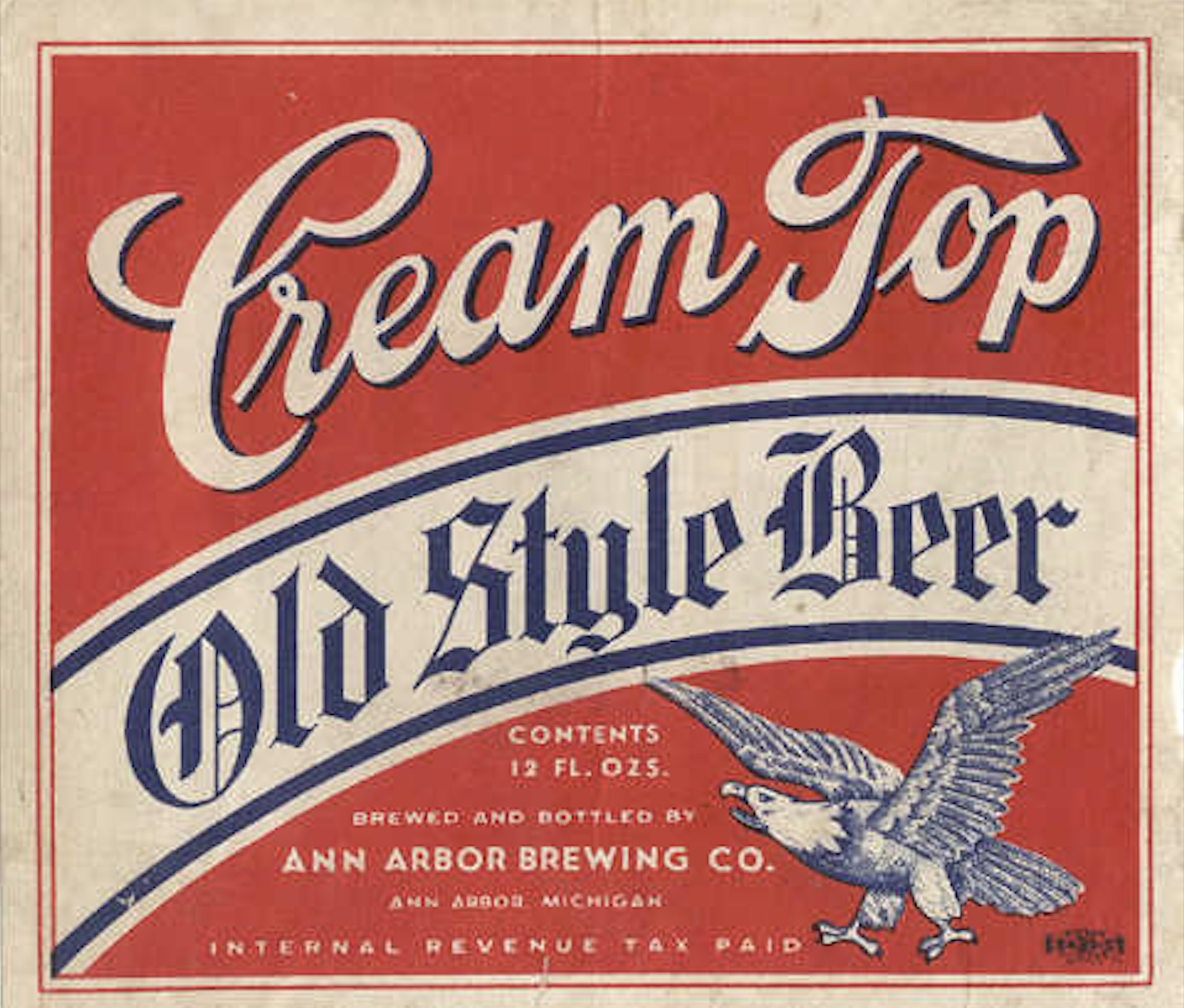
Right now, I’m coming off the interstate into La Crosse. It’s not so ancient, it has a rugged beauty and a bridge out west. I can cross the Mississippi here. Funny: I never thought of the Mississippi this far north; I always kept it down south in my head. It’s been a long day of driving, of thinking about that dream with John Rambo—I can’t remember if we said anything to each other. Old Style signs repeat—one every other block. Old Style: a reckoning of time with a graceful irregularity. Comfort, maybe. I’ve never been here, but why not? I wouldn’t mind. Maybe someone will buy me a beer. An Old Style. So, I stop.
I see a space and park the car. Four bars on the corner, none of them begging for attention. Neighborhood places—brick and neon in the window, paint peeling around the doorframe. Everybody knows everybody. They don’t look like they belong downtown. I pick the place with the stone-faced front. A happy hour sign that doesn’t promise much. The door itself is dark, partly open. It feels like a dare. It’s downtown—how bad can it be?
I walk in.
I order an Old Style. This isn’t so bad. Corn yellow poured into a pilsner glass, the kind my grandfather used. Baseball on the TV. From my seat at the bar, I can see the sun is still out. When I get to Seattle, maybe I’ll stay for a while. They say it’s beautiful. And for a minute, I can almost believe I’ve got a future ahead of me.
I sit, watching the game, letting the beer take the edge off. Regulars start coming in. Nobody bothers me. The weight of not being anywhere in particular. It’s almost peaceful.
The bartender buys me a round. The game’s in the late innings. One more pop, and then I want to find a truck stop, get some food, look at a map—keep moving. The inning ends and the screen cuts to a “News at 6” teaser. A boy in uniform. Clean face. Clean lines. A voiceover: “Tonight at six: a report from the front…”
Someone down the bar says, “God bless ’em.”
I forget. I don’t mean to.
“Yeah,” I mutter. “America’s Viagra kick gone wrong. A four-hour hard-on turned into how many years?”
I wasn’t looking at anyone, just my pilsner glass. The big, fluffy head doesn’t last long. I watch it collapse into a thin layer of foam.
Then a shift. Chair legs scratch the floor. An old guy on a stool moves, gestures with his chin. Another man comes at me. I’m not paying attention. The punch catches me on the side of the head. I go down.
He’s over me. Staring down. His face is a kind of certainty.
“Guys like you. Piece of shit. Why are you even here? My son’s got no legs left. Fighting for you.”
He kicks me hard in the ribs.
I hear, “Can somebody get this guy out of here?” I wonder who they’re talking about. Me? Then: “He’s not from here.”
I know now. It’s blown up. I try to breathe. The floor is sticky. The TV keeps talking. The failure that begins with one man. If I could just talk to him. Tell him. He kicks me again—for Christ’s sake—and it spreads. It doesn’t stop at the bar. It doesn’t stop anywhere. Because men do not know themselves.
Again, there is a threshold you cross when you come to a place like this. Keep your mouth shut. We would never do that. Blow up a bus with women and children inside? No. Never.
But we’ll buy a gun and shoot people up. That’s different. That’s a right. At least it’s not a bomb.
That’s cowardly, we say. I hope he doesn’t have a gun.
Because we tell ourselves we’re better than that—God and country, handed down. Our violence is clean and familiar. We like to think we know what we’re doing.
Another kick in the ribs.
Just because I’m still moving.
“Christ almighty—leave him.”
Old Style.
His boot goes into my ribs and the thought splits and reforms:
Old Style. Of course.
We don’t have that where I’m from. But they sure have it here. I wish John Rambo were here. I almost smile at that. The stupidity of it. The inevitability.
Another whack, this time in the head. It’s getting confusing now.
I need to breathe.
Is the sun still out?
I can’t see it anymore. Voices, feet shuffling.
I need to breathe.
Is this the threshold I crossed?
I can’t see the sky anymore. It seems just out of reach—the sky—where they like to keep it.
Now it’s getting quiet.
I need to breathe.
Is this a hand on my back, pointing me west? Is this what returns me to the path?
I need to know what color the sky is.
They say it’s so beautiful out there.
If you can get there.

