

My wife, she writes children’s books. They’re educational and give the kids practical advice. Her bestseller is Pete The Pedophile, which teaches children to stay away from grown men who wish to have sex with them. In another, she encourages the use of the words “penis” and “vagina” in lieu of silly nonsense words like “wee-wee,” “coochie,” “googly goo,” etc.
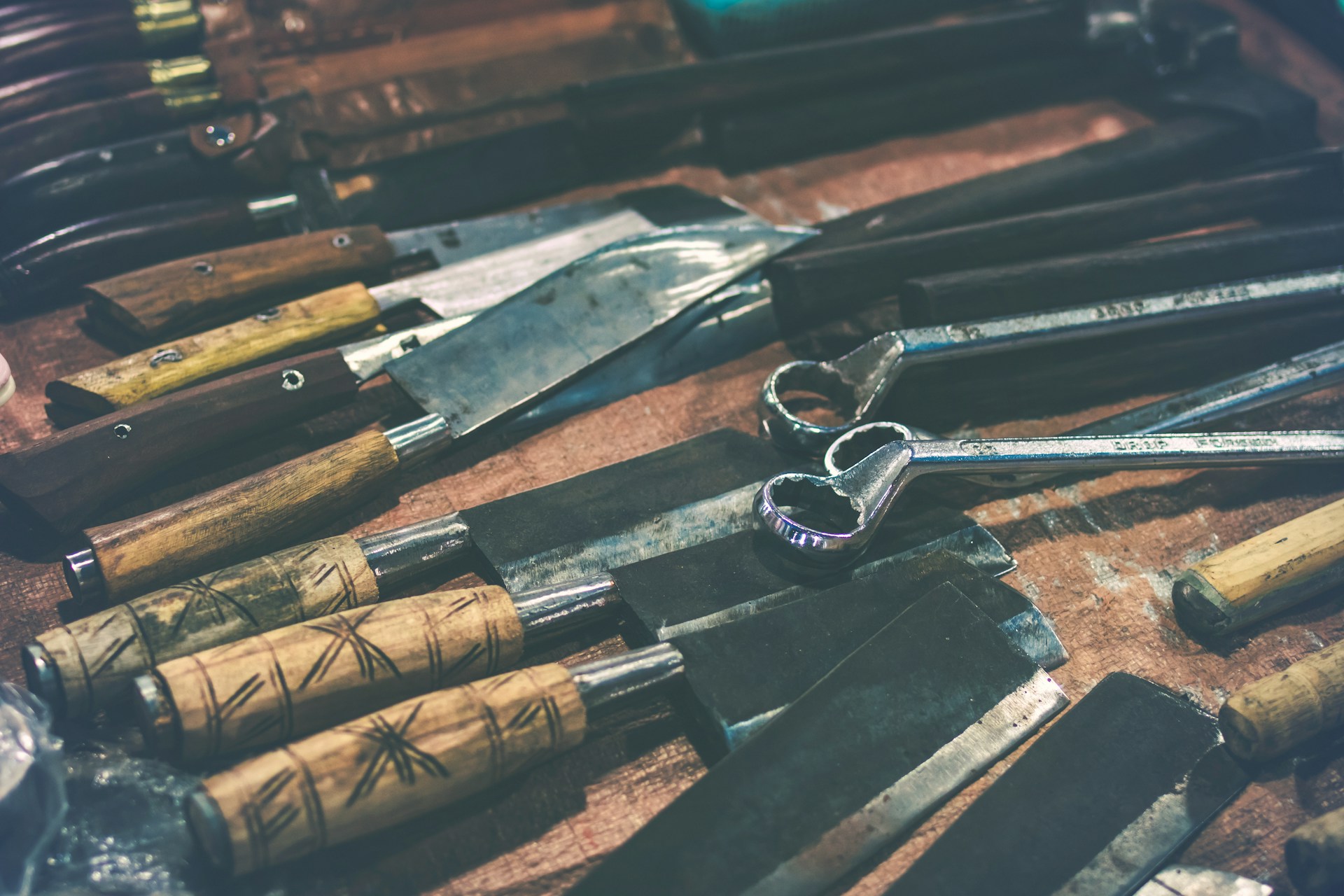
She is absolutely perfect and her books make us enough for me to stay at home and try to make a living from my carvings. I use knives. I use wood. I have a whole set of oddly-shaped knives for shaping the teak, oak, pine, walnut, cherry, or mahogany I’m using that day. The knives stay sharp because I always take care of what’s mine.
After we got married, we had a lot of sex. Since we were married and she didn’t mind, I would always blast off inside her, thinking nothing of it. Well, you know the rest. Eventually her little belly started to grow and she stopped having periods. There was a bun in the oven, the doctors verified. The bad part is: we hated kids—not hated like a Nazi hates pastels, but were uninterested in them. We had both been like that even at a young age. We were both precocious children and read James Fenimore Cooper when our peers were reading Dr. Seuss. We were a match made in heaven, except we didn’t believe in God. We didn’t like sports, we didn’t like opera, we didn’t care much for TV, except as background noise for couch-based coitus.
That was when we had neighbors to consider. Now, we have a nice house paid for by Christopher Tries Crack and Barbie Has Herpes. Indeed, in certain situations, we might woggle our fingers at cute babies or hold one at family gatherings, but those brief interactions were enough for us.
There is a basement in the house where the washer and dryer live and my wife is too scared to venture. In other words, I do all the laundry. It’s fine by me: we keep separate hampers, easy to sort. I throw all mine in at once, any colors or fabric, and wash away. Hers, I separate into delicates, lights, darks, and dry-clean only. I always thought dry-cleaning was a scam.
My wife is working on Why Mommy Needs Alone Time so I go out to my shed on the sloping hill of our backyard near Charlotte. I unstrap my case of knives, bringing out my oils, resins, epoxies, and glues. I have an orderly work station with all the tools in their place. I never really know where I’ll go with a piece until I take away the first cut. Usually, once I cut even a minute flake off a block I can see it becoming a miniature canoe, a feather, a leaping tiger, or a Buddha. This is how I do my craft. I don’t take commissions anymore because I feel like I can’t live up to my own standards since the piece won’t be made with precision like the others.
Instead, I fill up bins of carefully wrapped carvings and when they’re all full, I reserve booths at fairs, craft shows, and flea market festivals. For what I sell them for versus how long it takes to make them, it’s not a lucrative endeavor. Plus I have to pay to rent the booth. Still, it gets me out of the house and the wife is always saying I need to get out more and that I don’t have any friends. I daren’t point out that she doesn’t have friends either.
She does talk to one woman on the phone daily, sometimes for an hour. It’s her literary agent: THEY WANT TO PUBLISH HER IN ARABIC. Have to scratch the book about Mohammed. Translation means foreign rights which means money which means I can keep on carving as long as I do the dishes and the laundry and the yard work and cook and grocery shop and pee sitting down. It’s a fair compromise. I never was cut out for work. Not real work, I mean, like swinging a hammer. I’m more of a library clerk or church maintenance kind of guy. You’d be amazed how much gum there is on the bottoms of church pews.
After what seems like a while working on what has become an elephant, my wife calls for me. My cell sits there like a brick. She calls for me. She needs me. I carefully set down my sixty-five dollar knife and jog up the hill. “What’s the dealio, Emilio?” I ask.
“Take me to the hospital, now.” I see she has blood on her hands so I rush to open the door of the SUV and help her in, then run inside to get a towel. “Put pressure on the wound,” I say. She says: “It’s coming from my vagina.”
I drive about 215 miles per hour and we’re at the hospital lickety-split, blocking the ambulance entry. Simply because you’re rich enough to afford an ambulance doesn’t mean you shouldn’t have to wait your turn.
“My wife is dying!” I scream. Clearly I don’t do well in these situations. “She’s pregnant.” They wheel her in fast and pull me from the room which takes some effort because I’m considerably bigger than most nurses.
“Sir,” a nurse says, putting pressure on my arm. “We’re trying to help her. Let us help her, okay? Go get some coffee. We’ll get you when she’s stable.”
I wait in a musty waiting room and everyone waiting to see their dying loved ones look like they’re dying themselves. Ever since I’d tried to off myself and got put into a psychiatric hospital for a couple-dozen days, I have a fear of hospitals. Don’t say anything crazy and you’ll be fine, I think. Finally the doctor comes out still wearing his skull cap. Yes, I’m the husband. There is only one in the world and I am him. All the others are impostors. Don’t say that.
“Your wife is stable and she’s healthy,” the doctor says, “but we lost the baby.”
“Surely,” I say, feeling redness build at my throat, “you have some kind of RFID bracelet and we can find her.”
“No, sir,” he pauses, “she passed. She wasn’t old enough to be viable. You can see your wife now.”
I follow him, eyes welling up, feeling so terrible that I hated kids and now one was dead and it wasn’t some random one. It was my one. It was dead. Propped up on the bed, my wife watches Jeopardy, not acknowledging me.
“What is Minsk?” she says. I hold her limp hand and ask how she feels.
She answers, “Who is Taft?”
“The doctors say you’re going to be fine,” I say.
She answers, “What is taffeta?”
The nurse comes in with a little pink plastic tub and asks if we want to see the baby before it’s taken to the funeral home, which I expect is a polite way of saying the furnace. My wife says okay and they hand her a white towel which my wife cups in her palms.
Lying in the middle of the towel is an alien-looking, big-headed proto-human. I touch its little head and think it looks like a Swedish fish. My wife hands her back and the doctors say she can go. At home, she sits in the study working on Taxation is Theft as I peek in thinking of offering her French toast.
She doesn’t say anything and stops writing until I leave. I think she blames me for the baby. How adamant I’ve always been about hating kids all the while dumping my seed into her willy-nilly. I make French toast anyway and it is delicious. Vanilla extract and a touch of cinnamon is the key. Brioche doesn’t hurt.
I get back to my carving and finish the piece I’d started that morning. Upstairs, my wife is already in bed and I peck her on the cheek before we turn away from each other and do not say good night. We aren’t say-goodnight people. Never have been.
Screams wake me at three in the morning.
“The baby monitor! I heard noise!” She is hysterical. I pull a knife I keep by the bed. A knife is safer for home defense so bullets don’t go through the walls and kill your neighbors or your kids if they aren’t dead already. Then you’re up for manslaughter. I, also, am an expert with knives. I walk across the hall to the orange room where the baby would have lived and see no one. Hear nothing. I whisper into the monitor, “It’s okay, only a bad battery.” We got it for free from some previous infant owners and hadn’t checked the batteries. You can’t count on a newborn for much.
My wife won’t eat, not even cubed golden honeydew, she’s fine with the benzos her doctors gave her and tea in her study. She needs me when she needs me but not when I need her. Isn’t that like the main reason relationships don’t work out? That night, she asks me to sleep on the couch. I acquiesce. The drugs make her snore anyway, so I get cozy and fall asleep to an infomercial about a kitchen gadget. Nearing three, she wakes me screaming again.
“There’s someone in the house,” she screams. I bound upstairs and knock on our door and she won’t open it. “It’s me, your loving husband.”
“That’s what an invader would say.”
“You have a 5-leaf clover tattooed on your lady parts.” She opens the door. I try to hug her but she pushes me away.
“I hear the noise from there,” she says, pointing to the baby’s room. “Like white noise, like a radio station but you can’t hear the words or the music.”
“Go back to bed,” I say, “I’ll fix it for us, my macaroon.”
“Don’t call me that again, ever.”
“Yes ma’am.”
I go into the room and sit cross-legged on the ground trying to listen for noise when I notice a crackling. A buzzing. A hard-to-pinpoint sound, almost like my wife had described. I put my ear to the floor, to the walls, I stand up in the crib and listen to the ceiling. I make sure everything is unplugged. I go down to my shop and get a hammer and crowbar. Back in the room, I find a spot on the wall where the noise is coming from and I smash it with the hammer. Then again. And again. My wife stands watching. She says, “Don’t let me stop you.”
I keep going all around the room, prying back chunks of sheetrock until only studs and insulation are left, plus two beer cans in the walls. Construction workers often leave little tokens so people will find them one day, some kind of glimpse at immortality. I sit, covered in orange and white dust, exhausted. I leave the room the way I made it because it’s my room and not my baby’s room because my baby’s dead.
I go to the workshop to do some carving, but every piece I start has a large head, big round eyes and tiny little digits. Finally, I just carve my baby. I carve her perfectly from memory, from just having touched her one little time. All that went into the planning and preparing and physically making the baby was wasted, but this labor is not. I make our baby. I make her. Upstairs I show our baby to my wife who knocks it out of my hand and lies in bed. She has eaten very little and I’m worried she’s not taking her medicine. That night, she wakes me up from the couch. I need to sleep outside, she says.
I pick up my bundle of blankets and pillows and go to the porch where I make a moderately comfortable bed. I hold my baby close to me as I sleep. Again she wakes me up and again she hears it–the noise.
I put my baby down and I put my ear to the floor. She walks back into the room asking if I hear it. I shout that I do. I get the crowbar and pry up the hardwood floors, finding beneath that linoleum. I spend most of the night pulling up the boards and hauling them to the roadside. I carve again after I’ve rested, I carve our baby, again. My baby is all I can think about. The little Swedish fish, the red semi-solid candy, not the pickled kind, but also kind of the pickled kind. I wish I could have saved her. I wish I had never said I hated kids. I love my baby and she’s gone.
That night at bedtime, my wife wakes up me up and tells me I can’t sleep on the porch, I need to go farther outside.
I do what she says. I love her. I can’t imagine her pain. She lost the baby. Her body said no. I simply lost her. My body doesn’t ever say anything. I didn’t even have her yet and I lost her. I put down a tarp in the yard and sleep fitfully, waiting for sunrise. When she yells for me, the noise is in the clocks, the refrigerator, the toaster.
I tear it all apart, piece by piece, I smash the televisions, I tear down shelves, I gnaw on the curtains, until all there is, is noise. I don’t even look at the mess I’ve made–I simply go to bed. Before I’m even comfortable, she says, “You can’t sleep here,” and points to the shed. This is taking it too far, but I’m a strong man, I can tolerate it. She’s dealing with immense trauma. I don’t even go to sleep, I work on carving another baby, bigger this time, to plant in the yard and grow into a tree of babies.
At three o’clock, she is more hysterical than usual. The noise is everywhere. It’s everywhere. I go back to the shed and bring a sledgehammer and a long, curved knife, which I leave on the counter. I smash the piano. I smash all the windows. I smash the toilets the sinks the mirrors. I destroy it all.
Then I hear it, the closer she gets to me I hear it louder and louder. She doesn’t speak, but steps around the clutter as I backpedal to the kitchen counter. She goes upstairs and the noise she’s emitting is so deafening I barely hear her say, “It’s gone. You can come up.”
As I ascend, the only sound is the light scratch of my knife against the railing.

