

Margie had not used an alarm clock in 45 years. She prided herself on that—in bed every night by 10:30, up every morning at 5:00 on the nose.
So when her eyes opened at 3:15 that morning, she had a feeling something was wrong. She lay there a moment, collecting herself—then she heard it. Heard it again, rather; a soft double knock on the front door, a repeat of the one a moment ago that had awakened her.
Instinctively, she reached across to the other side of the bed to shake Wood awake, to let him know that there was someone at the door. But he wasn’t there. He’d been gone for fourteen months, but she was still sleeping on her side of the bed, still looking up from her magazines to read him something he would like, still cooking too much for supper. Some of the gals from the widows’ group at the church told her to just trust in God’s plan, that those little feelings would fade after a while; she wasn’t sure she wanted them to.
A third pair of knocks at the door, tap tap, this one followed by a voice. Hello? Anyone home?
The voice was soft, male. She could hear the cold in his words—it was already well below freezing when she went to bed, and the temperature was considerably colder now. The forecast called for snow by the end of the week, everyone hoping for a white Christmas.
We just need a little help…. Our baby, she…. Anyone home?
“Well, shit,” Margie said, to no one in particular. She found herself swearing more and more now that she lived alone. She kind of liked the swearing, the colorful versatility she had denied herself for so long. Wood never swore, at least not in front of her. Always too much of a gentleman, save occasionally in the middle of the night.
“Of course there’s a f’n baby,” she said, still not quite comfortable enough to go all the way with that one.
She slid out of bed with as little noise as possible, reaching in the dark for her robe and slippers in a practiced motion. The clock at the end of the hall confirmed her own internal time—3:15, on the nose.
She thought again about getting a dog; probably a bad idea, though, given the hours she spent at the store. She supposed she could bring a dog with her, let him sleep on the floor behind the counter, but that didn’t really seem like much of a life for a dog. David had always wanted a dog, when he was younger, but she could always find a reason that convinced him that it was a bad idea. Now she was just convincing herself.
Standing at the door now, she could see the man through the peephole, standing on her front porch. He was a bit distorted through the fisheye lens, but she could see he had the shaggy hair and silly mustache that young men of his generation seemed to favor. He was wearing a ratty army field jacket, one Margie was certain that he had not earned. Probably picked it up at a secondhand store, or a church charity. Wood had spent three long years in the Philippines before they were married, then two cold winters in Korea before their fifth anniversary. He never talked much about it, but she knew that whatever he had brought home with him had certainly been earned.
David had earned his, too, over in Khe Sanh and the rest of that godforsaken jungle. The man on the porch was about David’s age, and Margie shook loose familiar thoughts of what could have been for her boy, and would now never be.
The man blew into his hands, even though he wore leather gloves, and his breath formed a thick cloud around his face when he spoke again. “I can hear you moving around in there,” he said softly. “Was just hoping you could find a little Christian charity in your heart to help us out.”
Margie could see a car idling a hundred feet or so behind the man, tailpipe filling the cold night air with exhaust. It sat along the side of the filling station, away from the pumps, and she thought she could make out the dark shape of a second person in the passenger seat, but she couldn’t be sure.
“You own this place?” the man asked, real hope in his voice. “Or could point us in the direction of who does?”
Margie kept herself as still as she could, trying not to let the man hear her movements through the door. Her mind raced, returning to a simple thought she’d had over and over the last fourteen months, but less and less the last few—what would Wood do?
“I’m sorry for your loss, ma’am.”
Margie’s blood went cold; it even seemed to stop circulating throughout her body. How did he—
“The star in the window,” he said. “I know it don’t mean much coming from a guy like me, but thank you for your sacrifice.”
The star was not a popular choice these days, not like they were when Wood went off to war. As far as Margie knew, hers was the only gold star window in the entire county. The world deserved to know what she had lost. What it had taken from her.
“Did you serve?” she asked, her own voice surprising her. She hadn’t planned on speaking, it just sort of happened.
“Yes, ma’am,” he said softly. “Been home almost a year now. Da Nang… two tours.”
Margie’s hand reached out, a mind of its own, and pulled the door open slightly. Her hand was smart enough to leave the chain fastened, at least. She peeked through the cracked door, looking up at the young man. She could tell now with a clearer view that he had at least eight inches and sixty pounds on her.
“I know the sign on the station door says you open at six, but we were just hoping.…” He smiled, gave her a little shrug. “I get it, though. It’s a lot to ask, total stranger, scruffy looking as I am, middle of the night.…”
“The baby,” Margie said, cutting him off.
“Ma’am?”
“You said there was a baby.”
“Yeah, my wife and me, we were—”
“How old?”
“The baby?”
“Yes. The baby.”
“He’ll be two months on Wednesday—on Christmas day, if you can believe that.”
Margie could believe it, but just barely. Her second Christmas without Wood, and it seemed like he’d been gone for a week. Just yesterday she found herself in a panic because she hadn’t gotten him a present yet.
And David—thoughts of David among the presents under the tree as a boy drove her to her knees this time of year at least twice a day. A new ball glove, chemistry set, the Hardy Boys. She didn’t put up a tree this year, thought that it might help.
It hadn’t.
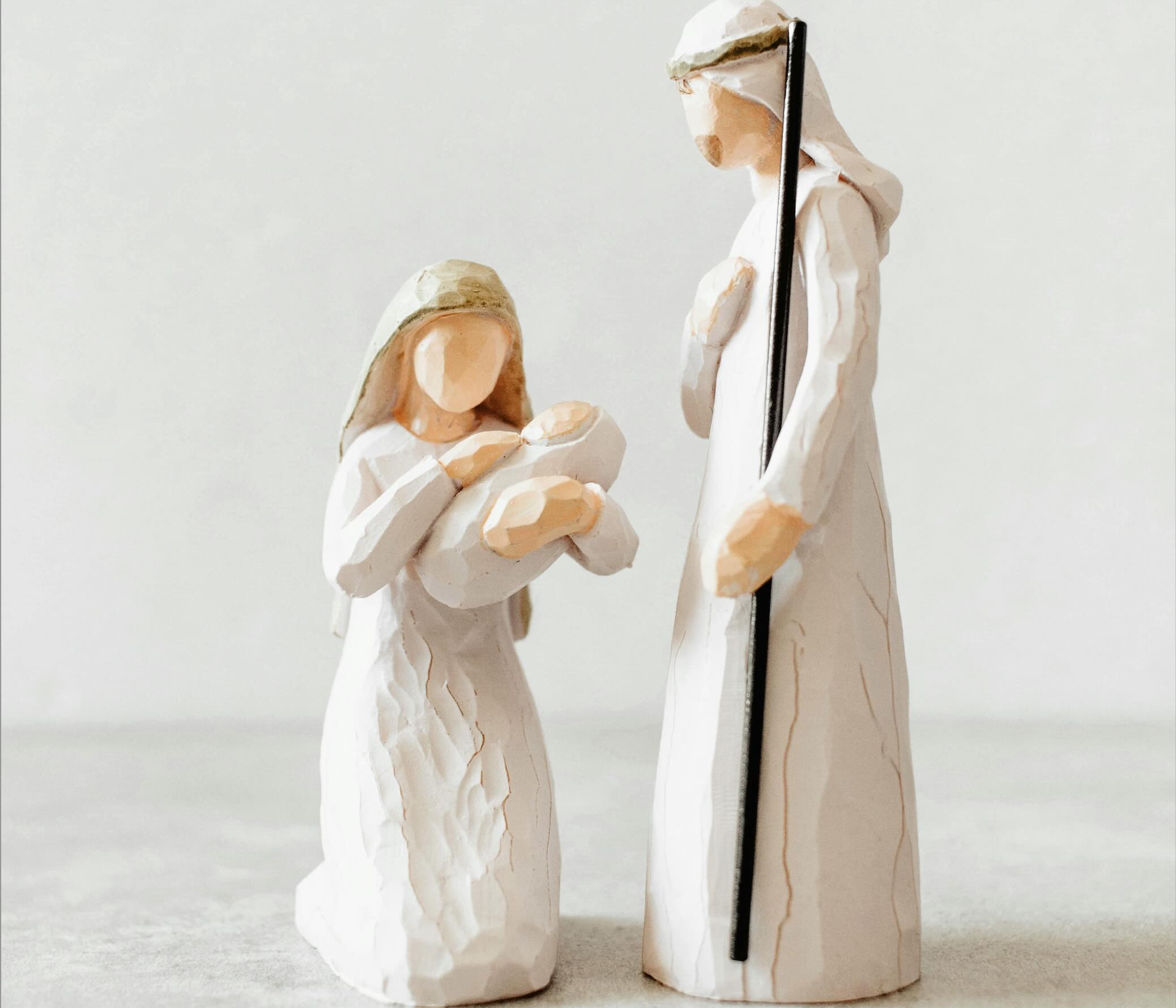
She thought about Reverend Bigelow’s sermon the morning before. “Imagine the King of Kings and his sweet parents standing on your doorstep this week,” he said. “With all the craziness and the ugliness and the division in this world today, would you give them the help they were seeking? Would you offer your stable? Your manger? Would you even recognize them?”
Margie gave the young man another long look, then glanced past him to the blue Plymouth Satellite idling in the station parking lot, engine running to fog the windows and keep his family warm. She gave him a thin smile, lips pressed tight together, then made her decision.
Wood used to tease her about her instincts, her little feelings. “I don’t know, Marge, I just need a little more evidence, myself,” he’d say, before taking her advice anyway. That’s how they won fifty dollars on the third race at Churchill Downs when they stopped on the way to visit her cousin in Cincinnati; that’s how they picked out this particular acre of land to build their life.
That’s how she knew David wasn’t ever coming home from the other side of the world. A little feeling.
The choice was as clear to her now as it was then, as if there had never been any decision to make in the first place. A little feeling.
She closed the door softly, then undid the chain and stepped out onto the porch.
“Cold out tonight,” she said. “Maybe we’ll get that white Christmas after all.”
“I hope so,” the young man said. “Can I loan you my coat?”
“No, thank you—I can manage. Fifty-two steps from the front door of my house to the front door of the store. We’ll barely have time to get cold before we get there. Good brisk walk will help me wake up.”
They walked side by side across the yard, the young man shortening his strides to match Margie’s fifty-two steps to the station. Even in her slippers, the crunch of the gravel rang loud in the quiet night air. “Fifty-two, huh? You’re not even counting.”
“Every day for the past um-urm years,” Margie said. “Um-urm being, of course, how ladies my age measure time.”
“Of course.”
“What’s troubling your precious baby tonight?”
“Trying to get to my in-laws for the holiday—thought maybe he’d sleep a little more if we drove through the night.”
“Hmmm. Didn’t work out?”
“Not yet—four hours to go still.”
“Four hours—where’s that, Roanoke?”
“Thereabouts.”
Margie fished a keyring from the pocket of her robe and opened both locks on the front door to the station. She automatically flipped the sign from CLOSED to OPEN, then realized and spun it back to CLOSED. “Sorry, old habit,” she said. “We’ll get you on your way, and I might get back to bed.”
“Thank you again for opening up for us—I can’t tell you how much we appreciate it.”
Margie waved a hand at the young man, a no problem at all gesture, as she made her way through the darkened store to the counter. She slipped behind and flipped on the lights, bathing the coolers of Coors Banquet and Cheerwine and the rack of Rand McNallys and the cans of Havoline in a harsh fluorescent light.
The store was still covered with Wood’s handwritten signs, thick black marker on firm yellow posterboard. She couldn’t bear to take them down; his handwriting was always better.
“Your baby,” Margie said again. “He’s sick?”
“Yeah.”
Margie looked down at the wooden floor beneath the register, the two slight indentations worn there, one slightly in front of the other, the same shape and size as a women’s seven. Probably invisible if you didn’t know to look for them, but there all the same, just deep enough to hold a little standing water or send a rolling marble slightly off course. David had tested both of these theories in his high school days; his own little feeling.
She moved into her spot, then opened the till. “I’m just asking if he’s sick, or hungry, or wet—just trying to figure out exactly what we can get for you so we can get you back on the road and on the way to Grandma’s house.”
He shook his head. “He’s pretty fussy—we fed him, changed him, all of that, but he just keeps crying.”
“Sounds like you need a doctor, maybe? We’ve got a little baby food, some milk; I could check if we still have a few packs of Pampers in the back. Not a lot of medicine, though, mostly just Bayer, Tylenol, stuff like that.”
“OK, sure.”
Margie shook her head, disappointed. “Pick one.”
The young man reached into his jacket pocket and pulled out an army knife with a six-inch blade and held it across the counter towards her face. Margie recognized it immediately; Wood had one just like it in the back of the closet, tucked away in a box he labeled Filipino Souvenirs.
“How about let’s just forget all that and hand over the cash you’ve got in that register there.” He pointed the knife down towards her feet. “That little safe you got down there, too.”
Margie was a little surprised how much she wasn’t scared. If this was going to happen, at least it would be here. She’d spent more hours here behind this register then she had anywhere else in her adult life. More than her kitchen, more than her bed. They both had. She felt Wood here more than anywhere else.
“Don’t do this, son,” she said softly. “You’re making a big mistake.”
“The safe,” he said. “Unless you want to see your boy again soon.”
Margie nodded, her palms in the air. You win.
“OK,” she said.
She reached down towards the safe, then stood back up with a sawed-off shotgun in her hands.
Wood had installed the gun a few years ago on a blind shelf beneath the counter, just above the safe. One of his little feelings. “Better to have it and not need it than need it and not have it,” he said when she protested.
“If you put a gun in here, a gun’s gonna get used in here,” she argued.
“I may not always be here to protect you.”
“I’m not letting you keep a gun in the house,” she said, and she hadn’t. And now here they were, the same way most of their fights ended.
They were both right.
“Woah, woah, woah,” the young man said. “You’re not going to use that.”
“I hope not,” Margie said, pointing both barrels squarely at the man’s chest. “But you’re going to put that knife on the counter there in front of you. Slowly.”
The young man stepped forward and did as he was told, then took another couple of steps back towards the door. “Your mistake,” Margie said, “was confusing my kindness with weakness.”
The young man nodded, then backpedaled a bit more, now just a few steps from the door.
“And you’re not going to make that mistake with anyone else.”
“No, ma’am,” he said, reaching behind his back to as he backpedaled again.
“If that hand comes back out with a gun in it, I will paint you all over that door.”
“No, ma’am, nothing in my hand but the doorknob.”
“You could have just broken in. You didn’t need me for this—you could have just broken in and taken what you wanted.”
“We figured it would be easier if we just got you to open the safe.”
“Take advantage of the helpless old lady.” Margie shook her head, still disappointed more than anything. “I wanted to believe you. I wanted to help you. A baby. You’re nobody’s father.”
The man shook his head. “No, I’m not.”
“Did you even serve?”
“That part’s true.”
That wasn’t the answer Margie expected, but she believed it. Despite all the rest, she believed that one.
“You stood on my porch and asked me for a little Christian charity, so here it is. You’re gonna get back in that car again, and you and your friend are gonna drive out of here in a straight line and keep going until you run out of gas. And when you run out of gas, you’re gonna get out of that car and start walking. And I don’t care how far you walk, but if you darken either one of my doorways again, I will punch your ticket without a thought.”
The man nodded, then gave the doorknob behind him a tentative turn. “Yes, ma’am.”
“You understand what I’m telling you.”
“I do.”
“I hope you find what you’re searching for in this world, but understand you will not find it here.”
He nodded again. “Understood.”
Margie motioned with the gun towards the door in a shooing motion. “Go on, then.”
“Merry Christmas,” she added.
The young man opened the door and stumbled out into the lot, nearly colliding with the gas pumps. He fell into the passenger seat of the car as it tore out of the parking lot and into the night.
Margie waited until she could no longer hear the roar of the car’s engine, then replaced the shotgun on the shelf above the safe. She pushed the till closed, then stepped outside, locking the door to the station behind her. The cold air nipped at her cheeks, the sharpest bites always closest to dawn.
She was awake now, no chance of going back to sleep. Fifty-two steps back to the house. Maybe she’d try out that new pancake recipe she clipped a few months ago. Make a few with bananas, maybe. Her boys didn’t care for bananas, so she had never tried it. But she had time this morning. She didn’t need to come back over and open up until 6:00.
Plenty of time.
She had a feeling she was just getting started.

