

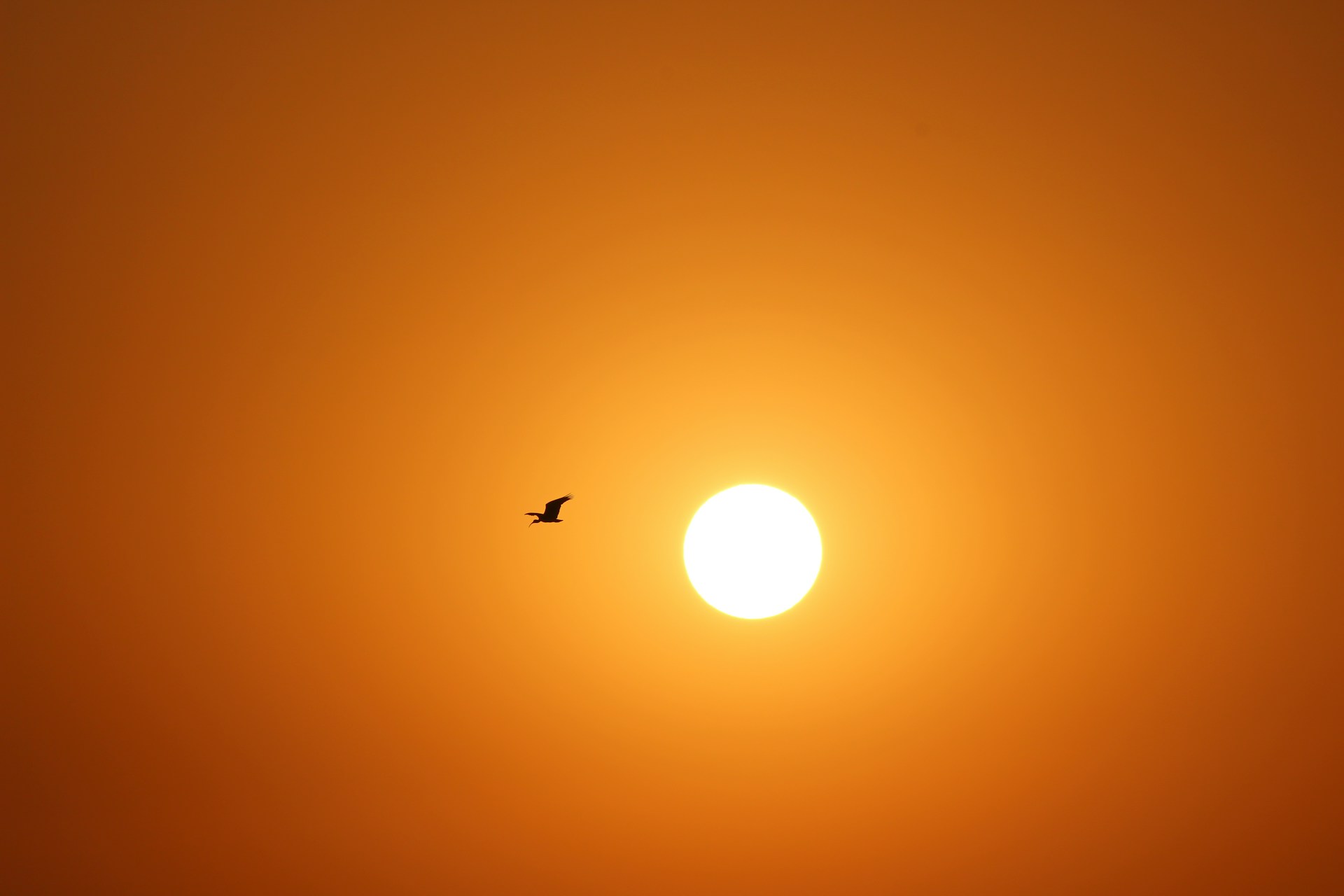
When I was a kid, my brother and I would stare directly at the sun. We’d stare for as long as we could stand it, and then laugh and rub our eyes until the pain went away. We did things like that a lot. Burned our knees on the carpet seeing who could jump off the highest stair. Gave each other pink bellies, slapping our hands against the other person’s bare stomach. We didn’t know any better. Just thinking about that staring-game now makes my eyes hurt, but back then, we thought it was hilarious.
That’s the only way I can describe what happened when I found the elevator.
Except it’s not the light that causes me pain. It’s the darkness.
The elevator is gone, and I don’t think I’ll ever get to see the light again. It’s eyes-closed-forever now.
I can hardly step out in the sun at all anymore, let alone stare at it. Cancer. The sun hates us, you know.
I took the job at Vorci-tech because Sadie said the money was good and they let you work from home whenever you want. Turns out the money was fine, but all new hires had to work from the small storefront with fifteen full-time employees who packed the place out. Without all the people, it might have looked like a nice space. Tall boy tables, IKEA couches and chairs, an espresso machine, kombucha on tap, bright green stripes along the back wall that reminded me of the rows of lodgepole pine I used to pass on the way to my parents’ house up north. Empty, the place was great. But even the most scenic drives are ruined by bumper-to-bumper traffic, and a lounge doesn’t feel all that loungy with three asses crammed into one loveseat.
Besides, that wasn’t my workspace anyway. Jeff put me downstairs. In other circumstances, I might have preferred it down there.
But that’s where I found the elevator.
The basement—stuffed with boxes of old promotional pens, shirts, and buttons, black metal shelves, and eight office chairs hiding in the corner like pool balls from a game half over—was less aesthetically appealing. Jeff walked me down the first day and guided me to a folding table pushed up against the backwall. “It’s tedious stuff you’re doing,” he said. “Thought you might like a quieter work space.”
“Thanks,” I said.
“Important,” he assured me. “But very tedious.”
I spent the morning scouring Twitter on my phone. Then TikTok, Insta, then Twitter again. I opened my laptop for the first time around 10:30 that morning and read through a backlog of emails from Jeff and the marketing team about their hopes to enhance SEO and streamline user experience. I texted Sadie, listened for her phone to ding from the stairwell, but couldn’t hear anything over the sound of footsteps and garbled voices.
Lovin my new digs, I said, and sent her a picture of the cement wall in front of me, then one of the brown ring of old coffee lining the inside of a mug I found on the floor.
She texted me back, but I don’t remember what it said. Nothing memorable. I think she thought it was funny. And I guess it was.
I came upstairs around lunchtime. Sadie was on a Zoom call. I waved to her, and she waved back from outside the camera’s view. I think I used to find it sweet when she did that.
I grabbed a coffee, a bottle of water, and headed back downstairs.
I spent the rest of the afternoon pitching a tennis ball I found against a cinderblock wall. I have pretty good aim, but once I thought I heard footsteps and misfired. The ball careened off a box and rolled under the pipe and drape Vorci-tech used for corporate events. It connected with sheet metal, emitting a sound like distant thunder.
When I pulled back the fabric, there she was.
You see freight elevators in movies sometimes—solid steel doors that open up and down, a gate on the inside that shuts like an accordion—but they’re always used to get into a mob hideout in the basement of a fish market or something like that, not to get boxes of swag down to the basement of a suburban strip mall. The inside had the look of a solitary confinement room: flickering yellow light. Scuffed up, pale walls.
I stepped inside. The doors squealed closed behind me.
I tried to open them, but they wouldn’t budge. I hammered at the sheet metal and watched through the little window for someone to come down the stairs. No one did.
That’s when the elevator started to rise.
There were only two buttons inside—up and down—and I swatted at both, but the elevator continued going up. I braced myself for the humiliation I’d feel when it finally stopped and the doors opened, revealing the new guy all alone in an elevator. I hoped Sadie would be waiting there because she would laugh and then I would laugh and soon we’d all be laughing like friends. Like family. And that wouldn’t be so bad at all.
But when the doors opened, there were no people.
Just my chair. The folding table. My laptop. The pipe and drape. The boxes. The tennis ball still resting a few feet from the door.
I had gone up.
I had.
And yet there I was in the same place.
Of course, now I know it wasn’t the same place at all.
It was Up.
The moment I opened the door, an odd buzzing sensation settled like a dew on my skin. It hung in the air, and I breathed it in. That first deep breath gave me butterflies, except not the ones confined to your stomach. They went everywhere: my feet. My fingers. My elbows. My hair. My eyes. I didn’t know how I’d gone up and nowhere at the same time, but the butterflies—that dew—pulled me away from the question like a dog on a taut leash being dragged away from a dead squirrel.
I walked up to the lobby and found it was actually quite large. The room could comfortably seat thirty people if it had to. Maybe even forty. I poured myself a coffee. It was richer, sweeter. I plunged my nose into the steam, sending the butterflies into a frenzy. I sat down on a couch, aware that at any moment Jeff could see me and banish me back down to the basement, but an hour passed where I sat on that couch, undisturbed, sipping until the day was nearly gone and the glow of the setting sun dyed everything around me a soft pink.
And all that time, my coffee never got cold.
Sadie found me before she left and asked if I wanted to come over to her place. I said of course, because I loved Sadie. And Up there, somehow, I loved her even more.
No, not love. There’s no love in the Up.
Just butterflies, dew.
Sadie’s apartment is three miles from the office, but when she started to walk, I did too. I hadn’t even considered that my car might get towed or ticketed if I left it overnight, but it didn’t matter.
We were together. We were Up.
We curled up on opposite ends of her couch, our calves mindlessly grazing against each other, and ate a pizza. She told me things she’d never told me before, like how her parents used to stick notes they’d written to each other on mirrors and windows and steering wheels. Once, Sadie found a note that simply read “You have a wonderful smile” and Sadie thought that was the most beautiful thing in the world. I told Sadie that she had a wonderful smile. She said thank you, that I did, too. The butterflies went bananas. I almost said it again right there, just to feel the butterflies beat their wings against the inside of my chest, but instead I just gazed at her until she laughed and told me I was so weird, which was just as good.
We watched a movie. I can’t tell you what it was about or who was in it, but I loved it.
The next thing I remember is the sound of my iPhone alarm.
Somehow, I was back in my own bed.
I couldn’t remember how I’d gotten there. All I remembered was the dream I’d had of Sadie and I on her couch, how much we’d laughed and smiled. I knew it had to be a dream, because it wasn’t like that with me and Sadie. She never told me things about her family, except that her parents hated each other. They didn’t write notes. They didn’t smile.
Honestly, neither did we.
But that day, as I rubbed my throbbing temples, I did smile.
Because damn, if that wasn’t a great dream.
I drove to work that morning in the car that I had certainly, though unknowingly, driven home the night before and thought about the dream.
Sadie was sitting down on a bar stool near the window when I got to work. I waved to her. She waved back. Any other day I would have stopped and tried to steal her attention for as long as I could, but that day, I didn’t.
Suddenly, Sadie looked like someone who’d survived a tragedy. Looking back, I guess she had.
Reality, after all, is no picnic.
I sat in the basement and watched the window in the elevator from my chair in front of the folding table. It never lit up.
That evening, I walked Sadie to her car. It was a nice enough day, I said. Maybe we could walk home, leave our cars overnight.
She laughed. “Sounds wonderful. It’s like ten miles, but, sure, let’s walk.” She clicked the button on her key fob and unlocked her Subaru with a ka-chunk. I asked if she wanted to hang out, maybe get a pizza, but she said she wasn’t feeling up for it, maybe another time.
I tried to dream that night—of Sadie, the cup of coffee, the dew—but I couldn’t even fall asleep.
I picked up a Monster from the gas station on the way to work the next morning. Drinking it was the first thing that made me think I might get cancer. It had only been a passing thought, but now I think about it constantly.
I kept my head down as I walked through the office, but Jeff saw before I could descend into the basement and patted me on the back like he’d coached me up good. “Go get ‘em,” he said, and suddenly I felt the need to shower because you really shouldn’t touch people like that. Not at work.
I rested my cheek on the cool plastic folding table and closed my eyes, hoping to relieve my throbbing skull, but the headache raged on.
Hours later, when I finally picked up my head, the light in the elevator window was on.
I bolted to the door and opened it. The scent of the butterflies, the intoxicating dew, lingered inside. This time I closed the doors myself. By the time I pressed the ‘up’ button, the elevator was already on its way.
The pulley squealed for thirty, maybe forty-five seconds before coming to a stop. I gripped the handle to slide open the gate, but didn’t.
I wonder, I thought, what it feels like higher Up.
I pressed the ‘up’ arrow again. The elevator rose.
When it stopped, I opened the door. The dew filled my lungs, and I started laughing so hard that I think I cried a little. I ran upstairs. I knew everyone’s name the moment I saw them, and, by some strange miracle, they knew mine, even used it to say hello, how’s it hanging. After greeting everyone, I sat down next to a window looking out on the sidewalk and watched as two puppies climbed over one another, occasionally catching a paw on the vinyl leash attached to one of the adults chatting alongside them.
“Sun sets right over there.” I turned and saw Jeff over my left shoulder. “I like to watch it ‘til it goes down behind the flower shop.”
“I was just taking a break,” I said. “I’ll head back down.”
Jeff furrowed his brow. “Back down where?”
I didn’t know. In that moment, I couldn’t remember for the life of me.
To where did I intend to go back down?
I ate lunch with Sadie at a sandwich shop around the corner. I was halfway finished with my Reuben when two perfect strangers sat down to join us. For the next two hours, we collectively nodded our heads, collectively laughed when someone told a joke, collectively shook hands as we collectively went our own way.
(If there’s anything these days I trust less than the sun, it’s strangers. I can’t enter into a casual conversation with my own mother, let alone a stranger. Just last week she told me that she thinks that there’s a reason you hardly ever see white people begging for money in the streets. “They just don’t seem to have that sort of proclivity.”
Proclivity, I said.
“You know what I’m saying. I don’t have a problem giving money to someone who needs it. Honestly, I tend to buy food if I can, but that’s not the point. I just think… well I’m not going to even say it. You really can’t say anything these days.”
And that’s just my mother. God knows what kind of shit goes on in a stranger’s head.)
Sadie came over to my house that evening. We lounged on my bed and talked and laughed. Late in the night, long after the sun went down, she yawned and touched my arm. “Hold me?” she asked. “Just until I’m asleep? Is that alright?”
I told her it was more than alright.
She rested her head on my shoulder, her fingers on my chest. I listened to her breathing, gently caressed her arm until she fell asleep.
I held her like that as long as I could, but eventually I drifted off and woke up in my own bed, a blinding pain behind my eyes.
I staggered to the kitchen, guzzled three glasses of water, and slammed 1000mg of acetaminophen. Even through the windows, the sun nearly melted my eyeballs. I tried to drive, but only made it three blocks before pulling over and calling Sadie.
“You should have been here a half hour ago,” she said.
“I need a ride. My head is killing me. I can barely open my eyes.”
“I can’t pick you up right now. Just call in sick.”
“When can you?”
“What?”
“If you can’t pick me up now, when can you?”
“Jesus. Just call in. Hell, don’t call in. No one is going to notice. I do it all the time.”
“I can’t,” I said. “There’s something there I need.”
She sighed, then I heard her laptop snap shut. “Where are you?”
Ten minutes later, she pulled up. “Hurry up and get in. I have to be on a call in six minutes.”
I picked myself up off the grass and followed the sound of her voice.
She dropped me at the front door before parking in the garage across the street. She might have asked if I needed help getting in, but I can’t remember for sure. I stumbled through the office, down the stairs, into the darkened elevator.
I hammered the button, pounded my fists on the door. My head throbbed, but still, I pounded. I pounded until I heard a voice ask what the hell I thought I was doing.
Jeff stared back at me through the little window, his hand on his hips.
(He might as well have had a whip. The power structure that we have here, man. It’s a real mess. A real disaster.)
I stepped out. “Sorry for being late,” I said. “Had a migraine.”
“You expect me to believe you tore through the office like that because of a migraine?”
I pinched the bridge of my nose.
(His voice, man. His tone.)
“I just needed something.”
“You should go home,” he said. He spoke to me like I was a child, like he thought I should at least try to make potty even if I didn’t feel that special tickle.
“It’s the light. I just needed to get out of the light. I’ll be fine now. I promise.”
Jeff sighed, shook his head. “I’ll check on you in a few hours. See how you’re doing.”
But he never did.
I woke in a puddle of my own drool to Sadie shaking me. “Jesus, why the hell are you still here?”
I looked at the elevator. Dark. “Time is it?”
“6:30. I had a late meeting. Everyone else left hours ago.”
Sadie drove me to my car and told me to get some rest. I told her I would.
And I tried. I really did.
But I couldn’t.
I hated everything. My sheets. My pillow. My mattress.
Food, couch cushions, TV shows, red wine, shampoo, toothpaste, cotton underwear, soap smells, water temperature. Jokes. Books. Pictures.
I wanted the Up versions of all of it. The Up versions were better.
Not just better.
Best. Perfect. Ideal.
Turns out, the dew has a flip side to it: When it goes away, everything starts to rot. Decay.
(But it was always rotten, wasn’t it? Wasn’t reality always this way?)
At five-thirty, I finally stepped outside—into the bright sun, the vaguely fertilized air—and drove to work.
I waited in my car for an hour before Jeff arrived and unlocked the office doors. I watched him through the front windows from my car across the street. When he finally retired to the bathroom for his morning shit, I snuck inside, tiptoeing softly down the stairs into the basement.
And there it was—the light—beaming through the window like a lighthouse beacon.
I pulled the door open and pounded the button. I expected Jeff to come down the stairs, to shout at me again, but he didn’t. I was all alone.
I could have fallen, I thought. Broken my neck, killed myself on those dark stairs,
(Thousands of people die on stairwells every year. Look it up.)
but the thought vanished when the elevator started to rise.
It stopped and the doors opened on their own. I felt a rush as the dew washed over me with the force of a firehose, the butterflies gripped me with their little sticky feet and nearly pulled me off the ground, carried me up the stairs and towards the sun.
But the light in the elevator was still on.
What if this was the last time? What if it never came back on again? Maybe if I kept going—kept going Up—I wouldn’t have to come down the next morning. Maybe I could leave the Down world for good.
Maybe I could stay in the Up.
I closed the door and slapped the button again.
The elevator rose and rose and rose.
Up, up, up.
Again, the doors opened. Again, the light remained on. Again, I pulled them back down. I could climb higher still.
So I climbed—up, up, up—until the lights turned off and the elevator stopped for the final time.
This must be the Top, I thought. This must be the very end.
And what a high. What violent butterflies. What heavy dew.
I remember the Top, but only in flashes. I remember greeting my coworkers, waving and shaking hands and laughing at jokes like before, but I don’t remember a single individual. In my memories, every one of them is a nameless, faceless, people-shaped blurs.
My memories of Sadie come in flashes as well. Us walking home. Her laughing and placing her hand on my thigh. Her hair falling down across her bare chest.
But up that high, even Sadie looked blurry.
Don’t wake up, I thought. Even though I wasn’t asleep, I thought it over and over again.
Don’t wake up. Don’t wake up.
And it made sense up there.
But eventually, I did.
So now here I am.
The last time I saw Sadie, she had come to my apartment to drop off a bottle of sangria. I’d been Down for a week—maybe two, hell, maybe three—when she knocked on my door. The sound echoed through my apartment and beat against my temples so hard that I threw up in the wastebasket next to my bed. Eventually, Sadie used her key, which she had the whole time and if she’d thought about it for a just a second, she would have remembered and used it and spared me the sour taste of vomit in my mouth.
In she comes, calling my name louder and louder and louder.
“Oh Christ,” she said when she saw me. “Oh my God.”
“What?” I asked, and even though my face was covered with a wet washcloth, I heard her walk towards me.
“I mean…. You look—”
“What? What do I look like, Sadie?”
“Like… complete shit. I mean… complete and utter… shit.”
I felt her hand settle on my shoulder like a cattle prod, and I screamed and slapped it away. The bottle of sangria fell to the ground. She told me she was going to take me to a hospital, asked me how long I’ve been lying there like that, when was the last time I got any sun, why were were the windows covered in trash bags, could I hear her voice.
I said of course I can hear your voice. Stop screaming.
She knelt down by my bed.
Please don’t touch me, I said.
I won’t, she said. What’s happening to you?
You think I look like shit?
What?
That’s what you said, isn’t it? That I look like shit.
You look like you might—
You want to know what I see when I look at you?
The hell are you—
And I could have said something then about the elevator. How I’d used it to go higher and higher. I could have told her about the dew and the butterflies. How sick I felt after I came down. I could have told her how frightening everything down here was now or what it was like to see the world through the sweet dew and on the wings of those butterflies.
I could have, but I didn’t.
“What I see when I look at you,” I told her instead, “are the fattest pair of ankles I’ve ever seen.”
So she left.
There’s a lot wrong down here, you know? I didn’t always see it before the elevator, but I do now. The world is a sandstorm. A constant barrage of whirling glass particles, grating us down like blocks of wood, each gust peeling a layer of us away, leaving us more raw than before.
I think it’s those layers that keep us safe.
But maybe if we lost those layers—if all of us lost them, all at once—we’d all be better off. Maybe we’d fix some things. Maybe then life wouldn’t hurt so bad.
But then again, maybe then everyone would be as scared as I am to go outside.
The sun hates us, you know.

