

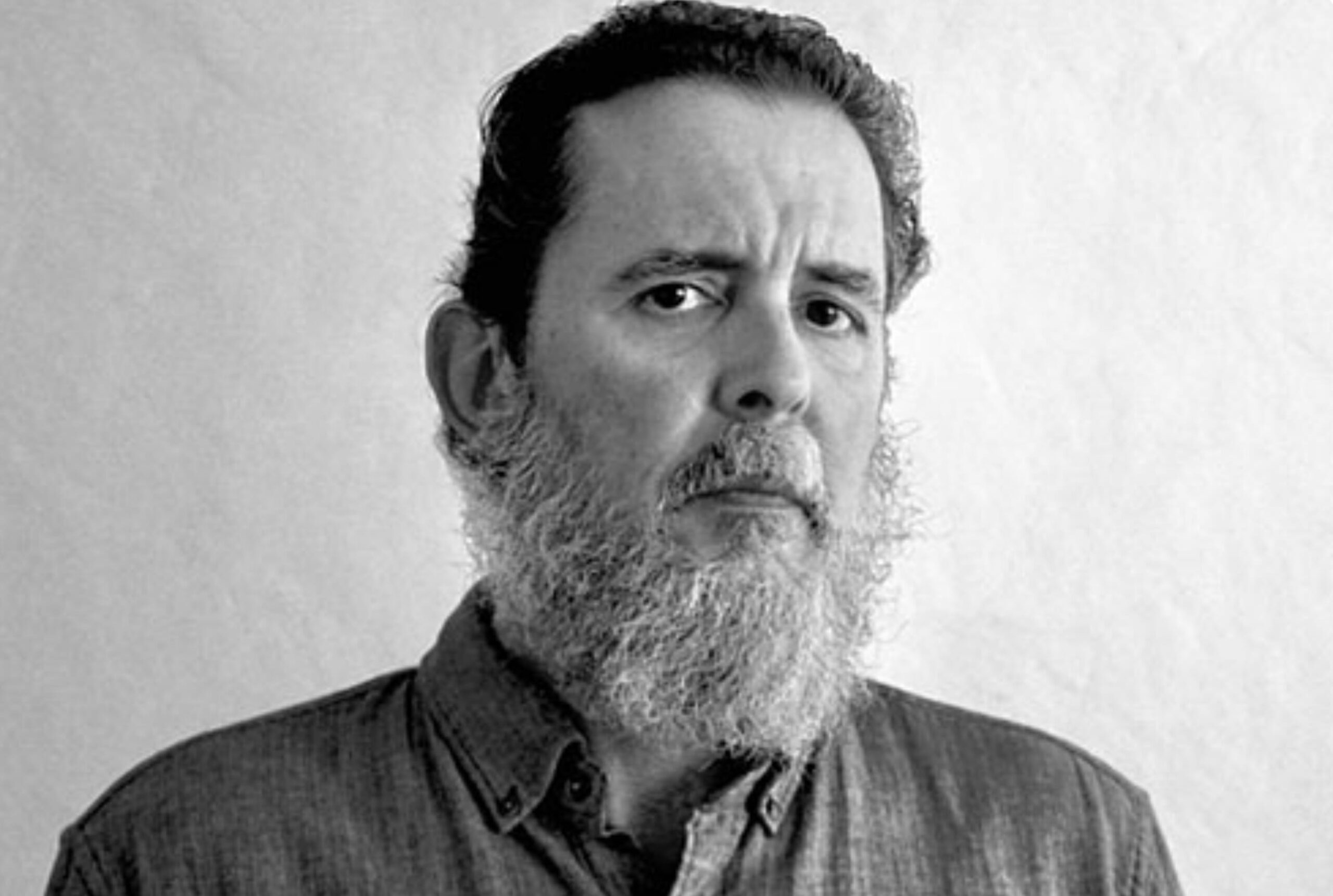
Richard Lange is the author of the story collections DEAD BOYS and SWEET NOTHING and the novels THIS WICKED WORLD, ANGEL BABY, THE SMACK, ROVERS, and JOE HUSTLE. He is the recipient of a Guggenheim Fellowship, the International Association of Crime Writers’ Hammett Prize, The Short Story Dagger from Great Britain’s Crime Writers Association, and the Rosenthal Family Foundation Award from the American Academy of Arts and Letters. He lives in Los Angeles.
FR: I’m going to dive right in and start with your novel, THE SMACK. I’ve read it twice, and it’s a favorite.
Growing up my father was a con man. I often toss books aside due when the con man characters become cartoon-like. Rowan breathes on the page. I could’ve played cards with him the other day, he comes across as real as any person I meet on the street. When it comes to writing cons Jim Thompson nailed in THE GRIFTERS, but the language of course is of the time, you brought Petty forward more in a modern world. Where did he come from? What’s his end game? Did you know any Rowan’s having lived in Los Angeles?
RL: Rowan Petty was loosely based on a few hustlers I’ve known, but as I was writing the book, he became his own man.
I’m a skeptical person—I think everyone’s trying to con me—so I’ve never fallen for any sort of scam. Which is fortunate, because L.A. is a hotbed of con artists. Everyone has a “project” that needs investors. People’s greed and the desire to be in the movie business led to all kinds of chicanery.
The actual con at the center of the novel, soldiers stealing cash in Afghanistan and smuggling it back to the U.S., was a real case. I read about it in the newspaper and built the novel around it. I’d been wanting to write about a con man, and decided to do it here, creating Petty and making him the main character.
FR: I’d like to talk a little bit about your novel, ROVERS. A bit of departure for you, more of a human story wrapped in a vampire tale. Where did the inspiration for ROVERS come from? Who are the rovers? And why did you choose to write it the way you did with alternating chapters?
RL: ROVERS is really a modern-day (well, 1976) Western with vampires as the main characters. The elevator pitch was “OF MICE AND MEN with vampires.” It started as a screenplay that my agent said would never get made. Ten years later I reconfigured the story and turned it into a novel.
I’d written three “crime” novels and wanted to stretch myself, because if you don’t stretch yourself, how are you going to get better? I read DRACULA as a kid and a few Stephen King novels in high school, and that was the extent of my horror fiction knowledge. I wasn’t afraid to give it a shot, though, because I hadn’t read many crime novels when I started writing crime novels. Which is good in a way, because then you aren’t imitating anyone.
I fucked a bit with the vampire mythology, picking and choosing what worked for me. No fangs, no bats, no garlic or crosses. Rovers are basically nomadic serial killers who have to cut someone’s throat once a month to drink their blood. They’re nocturnal and immortal. They prey on prostitutes, drug addicts, the homeless—society’s outcasts who won’t be missed.
The book alternates between four viewpoints, one of these being the perspective of a mentally challenged Rover and another being the diary of a Rover hunter (in a nod to the epistolary aspect of Stoker’s DRACULA). I chose to do this because, once again, I was challenging myself. I wanted to attempt a more complex narrative structure than I’d used before.
FR: Next, I’d like to dive into your last novel, the outstanding, JOE HUSTLE. After it was released, I remember seeing you post about it being in best romance novels, or maybe best love stories. Tell us about Joe. Where is he going? As the writer, did you find it the same for the reader? Always pulling for Joe?
RL: My short stories work differently than my novels, and JOE HUSTLE was an attempt to use my short story style in a novel. The plot is basic, and the book is more a character study and mood piece than a galloping, constantly evolving narrative. There’s some John Cassavetes in it, Bukowski, Denis Johnson. It was reviewed by the Crime Fiction critic at the New York Times but was chosen as a hot summer romance by the L.A. Times. Whatever! My publisher also didn’t really know how to sell it, especially coming right after Rovers. I’m a pain in the ass that way, following inspiration rather than a career path. So far they’ve been very patient with me.
Joe is a 40-year-old ex-con Gulf War vet/bartender/house painter/hustler/drunk trying to get by in L.A. He meets a troubled rich woman, and they embark on a whirlwind romance that includes a crazy road trip to Austin. Joe is loosely based on a friend who passed away a few years ago. Joe is a hero to me, a guy who keeps getting up and keeps going no matter how many times he trips or is knocked down. I don’t know what happens to him after the novel ends, but I hope he has some good luck and finds the peace we all deserve.
FR: A question I ask everyone. Give me three or four authors you loved growing up. Secondly, give us two or three authors out there today that you enjoy reading?
RL: I read a lot of comics and science fiction as a kid. When I was 14, I read ON THE ROAD and Hemingway’s Nick Adams stories, and that changed the way I thought about fiction. I started reading books that dealt with “real life” and writing stories in that vein. The next big shift in my paradigm came in college, when I read Raymond Carver and Bukowski. I absorbed them into my style. The last great awakening I had came in my early 30s, when I read Denis Johnson’s JESUS’ SON and William Vollmann’s WHORES FOR GLORIA. Those were the final pieces of my personal puzzle. The stories I wrote after that had a voice that editors responded to, and I started getting published in journals.
I don’t read much contemporary fiction. I buy all Vollmann’s stuff and will hopefully get around to reading it someday. He’s the best novelist in the world, in my opinion. Should have the Nobel. The last modern novel I really loved was George Saunders’ LINCOLN IN THE BARDO. Three big influences on my novel writing are Elmore Leonard, Robert Stone, and Ross Macdonald. I love all of their books.
FR: You are a versatile writer. You don’t stick to any one type or style. Crime, horror, a bit of romance. You write novels, short stories, and I believe you worked for a famous porn mag as a music writer? I could be wrong. Is it because throughout your life you were a prolific reader, and enjoyed reading a little of everything? I’m a lot like that. I go on kicks, one day I am reading a ton of crime fiction, right now I am rereading Sam Shepard. Next week, I might grab a horror novel off my girlfriend’s bookcase. When writing, do you say, this story needs to be told through a horror lens, or crime, what have you? How does that roll out?
RL: First off, if you’re going to be a serious writer, you MUST read widely outside your “genre.” Classics, the ancient Greeks, poetry, experimental stuff. Everything, all the time. That way you’re not just regurgitating what other writers in your lane are doing. You learn how far you can stretch narrative and discover stylistic tricks you can incorporate into your own writing that will make it stand out.
I worked as a magazine editor for many years, starting at Larry Flynt’s Hustler and then a heavy metal music mag he published called RIP. Editing is fantastic training for a writer. You learn how to spin shit into gold (or at least readable prose). You also learn to recognize what bad writing is, which is important to know.
I’ve written “literary” short stories, crime novels, a horror novel, a hard-boiled romance, and I’m now working on a book that’s a cross between Graham Greene, Conrad, and Lovecraft, my most ambitious project yet. I just go where the muse takes me, not worrying if it’s uncharted territory for me. At this point, after so many “swerves” in genre, I trust that I’m a good enough writer and storyteller to pull off whatever I set my mind to. We’ll see. In the end, whatever I write in whatever genre is, when all is said and done, uniquely identifiable as a Richard Lange book. There are through lines in style, milieu, world view, and in the characters I create.
I will say that this is no way to run a writing “career.” It confuses and irritates some readers, and my publisher would be very happy if I’d pick a genre and stay there. Too late for that though. I’m going to keep swinging for the fences.
FR: I was introduced to your work by Bill Soldan, who kind of dropped off the map last few years, too bad a solid writer and an even better human. The first book of yours I bought was what the bookstore had, SWEET NOTHING, a book of INTENSE short stories. After I put it down, I was like, “fuck. This guy is the Hendrix of short stories.” I then bought almost everything you had written. Do you enjoy the short format? I prefer short story writing to a longer form. Maybe, for you, some stories can be written in Twenty thousand or less words, whereas others demand a longer format? Which do you prefer? Or is it simply what the story demands?
RL: I started out writing short stories because that was all I could handle with a full-time job. For 12 years that’s all I wrote. Then I got a two-book deal, and one had to be a novel. So, I wrote a novel, teaching myself how as I went along. By then I had quit (been laid off from my day job) and was writing full time, and the economic reality is that you can’t make a living writing shorts (everybody says they love them, but they don’t buy the books), and publishers will give you one collection at the start and then want novels after that because that’s what sells. Plus Hollywood wants novels, and Hollywood pays way more than publishing companies.
After 20 years and five novels, I’ve come to prefer the grander scope of novels. I feel like I did all I could in the short story form, that the stories were starting to get a little same same, so I doubt I’ll go back to it. But never say never!
FR: Switching gears, you are a bit of a photographer. I noticed your online posts about photography magazines. Tell us about that? I love taking photos myself and I find it something artistic and creative to do when not writing. Have you always enjoyed taking photos? Something rather new?
RL: I’ve been taking photos for a long time. First on film, and now mostly digital, though I pull out the Holga once in a while. I’ve also used a pinhole camera. A few years ago I started making zines of my photos, little Xeroxed books that I lay out, fold and staple myself. I’ve done five to date and sell them on Etsy through my “store,” Tonopah Press. It’s a fun hobby and, like you said, a way to do something creative besides writing.
FR: I lived in Los Angeles when I was a child, ‘78 through ‘82. I have, of course, been back to visiting different friends over the years a bunch, but I am a Bostonian and road dog. The road and old Boston are in my bones, I imagine you feel the same way about Los Angeles, and not that all your work takes place there, but a lot does. You are a chronicler of Los Angeles like Bukowski, John Fante, James Ellroy, and Lange. In a lot of your work, I can taste the tacos from the original Taco Bell when I was a kid, back when it had flavor. I can feel the strip mall poverty world not far from Hollywood. Is the city in your bones? Hard to push back and away from?
RL: I unabashedly love L.A. and have never wanted to live anywhere else. I’ve traveled a lot and lived for short periods in other cities, but it’s always been L.A. for me. My short stories and early novels were all set in L.A., and mostly in neighborhoods I lived in, because I didn’t feel comfortable writing about places I didn’t know well. Luckily, L.A. is the kind of place where you can get enough material for a story from a single trip to the supermarket. My stories focus on the bleaker aspects of the city, because writing about how great it is wouldn’t be interesting. And because, as Ezra Pound said, “The cult of beauty and the delineation of ugliness are not in mutual opposition.”
As I’ve gotten more confident as a writer, I’ve started branching out and writing about places I’ve never even visited. My new novel starts in L.A., moves to Butte, Montana (where I spent a few days), and ends up in Guyana, where I’ve never been. I may still convince my wife to take a trip there someday though.
FR: What I truly love about your work, besides it being fantastic, is that you don’t give a shit. You are going to write what you want when you want, damn the torpedoes. It must be maddening for the agents of the world, book sellers of the world, not to be able to label you. There’s freedom in that I imagine. You also cross genres like Larry Brown crossing crime with literary, grit lit. Much like myself, and I could be wrong in assuming, labels don’t interest you as much as story and character? How does the process begin, and when does the mechanism start rolling?
RL: As I said in an earlier response, I write what I feel like writing, what interests me, with no thought to publishers or audience. Of course, I want to entertain, because I like to be entertained when reading, so I write plot-based books. But plot is not my main focus. I don’t outline. I know the beginning and what I think the ending will be, and I just dive in. There’s usually a point about halfway through the book where I have to stop and figure out how to get to the ending because during the writing I’ve veered from the story I thought I was going to tell. It’s terrifying, but I’ve always managed to pull it together. I’m more focused on craft than plot, the proper words, great sentences, and great paragraphs. It’s a rhythmic thing. My sentences (when I’m really cooking) have beats akin to the lines of poems. I think readers pick up on that, the particular music I make.
FR: What’s next for you? Are you working on a new book? Maybe short stories? Taking a break? Are the movies/series still a thing? Or waiting on Hollywood hell?
RL: I’m three-quarters through a big (for me) novel that I’ve been working on for a couple of years and have probably another year to go on. Which is so fucking daunting to think about, so I don’t. I just concentrate on the next sentence and the next and the next and hope it adds up to something compelling in the end. I started writing poetry recently and am putting out a little book with an artist friend of mine, his drawings, my words. It’s called ASPHODEL. My novels THE SMACK and ROVERS are currently optioned to film companies, but I’ve done this dance many times and am not holding my breath that anything comes of it. I have written a bunch of pilots and a few screenplays, but nothing that was ever produced. I’ve stopped trying to do TV and film because you end up spending months on something you never get paid for. I’ve realized I don’t have a lot of time left, and what time I do have is better spent on my own books.
BONUS:
FR: You are driving around Los Angeles during the great vampire plague. The characters from ROVERS are all dead, so you can’t use them. You can choose one character from any book or short story you’ve written to help you survive, who are you choosing and why?
RL: Probably Joe Hustle. He’s a survivor!

