

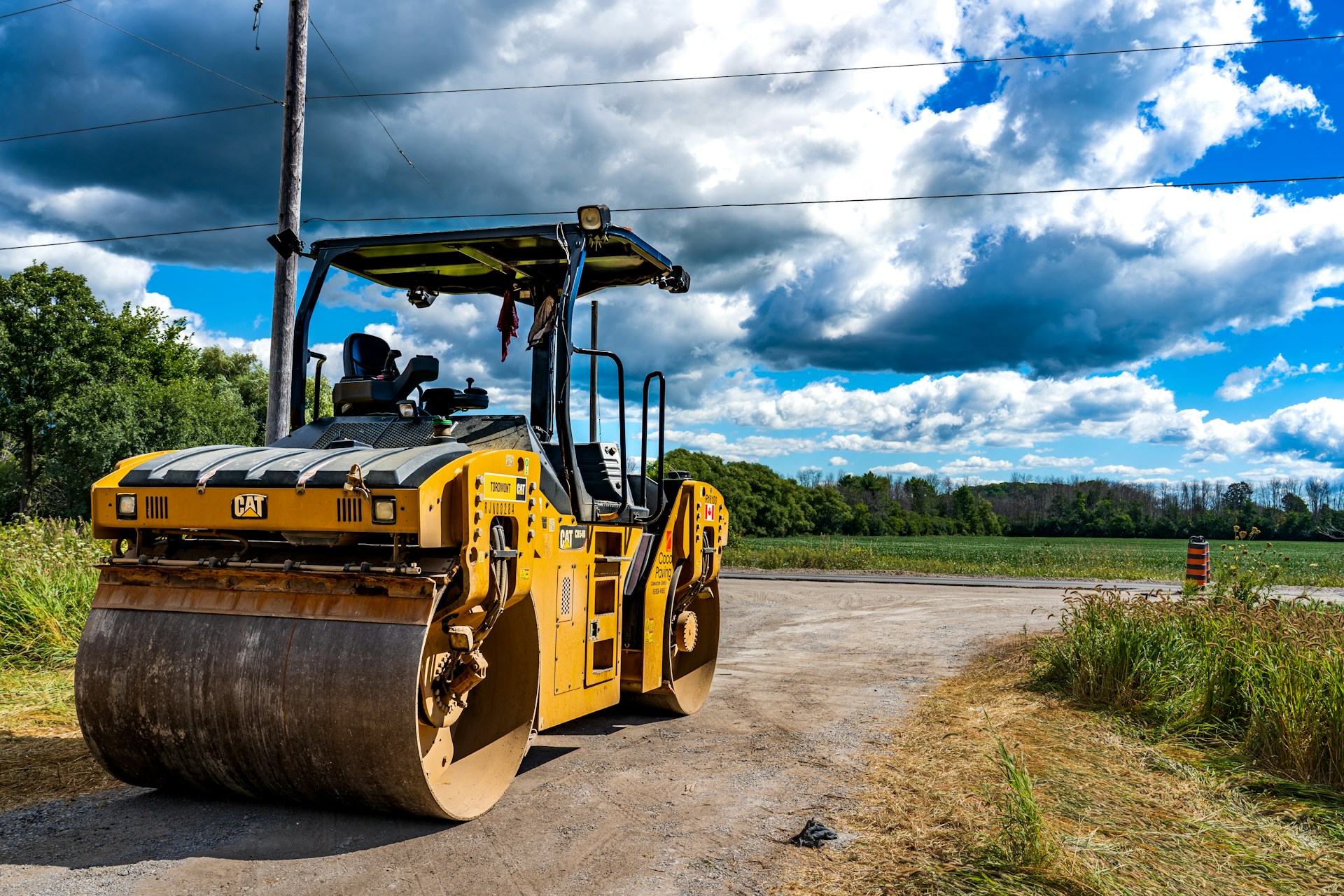
In our slight town, my father might’ve been the best gambler. He could bluff, sure, but more often than not he held the best hand. At one point his friend Buck had a full house, but he’d run out of chips. Buck owned some kind of asphalt business. With kings over fours, he threw in his steamroller. My father called, throwing in his chips and a Volkswagen Bug. If my mother’d known of this occasion she’d’ve probably requested a divorce. This was a game of seven-card stud. Everyone else folded. I was there, in our den, circling the table and helping myself to pretzels. My father had two jacks showing, but he also had two jacks in the hole. Four of a kind beats a full-house, of course. I’ll give Buck this: He delivered the steamroller the following morning. We lived about five miles apart, so he must’ve left in the middle of the night. My father sold real estate, or at least he bought property and then turned it over as quickly as possible. He didn’t need a steamroller. He used the thing only to run over beer cans in the driveway, until it came time for me to take my driver’s license test at age sixteen.
Like I said, Burburg didn’t hold a thousand residents. Kids my age took their driver’s tests using tractors, dump trucks, tow trucks, garbage trucks, hearses, the occasional homemade dune buggy. “I’m not going to take the test driving that old steamroller,” I said to my father. “Let me use the Volkswagen, at least.” His other car was an old 1963 Cadillac with fins on the back end.
Rightly, my father said, “You can’t drive the VW because you don’t know how to shift gears. And you’ll never be able to pass the parallel parking part of the test in the Caddy.”
So I left our house one afternoon after tenth grade, and got to the DMV right before they closed. Man, the driver’s test guy wasn’t happy. He had to stand upright behind me. Me, I used hand signals for left and right turn, then held my left arm down to show that I slowed. Basically—the steamroller didn’t ever go more than five miles an hour—I drove the entire time with one hand on the steering wheel and the other pointing toward the road. Sometimes I waved traffic around me.
I don’t know how long it took to finally parallel park, but I do know dusk set in, and the man conducting me wasn’t happy. On about the fortieth time I wrenched the steering wheel all the way to the left he said, “Just pull out. You did good enough.”
I thought about this guy a lot in college, when I was with my girlfriend.
So I got my Class G license, then almost got rear-ended a hundred times going home, seeing as I didn’t have taillights. I don’t know how many kids my age driving hay balers sped right up to me at ten miles an hour, then yelled out “Beep, beep, beep” because they, too, didn’t have horns.
“I don’t believe any of that story, Lamar,” my wife Valia said to me when I told it to her, only last week. “I know you never come close to driving the speed limit when we’re out on the interstate, but I don’t believe the steamroller story. No way.”
We live near the state capital. We live in the same county as Burburg, but in another tiny place way on the other side. It might even be smaller than Burburg, a place called Mangle. The road out front of our house, here in the country, is dirt. Both of us drive a mile before hitting asphalt, then heading out to our less-than-exciting regular jobs in government, which we’ll probably lose for no reasonable reason. She’s been to Burburg, but never paid attention, I guess.
I said, “When my parents died, I sold the steamroller back to Buck for a dollar. I felt as though I owed it to him, you know.”
Valia and I married each other in our early-thirties. We plain went to the courthouse. Both of us were only children, and her parents died in a tragic boating accident when she and I were in college together. My parents died one right after the other, of heart attacks, just when I felt proud for getting a job at the Department of Transportation, of all places. So Valia and I didn’t need any kind of wedding registry. Between us, we owned silverware, China, toasters, and whatever else people request for their marriages. We had plenty of mid-century furniture, wine glasses, blenders, ashtrays, yellow ware bowls, tools, pots, pans, and towels. We lived together for a number of years and then—thinking wrongly that it would be better to file to the IRS together instead of separately—we went down and had a woman named Gladys witness our marriage vows.
Valia works for the Department of Education. Among other things, she’s in charge of trying to convince people that even though our high school seniors read on a fifth-grade level, they’re able to thrive in vocational schools and technical colleges afterward. It’s probably a thankless job, just like mine trying to convince everyone that we don’t have the most potholes in the nation. It’s kind of spilled over into our marriage: I’ve noticed that I say, “We don’t have as many dirty dishes in the sink as most families,” et cetera. She says, “Our grass isn’t as high as our neighbors.” On and on. “It’s not like pine needles are flowing over the gutters,” “At least one headlight’s working,” “More than half of the rake’s prongs are intact,” “I just checked with ancestry.com and only one-quarter of my relatives are ex-felons.”
“It’s true about my driver’s test,” I said to Valia. “I can’t believe I’ve never told you this story.”
She said, “Maybe it’s because you usually don’t lie.”
I realized that I’d probably not told Valia about my driver’s test because I still underwent painful flashbacks about taking my first date ever out on the steam roller. My date—she’s asked, over the years, not to mention her real name. I guess she doesn’t want it coming back to her husband, who’s a highway patrolman, or her neighbor who works for the Humane Society. Anyway, she sat on my lap as I drove the steam roller, which, of course, distracted me. A drive-in movie theatre operated not far from where we all lived, just outside the town limits, on highway 378, not far from the flea market. Well, the drive-in operated as the site of the flea market on Saturday and Sunday mornings. On the way there I ran over a cat, then a snake. My date shifted her weight on my lap, and I jerked the steering wheel so hard to the right that I obliterated somebody’s mailbox. Of course it had gotten dark, so when the movie ended I couldn’t see very well. I waited for everyone else to leave in their regular cars and tractors. I crushed a number of drive-in speakers along the way with the 6,000 pound drum on front—listen, I called it a steamroller, but of course it didn’t run on steam. I guess the technical term by this time was a road roller, or compaction roller. Anyway, the business end of it weighed three tons. For what it’s worth, there are drums out there that weigh more than 14,000 pounds. I think those are made in England or some place. So it would actually be 6,350 kilograms, which doesn’t sound as big, at least to me.
When I dropped off my date her parents sat out on the front porch, I guess waiting, so I didn’t even get to kiss her. But they yelled out thanks for tamping down their gravel driveway.
The movie happened to be Vanishing Point, which depicted a number of car chases with which I couldn’t relate.
Because I never owned a regular car, I was forced to attend a university that bragged about the town’s on-time bus system. I’d done better than average in school, but not so great that I received any major scholarships. I got a $250 award from the Burburg Lions Club, and a hundred dollars from the Rotarians. There were no other civic organizations in town, no Civitans, Friends of the Library, Kiwanis, or Junior League. In a way, my dad’s friend Buck put me through college, seeing as he kept losing at poker. All of this is to say, I didn’t own my own car until after I’d gotten a job at the Department of Transportation. You’d think that I would’ve gotten a job as a highway maintenance worker deft in heavy equipment, but, no, with my anthropology degree and a minor in political science—plus my ability to read at an appropriate level—I got tabbed for a position as an Associate OSHA officer. My job entailed plain showing up unannounced at work sites, or shops and yards, and inspecting for environmental regulations. I got a pick-up truck to use. No one ever asked me if I had a real drivers license.
In case I’m not being clear, OSHA stands for Occupational Safety and Health Administration. It’s been around since 1971, during Nixon’s fiasco.
When I showed up for inspections, people pretty much scattered, or didn’t make eye contact. I wasn’t popular, is what I’m saying.
By this time Valia and I lived together already. Until I saved up enough money to put down some payment for a used Toyota, she took me to work, which wasn’t that far from her office at the Department of Education. She knew how troubled I felt by people avoiding me. She said things like, “Bring up sports. These guys like to talk sports,” or “Bring up Pabst Blue Ribbon. These guys like to talk about beer,” or “Carry around a pouch of chewing tobacco and offer it,” or “Talk about what I did to you last night in bed so they know you like women.”
She said, “Think of how being an Associate OSHA officer can only lead you to higher positions.” I didn’t mention how they didn’t exist, unless I ran for some kind of political post.
The young woman I took to see Vanishing Point’s name was Carla Wright. Now it’s Carla Wright Turner. I know I promised that I’d never mention her name in public or private. But she’s running for County Council, and one of her main campaign promises is to get the tractors, hay balers, homemade dune buggies, dump trucks, garbage trucks, hearses, and steam rollers off the roads when not being used in an official capacity. People just can’t joyride in these vehicles, that’s what Carla believes.
Carla Wright was also Junior Miss Burburg at one time. She’s using that “Wright Turner” name as if it connoted “right turn,” meaning she thinks we all need to be more conservative here in the county. I feel the opposite. During Vanishing Point, the main character Kowalski—played by the fine actor Barry Newman—speeds from Denver to San Francisco, never pulling over for the cops that chased him. I never asked, but I imagine that Carla Wright Turner, married to a highway patrolman, didn’t pull for the character Kowalski. If you ask me, people who don’t pull for the underdog deserve a special ring in Hades.
I don’t talk about books like The Divine Comedy with the men and women whose work I need to inspect.
Later on in life I’ll probably tell this story differently, if I tell it at all. I know that what I’m about to divulge seems unlikely, beyond coincidence. Like I’ve mentioned, Valia worked for the Department of Education, and her “area of expertise,” I guess, involved the vocational school network across the state. Students who couldn’t quite grasp such things as Algebra 1, or Civics, or Grammar, or Biology 1 might be prodded—by a qualified high school counselor—to veer over to the vocational school, usually in a building or buildings on the periphery of the actual school, probably on the other side of the school bus lot and smoking area. Here, hard-working and determined not-qualified-for-required-foreign-languages teenagers might opt to study welding, carpentry, small engine repair, automobile maintenance, cosmetology, culinary arts, or agriculture.
And heavy equipment training.
So Valia had an in. The director of every vocational school in the state knew her, and maybe tipped her off before each annual auction of damaged and/or obsolete items used in these programs. I’m talking old arc welders, electric drills, blenders, shears, hair dryers, et cetera. It just so happened that, right after I admitted to her that I took my drivers test atop a steam roller—which she didn’t believe, and wondered what took me so long to admit—that one of those auctions took place and, sure enough, a Caterpillar vibratory roller went up for sale, no one wanted it, no one bid against Valia, and—according to her—she got the thing, including delivery to our house—for less than a thousand dollars.
I came home from work and found her seated atop the road roller. She didn’t smile. She didn’t say, “I thought this might bring back some happy memories for you. Happy early birthday,” or something like that. No, she said, “I want to see you drive this thing, Lamar. I want to see you parallel park this here Caterpillar. I bet you can’t. I bet you a thousand dollars.”
I thought, Why is it that every used steam roller that comes into my life depends upon a bet?
In my defense, it didn’t look like the old one my father won off of Buck in the poker game. The roller in front looked about the same, but that was it. This one had an actual cab up top to shield the driver from rain and sun. I said, “Are you insane?”
Valia hopped down. She said, “I think you lied to me. And if you lied to me about that, I’m of the belief that, throughout our marriage, you’ve probably been lying about other things.”
Listen, this wasn’t the wife I knew. Had she been spending her lunch hour watching those shows, like Maury Povich and Jerry Springer? Did they have cable TV in their break room, with those channels that aired old talk shows of a sort?
I didn’t cuss. I climbed aboard. First off, I couldn’t even find an ignition. I said, “How do you start it up?”
“That’s what I thought,” Valia said. She shoved me aside when I hopped down, twisting my right ankle sideways. She ascended. I don’t know what she did to start it up, but it roared into life. She didn’t look down at me standing there. No, she rolled down our driveway, then took a left on the dirt road that led to highway 501. I followed behind her for a while, then stopped because of the twinge.
I’d come across the notion of “projecting,” somewhere. Maybe that’s what she did. Maybe Valia cheated on me, that she kept a paramour over there at the Department of Education. I stood in the road until Valia became a slight dot on the horizon, barely visible, packing that dirt road harder than it had ever been.

