

Frankie Dorman and I had just met him in the field earlier that afternoon. Mid-August. Two weeks before school, and a week before we were to start football double sessions. He had come down the hill to the field from the school on the other side of the woods. Walking in long strides, his chest jutted forward like a man on a mission. He wore bell-bottom jeans and cowboy boots. Heavy clothes for such a hot day. Dorman and I sat on the bench of the baseball diamond smoking cigarettes in the hot sun. It was that kind of summer and we were bored.
The field was on the other side of a small stretch of woods which separated it from my parents’ yard and my father’s garden, and the baseball diamond was just used for farm league kids and hadn’t been really kept up in years. No backstop and no real pitcher’s mound, the grass closing in on all sides, and home plate buried deep enough that kids wouldn’t waste the energy trying to dig it up when they came down to party.
His real name was Tony, but he told us to call him Buck. He had bright red hair, orange really—looking dyed—a little bit of a mustache and goatee. A leather vest and wallet on chain, a tattoo on his neck, and an earring. One gold loop. He looked a little like a pirate. He must of been in his late twenties, maybe even thirty, and Dorman and I were about to start our sophomore year of high school.
Buck grimaced a little as he hitched up the legs of his jeans and took a seat on the bench beside us.
“These boots cost me seventy-five dollars, soldiers.” He pulled a bottle from a bag, unscrewed the top, and took long pull before grimacing again, and shaking his head theatrically as he admired the label.
“There’s only one rose,” he said, “And that’s the Wild Irish one.”
Dorman and I just looked at him. He spread his knees wide, and tilted his head back, his eyes shut to the sun. “I’ve been working on this tan all summer,” he said. “I’m the only Italian I know who can’t get a tan.” He glanced about the field. “These used to be my old stomping grounds, boys. A lot of memories down here. A lot of memories.”
He finished the bottle and made a sound of satisfaction, before studying it, and then pitching it, spinning neck over bottom, into the center of the diamond. He lit a cigarette and rolled up his sleeve a bit, exposing a tattoo of a cartoonish woman—wide hips, an incredibly small waist, and big breasts barely covered by a low-cut tank top. She had one eye shut as if winking, had her lips pursed in a kiss, and she wore a sailor’s cap at an angle. He glanced down at the tattoo himself and then ran his fingers gently over the picture.
“Her name was Jessaline. And I loved her,” he said, shutting his eyes, grimacing, as if the pain were too much. “God, I loved her. That fucking bitch!”
Dorman looked at the tattoo. His eyes were alight, and he looked amused, suppressing a smile. “She was in the Navy?”
“I was in the Navy. And she was in the USO.” Buck belched, placing both hands on his knees. “Came over on a helicopter with Bob Hope, and um… Soupy Sales or some mother fucker like that and loved me. Loved me up!” he said slapping my knee.
“You were in a war?” I asked.
He looked at me, baring his yellow teeth in the bright sun. The sun felt hotter now, and a sweat had broken on his brow. “I was in three of the mother fuckers.”
“You don’t look old enough to have been in three wars; you still look like a baby.” I knew I was being a wise ass, but I was hoping to get a laugh out of Dorman. I loved to get laughs out of Dorman. We had been best friends for five or six years. Played football together and were both in the honors program.
He didn’t do as well in school as I did, but despite the cigarettes, he was the best athlete in our grade, captain of three sports, and girls all loved him. And I envied that—something I always wished I could be. Despite being on the football team, I was never much of an athlete.
But there was one thing I was pretty good at, and that was making him laugh. There were a few guys like Buck, his age, who wandered down the field like this once in a while, all has beens with no real histories, and definitely no futures.
Our town was small, middle-class and suburban, not a lot of super wealth, but also not a ton of poverty or crime, and so when a guy like Buck strolled down the street people noticed. And so far the day had been uneventful, so I really think we just wanted to have a little fun with him. It had been a long summer, and summer was fading, the grass of the field yellow, brittle and dead, and the diamond nothing but dust. Heat ripples in the air.
Buck leaned towards me and slapped my shoulder. “Covert operations. Uncle Sam put the big boys in my hands and sent me all over the world! I’ve killed more people than I’d care to admit, gentlemen. Innocent people, and soldiers and spys, all casualties, and all in the name of the Red, White and Blue. To keep you safe.” He looked into the distance and shook his head a bit. “More than I’d care to admit,” he said again.
“But you just did,” said Dorman.
“And I hope Jessaline didn’t mind you being a murderer, and all,” I said. I could hear Dorman chuckling beside me and could feel a fluttering in my chest. A rush of sorts. We both came from a big families, and so were used to giving it and taking it ourselves. I had six siblings, but Dorman had something like twelve or thirteen of them. I don’t even know. He had a much older brother who was in the service, another brother was Ivy League, all scholastic and an athlete himself, and a third brother was in prison, but I wasn’t clear on why. Dorman had bunch of sisters, too, one or two pretty successful, one was a nurse, I think, and one lived in a crack shack in Brockton, and some just spouted out more kids. And then there was Dorman. All in all, it was quite a mix. My own family was a little more homogenous. You went to school, went to Mass every Sunday, whether you liked it or not, made the sacraments, blew out birthday candles each year on your day, finished high school and went to college, and that was that—there was no arguing other options.
“That woman would’ve loved me if I had emptied six rounds into the Pope and dragged his body behind my chariot through Saint Thomas’s Square,” Buck said now.
“You’ll go to hell for talking that way,” I said, “You and your chariot. And where the hell is Saint Thomas’s Square?”
“It’s in Rome,” said Dorman. “The Vatican.”
Buck tapped his finger against his temple. “He’s smarter than you, Corporal, smarter than you.”
“He never finished second grade,” I said.
Buck looked at me with one eye shut, focusing. “Remember Corporal, smart guys don’t stay too smart, not for long, when they step out of line around their superiors, Corporal. Now I think you should remember that. The CIA taught old Buck here to dispatch and dispose of a body without a trace using nothing more than a short tube of hose and Zippo lighter. All within ten minutes time. No trace. Do we understand each other, Corporal?”
I nodded a bit, suppressing a laugh myself, but also a little bit nervous. He was a lot older, and considerably bigger. And I was betting he was a hell of a lot stronger—if he could get hold of me anyway. After a moment, he pulled his wallet–still attached to the chain–out of his back pocket, opened it, and sighed. “It looks like that young lass just may have got the best of me last night after she handcuffed me to the bed. I had two fifties, six tens, five and four ones, and now it appears I am a bit short.”
“How much you got?” I asked.
“Not a thing, Corporal. I believe she left me without a dime. If I had known I was paying her for her work,” he bared his teeth again, “And a professional, she was. I would have spent a bit more time browsing the menu if you know what I’m saying.”
“I know what you’re saying,” I said.
“He visits prostitutes all the time,” said Dorman.
Buck took a deep breath. ‘Now. Let’s get down to the business at hand. I don’t suppose you soldiers could spare a few dollars which I will return with fifteen percent interest come next Tuesday. Specifically, two dollars and seventy-five cents should just do the trick.”
We didn’t have $2.75, but I had a dollar bill, and Dorman had a few nickels and two pennies, so we gave that to him. He stretched the dollar bill out and stared at it a moment, as if thinking, or willing it to multiply, and then he put his hands on his thighs and rose up off the bench. “Where there is a will, there is a way,” he said. “And as MacArthur said—’I shall return.’”
We watched him go, walking with long strides again, but just slightly off balance, as he passed the posts at the end of the road with the wire running between to keep cars from driving down the field and stone block from what had been a bubbler when I was small. I noticed now he had bald spot on the crown of his head, burnt red from the sun. The sun had breached the tops of the trees in the west, and the heat was beginning to subside. In the distance, a couple of kids our age were bouncing a basketball on the other side of the field in the shade of a large apple tree on the outskirts of the small swamp with the long cat tails and clumps of marsh grass.
When I was small, the town would flood the swamp in the winter so kids could skate once it froze over. It had been several years since they had done that though, and once while watching farm league baseball game I had heard one adult say to another that they had stopped doing it to keep out the punks. A shame, the man had said, arms folded and baseball cap pulled down tight above his eyes, and then he had turned and spit a wad of tobacco on the lawn. “Too many of them.”
I hadn’t noticed the kids over at the court come down, so they must’ve done so while we were talking to Buck, distracted. One looked like Pumpkinhead Fred—bad, crooked teeth and skinny as a rail, his clothes much too big—and one looked like The Outlaw Marlon Shores. Both Pumpkinhead and the Outlaw were a year behind us, but I think the Outlaw had stayed back at least once or twice. He wore a Dutch boy hair cut, bangs straight across, and was pretty jacked up—liked to lift weights, and had biceps as big as grapefruits. He always wore a tight plain red pocket T-shirts, nothing more, summer or winter. Now he started dribbling the basketball with both hands. He passed it to Pumpkinhead, and Pumpkinhead did a lay up. Chances were good, since it was still summer, I thought, that there would be a few more kids down within the hour, and maybe enough for a game later on.
Dorman spit into the dust. “Do you think he’s coming back?”
“Probably depends on whether the cops spot him or how far he has to walk to get the rest of that two dollars and seventy-five cents.”
“What does that buy him?”
“Another bottle of Wild Irish Rose, I’m guessing. That stuff is almost as bad as Mad Dog 20/20. Remember that time we drank Mad Dog?”
Dorman nodded. “I puked for close to a day.”
I laughed. “I crawled home for about a mile in the snow and nearly froze to death. Then I was grounded for two weeks.”
“That’s right, I remember that,” Dorman said. “You’d think he’d be able to handle more than we could, though. My old man doesn’t go sideways until he’s drank a twelve pack of Schlitz and half a handle of Old Granddad. Sometimes more.”
“Your old man probably weights three hundred and fifty pounds though,” I said.
Dorman spit. “Three seventy-five. Fat Bastard”
A couple hours later, the court was hopping, and there was a radio blaring in the corner of the pavement. I had gone home for dinner—my mother had made BLTs—my younger sister mangled her sandwich as she ate, pieces of bread and tomato dropping to her plate as she chewed, and my little brother, dressed up like Rambo, was complaining about upcoming soccer practice. I punched him once in the arm, and he snarled at me and told me he hated me before I headed back out, my mother reminding me that despite being summer, it was still a weeknight.
Buck had apparently come back from his quest for the Wild Irish Rose, and now sat flat on his ass in the corner of the court as I came out of the trees and back into the field. There were already enough kids for a five-on-five, a few of them more into it than the others.
Toad Davis, short and hunched with big feet and big hands—he looked like Toad from the Frog and Toad books–was all over the court going in for one layup after the other, and as I sat down, Goose Arnold—all arms and legs, a leather vest, shirtless beneath, an earring in his left ear and a bandana tight around his head, longish wavy hair, parted in the middle, a cigarette dangling from his lips—was trying to block him out. Toad despite his stature, was pretty good though, and he went right under and up.
Dorman was playing, too, his hair clinging to his face with sweat, and he was dominating the game. He rarely went home for supper, and I got the impression that it was even rarer that anything was on the table. Buck stood, staggering, and wandered over to the radio. Leaned over to change the station. Spinning the dial, static crackling through the dusk. The air felt electric and warm, the way it only can in the evening in late summer, when there’s always a possibility of a storm coming down from the sky. The woods on the other side of the field were already blurring into the haze of dusk, and the school at the top of the hill gone from view. That afternoon, sitting on the bench with Dorman in the bright sunshine, the field empty, already seemed like days, if not weeks, ago, and I wasn’t exactly sure why.
Goose Arnold turned to Buck. “Don’t touch my fuckin radio,” he said with a stutter on the second word. He stuttered a lot, and it made him angry. He carried the boombox up on his shoulder, walking all over town. He was older than us, out of high school, and was always trying to pick up the girls our age. Luring them into his car with coke. The radio had been on 94.5, WCOZ. It was the only station that Goose Arnold allowed on it if he didn’t have a new cassette tape he was playing. Usually Rush, or something like that. Tom Sawyer. The boombox was state of the art.
But Buck either didn’t hear him or didn’t care, and Goose Arnold snapped again. “I said don’t touch my fucking radio!” Goose stormed away from the game and went over and picked up the boombox. “You have no business touching this,” he stuttered. “I say don’t touch it, that means don’t fucking touch. I don’t care how shitoed you are.”
The game had stopped for a minute. Buck leaning forward, his legs slightly spread and bent at the knee to help keep his balance, shut one eye to focus. Then he pushed his tongue between his lips and raspberried Goose.
In the corner of the court, not playing, stood a kid who had just started coming down to the field a few weeks earlier. Fat Ed. I didn’t know his full name, or even really how old he was. He either wasn’t from our town or had just moved there—I forgot which. He was kinda fat, but not out of control. He did have a big belly, and his hair was long, and stringy and halfway down his back. He wore a bandana wrapped around his head like a sweatband.
Steel-toe boots and a Black Sabbath belt buckle. A face spotted with acne. He was smoking a cigarette and drinking a beer and watching Buck. He didn’t play basketball on the court, and I couldn’t picture him trying. He had come down with Trevor, a.k.a, Bunny McFarland. Bunny looked like a Bunny, albeit a dirty little one. A small button nose, and overlapping buck teeth, and stringy hair, parted on the side, down to his shoulders. McFarland was my mother’s maiden name, and because of that Bunny said we were practically like brothers. He dealt a lot of pot, and was always sparking a joint. Bunny had just moved to Willington from the crumbling once famous shoe city next door, full of tales of whores and drug busts, and scaling collapsing, rusting fire escapes to break into third floor apartments with no bars on the windows.
“You’ve never done a B&E?” he asked me once. “You’ve got to be kidding? What the fuck?” he dragged on the joint we were sharing.
“That’s where the money is at, Max. Big Dollars.” Now Bunny lived with his mother and three older brothers in a two-bedroom apartment in an old splintering A frame across the street from the Island Grove Pond. He had gone to school for a month or so the year before after moving into town, but quickly began skipping, and then as soon as he turned sixteen, he quit all together. “I got permission,” he said, “my mother’s no fool. Why waste time like that? I can just get my G.E.D.”
“I thought it was G.I.D.,” I had said.
Bunny looked at me questioningly. “G.I.D, what’s that?”
“General Imbecile’s Diploma.”
“That’s bullshit, Max,” he snapped, “A G.E.D. is all you need. And you know it. You think you’re better than everybody, but I got news for you—you’re not. Why waste your time in school? It’s just for retards. Smart people want to get one with their lives. I’m going to work and make some dollars. My brother Mike promised me he’s going to get me a job car detailing next month.” He dragged on the joint again, the side canoeing as he did.
“That’s where all the money is at—car detailing. He quit school before he was even sixteen, and now he’s rolling in the dough. Loaded. He’s got so much money he just leaves piles of cash hanging around the house in candy dishes. Any of us can take some whenever we want.”
His brother Mike was much older, so I almost asked why he was still living at home at twenty-seven then, sharing a room with his other three brothers, but I decided to let it go, kept my mouth shut. Now Bunny was at halfcourt, playing guard, the ball beneath his fingers when Buck scurried out, stole the ball from him, and started dribbling it, stooped over, and concentrating hard like a first or second grade kid who had been thrown a basketball for the first time. He raised the ball and took a shot, but it didn’t go anywhere near the net. Dorman was catching his breath, his hands on his hips.
Buck tried to scurry to get his own rebound, but Toad beat him to it, swiping the ball away, smiling, one canine tooth biting down upon his lower lip.
“That’s it for your Kemoosabe. Back to the minors.” Buck tried to steal the ball back from him, but Toad was too fast. He passed it to Reggie Finneran who then hit Goose going in for the layup. Goose got his own rebound, dribbling. Buck staggered a little more, and then straightened up and belched. “Get him off the fucking court,” Goose said, “this is getting ridiculous. The dude is fucking wasted. Fucking moron.”
“Easy Clyde,” said Toad, “he’s not a bad egg—he’s just had one too many Shirley Temples, haven’t you pal?” he said to Buck, looking on the verge of laughter, dribbling the ball from left hand to right.
“Shirley Temple,” Buck slurred, grinning. “I ate her pussy.” He flicked his tongue out like a snakes and then began making slurping noises.
“You can go to jail for that shit,” the Outlaw said. Someone had found a baseball bat, leftover by the Little League kids, in the tall grass, and the Outlaw was picking apples, half rotten, up off the grass and hitting them across the field. “It’s disgusting.”
“For eating Shirley Temple?” Toad asked.
“Yah,” the Outlaw said. “She’s a little kid.”
“Dude,” said Toad, dribbling the ball again, “She’s like sixty-five years old. She’s as old as my grandmother.”
“That must be a different one,” the Outlaw said.
The sun had broken in reds just below the tree line. More kids had shown up by now, the music louder—“I’ve Seen All Good People” playing on the boombox—and a few had brought down six packs of good beer, Heineken or Molson, and some bringing suitcases of Bud. Someone else had left a big bottle of Southern Comfort near one of the suitcases, and there was a bottle of no name Vodka we started passing both around. The entire field was spinning a little for me, beginning to fade into shadows. In the spring, the little kids, the farm league baseball teams—second and third graders—would be out here through dusk, but now their season was long over.
I remembered when I was very small, maybe three or four, coming out here on nights like this to play football with the big family of boys who lived across the street. There was a lot of them, going from age twenty-five or twenty-six to the youngest who was only two years older than me. They lived in old farmhouse, a few even sleeping in the barn, and they had a couple ponies, a number of ducks and chickens, two sheep, and a couple of big dogs—mastiffs—that were nearly as big as the ponies. On weekends and on weekdays in the summer, you would see their mother running about the yard, chasing one of them or looking for others, trying to get them to do their chores. And sometimes some of the boys would climb out the window and hide of the roof, happily singing, freedom, after their mother ran back inside. They were a nice family, all great athletes most of whom excelled in school, and despite how small I was they would grab me and my older brother Stephen on their way to the field, through our backyard, to play football, one of the older boys carrying me. I didn’t know how to play football back then, but I knew if I got the ball I was supposed to take it and run, and that was fun enough for me. And then sometimes once the dark just about settled, just about like this, their father would drive down the field in his pickup truck and pick us all up and drive us home. Sometimes stopping at EZ Park to get us ice cream or a Slush Puppie, or sometimes a grape soda. It was gray in my memory, but it was still there, and I thought about it now, and how things had changed. I missed those days.
I looked over at Buck, and he was now lying flat on his back in the middle of the court, presumably out cold. He had sat down for a minute to catch his breath, and then that was it. Goose and Reggie each grabbed an arm and dragged him to the grass, Buck’s head lagging to the right as they did and making him look like a fallen soldier.
“Easy with him,” Toad said, “he’s going to feel rough enough when he wakes up as it is.”
“Dude’s a fuckin loser.” The Outlaw hit another apple with the bat, the pieces splintering in mid-air, and he spit.
“He’s probably all hopped up on junk.”
“Does anyone know where he lives?” Goose asked.
“I think he lives up on the Rockland line, maybe just over,” said Toad. “Near Dairy Queen.”
“Fuckin dirt bag,” Goose said.
“My brother Paul knows him,” said Mr. Grimes. “He used to hang out with him.” Mr. Grimes had just arrived a few minutes before, a twelve pack of Milwaukee’s Best under arm, and his hair looking slick like he had just stepped out of the shower. He was the oldest of all of us, could already buy beer. He wore a T-shirt with Elmer Fudd on the front getting what looked to be a blowjob from a long-haired woman with an hourglass figure who had her back turned so you couldn’t see her face, or just exactly what she was doing. Fudd was blushing, though, sleepy eyed, and had a caption saying, “Shhh….be berry, berry quiet.”
Mr. Grimes loved that T-shirt and wore it all the time. It was already threadbare and looked as if it hadn’t seen a washing in a few weeks or more. He wore his leather over it, summer or winter, and he had been struggling to grow a mustache since I first met him three or four years before. Mr. Grimes had almost managed to graduate high school a few years before—just nine more credits to go, he was always saying-and was now working full time as a custodian at a metal painting shop over on the Brockton line. “You gotta start at the bottom, my friend,” he had told me, “and learn the trade and work your way up. Two or three years from now, I figure I’ll have enough socked away to open a shop of my own. And then the big dollars start rolling in. Real estate. Cruises to the Bahamas, drinking cocktails with little umbrellas, all that shit. I already bought half a dozen flowered shirts.”
Now he cracked a beer. “I think my brother was a year or two ahead of him in school,” he continued about Buck. “They’re both field alumni. They were punching the clock on weekends down here back when we were still watching Scooby Doo.”
“I don’t buy that shit,” said Goose. “The dude’s a fucking loser. Your brother, sure, not this moron.”
“All true,” said Mr. Grimes. “They used to have rumbles with the jocks down here all the time. They didn’t fuck around back then. Chains and bats. Whatever you could get your hands on. Pow! Wham!”
“Must be why he’s brain dead.” Goose said. He laughed, making the honking noise which had landed him his name. “Dude can’t be fucking with our game though.”
Fat Ed had walked up to EZ Park, and was now coming back carrying a brown bag in his arm.
Ed pulled some Funyuns and began to nibble at them, looking at Buck. Buck was lying on his back again, his eyes half open, and one leg up. Ed put the bag down beside him and with a cigarette dangling from his lips, pulled out a can of shaving cream. He leaned over and gave Buck a beard. Buck wiped at the beard but only succeeded in covering the rest of his face, the cream now in his eyes. He tried to sit up.
“We should coronate him,” I said.
“Coronate him?” Goose said. “What the fuck does that mean?”
“Make him King of the Field,” I said.
“Ah ha,” said Mr. Grimes. “King Buck.”
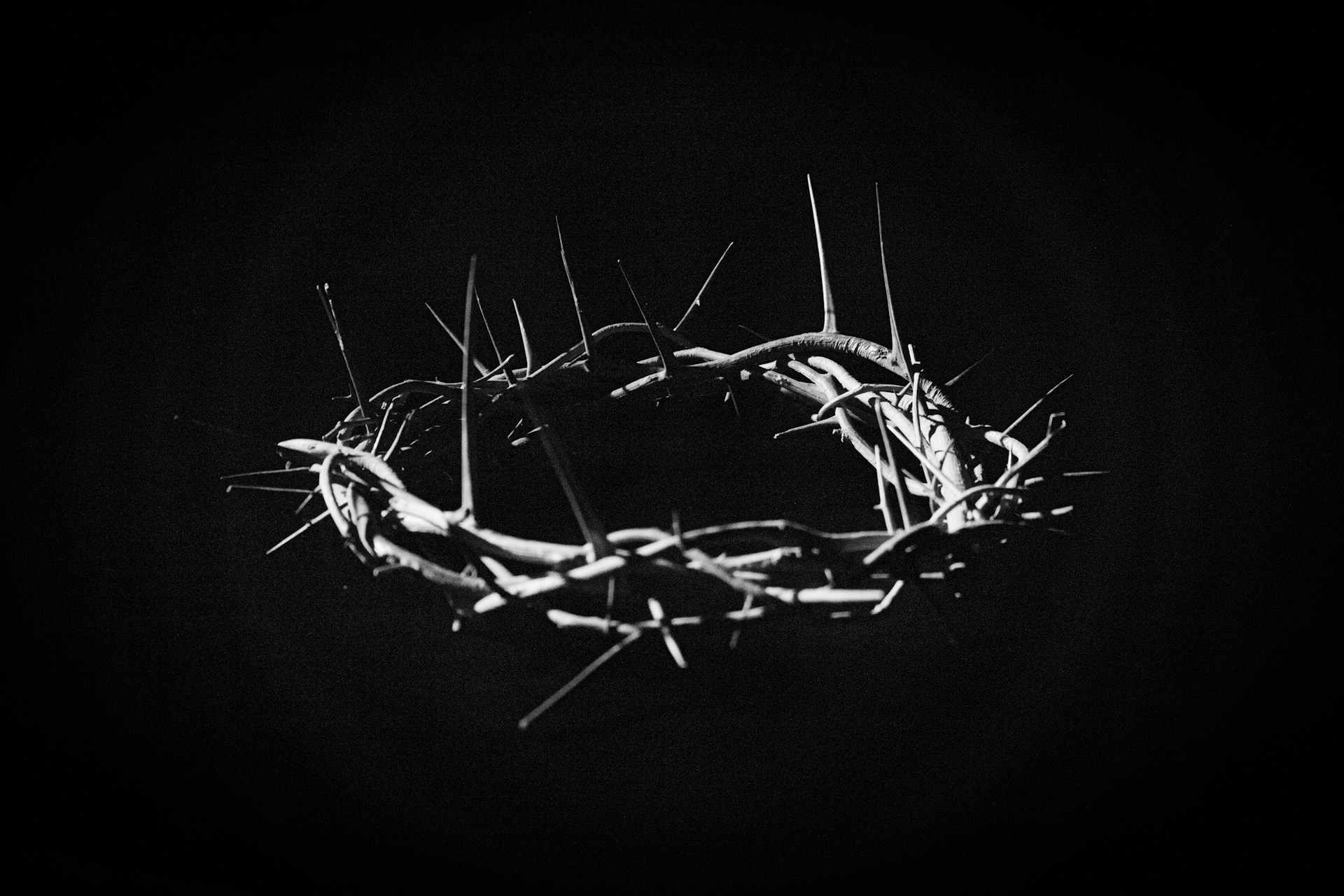
“Ha, fuck that,” Goose said. “King of the fuckin zeros, you mean.” He lit a cigarette. “That dude ain’t my king,” but even before he finished the words, Mr. Grimes had his pocketknife out and was at the edge of the swamp sawing away at a thorn bush branch. He began to fold it into a ring, a crown. Pricked himself once, a drop of blood dropping to the lawn.
“Ouch,” he said, sticking his finger in his mouth, and suppressing a smile, he finished the crown. “Too bad it doesn’t have any roses on it; old Buck would be looking like the guy on the Grateful Dead album covers.
The whiskey bottle sat beside the radio, just a little over an inch left. Mr. Grimes had given me and Dorman a Milwaukee’s Best, and Toad had given us a Molsen. The beer looking that much better in the cold green bottle.
The game had ended, but Dorman was still taking a shots. I remembered when we were really little he would go up to the school at the top of the hill and shoot for hours at a time. I remembered his jeans being much too big for him, holes in the knees before that was styling, and a faded T-shirt with Dartmouth written across the front. His brother had gone to Dartmouth, full scholarship, and Frankie said he planned on going there, too. So he had to shoot. Had to practice, and then who knew? NBA maybe,” he said smiling. “But I’ll probably be too friggin short.”
“You have class, Toad,” I said holding up the Molsen. “You drink the good stuff.”
“I’m all about class baby.” Dorman passed Toad the ball, and he shot. Hit. “Upscale!” The ball landed between Buck’s splayed legs and bounced away. Buck moaned a little, and lifted his head. Reggie passed Frankie a joint, and then he and the Outlaw began arguing with Bunny over who would kick who’s ass in fight—Bruce Lee or Sylvester Stallone.
“Stallone would fucking kill him,” added Bunny. “He’d go all fuckin Rambo on him.”
The Outlaw had his arms folded tight across his chest. “Na-ah. No way. Bruce Lee had skill.
He could do all sorts of shit.
“Bruce Lee was a little Chinese pussy,” said Bunny.
“Na-ah,” said the Outlaw. “Just because he wasn’t that big, it doesn’t make him a pussy. I know plenty of little guys who are tough as fuck.” He spit. “They’re wiry and mean.”
“Stallone would still kill him.” Reggie dropped his voice a few notches.
“’I’m coming to get yoooouuuuu….”
The Outlaw shifted his feet back and forth.
“If Bruce got his nun chucks out he would fuck him up. I know this shit, I’ve been taking martial arts classes since I was like seven years old. My father wanted me to learn to defend myself against my brother.”
“So he bought you nun chucks?” I asked. “Seriously? To hit your brother?”
“Yah. He wanted me to protect myself. He knew I wasn’t going to be wicked tall or any shit like that.”
“No, way,” I said.
“Yah, he did,” said the Outlaw.
Pumpkinhead giggled a little, drew on his cigarette. “He carries them on him.”
“Get out of here,” said Dorman.
Everyone had stopped shooting except for Dorman, who was at the far side of the court, away from Buck, grabbing his own rebounds and going in for lay ups. He had dominated the game, but now kept going.
The Outlaw smiled again. His canine teeth were long, the right one longer than the one on the left, overlapping his lip when he suppressed a smile. He rolled up the right pant leg of his jeans, and undid a strap around his sock, and then pulled two sticks of wood attached by a small chain in between.
“Oh, wow,” Dorman said, stopping then. “Aren’t those illegal in Massachusetts?”
“Only if you get caught,” said the Outlaw.
“How do you do them?” Dorman asked.
The Outlaw put down his beer and took a few steps back.
“I haven’t practiced in a few days, so I’m a little rusty.” He started with one of the sticks in his right hand and began swinging it around, over his shoulder, behind his back, then switching hands with the blink of an eye, all the while bending his knees, and working his feet. He was really pretty quick, agile, and impressed me quite a bit. I would never think that a kid who slowly sauntered around with his head down the way he did could ever move like that.
The Outlaw stopped his demonstration for a moment, and Reggie began insisting he let him try the weapon. Reggie was like that. Wanted to prove he was better than everybody at everything.
Over beneath the hoop someone had place an empty beer bottle atop of Buck’s head, in the middle of the crown of thorns. He stirred again, and the bottle fell off, smashing on the pavement beside him.
It was dusk now, and the mosquitoes were out, most of us slapping at our bare arms, and the sides of our heads when one flew to close to our ears. And at the far edge of field, by the woods, and in the swamp, you could see the fire flies flashing in the darkness. My head was starting to feel good with the beer, and I thought of how when I was little my grandmother used to point to them in the woods behind our house at night, and tell us they were fairies. I remember that even back then I wasn’t sure whether to believe her, but I wanted to believe her, and back then the world was still magical, and anything was possible. I wanted that world back.
The breaking of the bottle had brought Buck around, and he pushed off the tar with both hands, trying to climb to his feet. Fat Ed walked back over with the shaving cream and started covering him again. “Down Fido,” he said. Buck collapsed on his ass, and Pumpkin head grabbed some handfuls of cut grass and dropped them on him, sticking to the shaving cream.
“He’s tarred and feathered,” said Mr. Grimes. “I’m starting to feel a little sorry for the dude.”
He finished his beer then and looked at his watch. “Well, Bubs. I need to go. There is a party over on Groveland Street with plenty of ladies anticipating my arrival.” He ran his fingers up through his hair and started across the field, his silhouette soon merging with the gray of the dusk.
When he was gone, Pumpkinhead picked up some used cigarette butts and stuck them into the shaving cream, too. Then some Funyuns. Buck swiped out his hand trying to grab him, but he jumped back out of reach.
Reggie had successfully got the nun chucks away from the Outlaw and was trying to swing them about himself albeit it much clumsily.
“This isn’t that hard. Give me a day and I’d be an expert with these things.”
Buck went to stand, and Fat Ed leaned over and grabbed him by the boot so he fell flat back on his ass.
He picked up the shaving cream again. Toad had stopped shooting and stopped dribbling. He tossed the ball towards the swamp and grabbed the shaving cream from Fat Ed’s hand.
“Enough,” he said. “Enough is enough. Leave the poor fucking guy alone. What’s he ever done to you?” He tossed the can towards the swamp. “So, he got a little fucking drunk, so what? In an hour, you’ll be drunk, too. You guys are acting like assholes. Let him keep some dignity.”
Buck went to stand again, now reaching for the basketball post.
Toad glared at Fat Ed. “Now, clean him up!”
Fat Ed just lit a cigarette and stared at Toad for a second as if sizing him up. “Ok,” he said. “I’ll clean him up.”
He took a step closer to Buck and undid his fly.
I heard someone shout out “No way!” and then Ed began to piss on him.
Buck shook his head a bit, wiped at the urine splattering across his face, his eyes still shut.
“What the fuck?” he said, reaching out again to grab at Fat Ed’s leg. Fat Ed shook and finished and pulled up his fly.
I couldn’t move. Everyone was silent. And then somebody laughed.
Toad just stared at Fat Ed, his mouth hanging open.
“I’m going to take a shit on him later on,” Fat Ed said. Toad motioned as if he were going to say something more, but the challenge that had been his eyes completely drained. He went to help Buck to his feet, but the man was too heavy and fell back on his ass.
“Fuck it,” Toad said, and then he marched off towards the ruins of the bubbler and the posts with the wire running between at the entrance to the field, disappearing towards the neon lights of the convenience store on the other side of the trees.
Buck’s eyes were open now, white in the darkness, and glaring at Ed. “Fuck you,” he said.
Somebody spit on him, and then a second later Bunny grabbed the nun chucks from Reggie’s hands as he was still spinning them about, let out a yell like he was trying to make a karate sound as did, spun around on one foot and swinging the sticks, brought one down across the side of Buck’s head. Buck cried out, his hands going immediately up to cover his face, and Bunny head hit him again. This time the crack against the bone was louder than the first, the blood beginning to trickle just above Buck’s left eye.
Bunny stood back watching the blood run—we were all watching it run–catching his breath and looking a little stunned. Buck tried to stand again, and this time the Outlaw took the nun chucks back, saying something like “that’s not how you do it, this is how,” before the sticks were twirling too fast to be seen, and Buck began slumping over, trying to shield his entire head and crying out repeatedly.
Then Ed, cigarette dangling from his lips, picked up the bat that The Outlaw had been hitting the apples with earlier. He stepped closer to Buck, and the little awareness that was left in Buck’s eyes came to life as he did. He tried to stand again, and Ed swung the bat with both hands, cracking him across the head and knocking him flat on his back. Bunny was still getting him with the nunchucks. And Fat Ed handed the bat off to Reggie.
Reggie hit Buck three or four times, before standing with the bat at his hips, catching his breath, and then he handed it to me. Buck had begun to whimper. I shook my head, and Reggie whispered “pussy,” and then tossed the bat to Dorman. Dorman caught the bat with one hand and glared at Buck. I could see him shifting his legs about, his eyes focused, the way he looked during football just before getting down into a three-point stance. He flicked his cigarette, and then he spit, and then he cracked Buck twice on his right shoulder, and then three times on the head, but Buck wasn’t crying out anymore.
By the time they had finished, Buck’s head split down the middle and what had been his face now unrecognizable, the moon had risen high above the field. Someone kicked out at him with their boot, and the Outlaw started to cry. Bunny dragged on a joint, his eyes so narrow now that you could barely see the pupils. He held it out to me, his hands shaking a little, but of course there was nothing left to do then but run.

