

The elder of us had a nose for disaster but the younger smelled it first. Immediately, we thought of the treasure. The smell of smoke always made us think of treasure, but especially then.
There was a deckhand shouting at us from above, a pugnacious and self-important fellow whom us two had always despised. He was miming the tossing of an incendiary device interspersed with a kind of dance we understood to mean something along the lines of, “The ship is on fire.”
The problem with people dying slowly was that they had time to be dramatic about it, to throw things about, and start their heroic little fires, and instill a general sense of disorder. We supposed, in any case, that the dying were entitled to some amount of theatricality. We welcomed their sighs but could have done without their screams. The sword, we had found to our vexation, was a weapon of the scream. The younger of us winced, and the elder reached over to cover her ears.
Already, the fire had reached the crow’s nest, and the deckhand was doing a new dance, which undeniably meant something along the lines of, “My trousers are on fire.”
We had always supposed this day would come, we were what we were, and had chosen to be that way, and intended as many have to be parted by burning but not just yet. We sighed and adjusted the feathers on our hats. We grinned solemnly at one another, assuring ourselves that neither would be remembered with mutton in her teeth, which of course would be incompatible with any legacy of ferocity. One of us plucked a splinter from the wooden railing and extended it, gesturing to the other’s canine. The one of us who had food in her teeth was always complaining that her hook was too blunt to harpoon it.
We set about loading our treasures into the belly of the burning ship.
We did not lash the ships together with our hands, we lashed them with our mouths, by shouting at the men whose charcoaled muscles held more breasts in ink than we held between us in flesh. The elder of us showed the younger which words cut, and which coddled, and when to use them, and when to hold them back. “Sugar, please would you,” said the elder of us, and the younger nodded and said, “Honey, would you just,” and the men listened.
A wooden plank was laid between the ships, and as we passed between them, we brushed away the hands held out to us, to help us find our balance or to tear at our clothes. We held ourselves upright by impaling the wood with the sharp heels of our boots. The wind carried our hair into one of our eyes, and we stopped so the other could brush it away and secure it with a little topaz pin we’d plundered long ago, when one of us was small. We held hands and felt mightier than the sharks that circled in the bloody water below.
It was our misfortune that the fire should occur just when our ship was laden most heavily with gold, but it was a misfortune we should have foreseen, as we had known others to share it and were familiar with the superstitions of those we had never considered our equals. We had thought our fate was ours alone. “Fate,” said the younger of us with sudden sagacity, “is given, not taken.” But knowing this did not settle our desire to yoke it, to subjugate it, to impale it on our heels.
We prepared our treasures to be ferried onto that foreign ship which was burning and sinking, from this ship, our ship, which was whole and sound. Planks cracked and spat flames at us and we spat back.
“Why must we do this?” said the younger of us.
“This is what is done,” said the elder. And we clung together, though we could feel the scissors of the fates as they closed around the ties that lashed us.
In the hold, it was always silent and dark and bitterly cold with the salt wind that fingered its way through caulk and tar, indifferent to our swords. We had swaddled our treasures carefully against its onslaught and even now, listening to the groans of that vessel of our burden as it lost ground to the tide, we could not help taking our treasures out of their wrappings one last time to admire the way they shone.
From the folds of a fleece we extracted long ropes of pearls and held them up to our candle. We remembered diving for them in opaque and freezing waters, how blindly we had groped across the ocean floor for the ossified warts of oyster shells. How we delivered them from the sand, cradled in our palms, each precious pearl, and pried apart their mouths that cut our fingers. We imbibed their tongues with thanks, such immaterial things, and in our mouths for hours after lingered the flavor of their absence.
From mats of woven seagrass we denuded stone statues, strange idols always warm to the touch, which seemed to flutter under our fingers. They were modeled after their creators with whom we once traded plundered jewels and spermaceti candles for a magic we did not understand and could not use and wanted, selfishly, only to possess.
On the island of the stone statues, the trees were impossibly tall and bare, and only the women lived above ground. They moved about in a single mass, as instead of arms or hooks like ours they were born with tentacles which never stopped moving long enough for us to count them, and which never disengaged from those of the teeming hoard. They went about the business of operating their colony always with their limbs tangled together, resulting in a great cacophony since the tentacles were not slick as is common to other tentacled creatures, but rough and grating like hard-packed sandstone. This was the music of their lives—they explained to us in writhing gestures—whose silence could only mean death.
The women never seemed to lose track of their own extremities, and from fifteen paces away, wrapped around a dozen others, the sticky pads of their tentacle-tips were as dexterous as though held directly before their eyes, and more than capable of molding statues like the ones we now held.
Sometimes distraction, greed, or the malice of another brought about the slipping of one woman’s tentacles from the rest, the cold of air and freedom of movement would be unbearable though few experienced it. She who did often hovered for days or weeks around the mass from which she had been so painfully expelled and attempted to cast a tentacle into the lot, to be sucked back into that great undulating body which would not take her, until eventually she would depart. She began to find it violating to watch the others, and she made her way alone into the sea and had to learn the language of the cephalopods who were her nearest kin, though never as near as the kin she left behind.
This was the story we had been told but as we ran our fingers over the throbbing impenetrable skin of the idol, we always wondered if really we carried with us some body of the damned.
From fragrant oiled sealskin, we finally drew that possession most precious to us, a plain wood-handled dagger with its blood-stained blade we had vowed never to wash clean.
This was not the first time we had been wrenched from one another but we knew well enough the difference between the scissors of the fates and the sharp grasping fingernails of men.
Back then, we had fought. The one of us who was small had been carried away under the power of straining oarsmen while the elder was left to sink, until, standing with her sharp-heeled boots pegged to the upper beams of the mast as it went down, she watched the sails of the enemy blink out over the horizon and sharpened her sword on her teeth.
The elder of us fought the surface-suckling mouth of Charybdis, that betrayer, kicking cavities into her teeth until she relented with a whimper. She would not allow the swirling water to take her eyes off the horizon. Their gaze was steadfast, twenty degrees north of Neptune’s burning.
Her arms were deck-strong and past scorching, she swam into the morning, scattering trembling sunbeams off wavetops, fixed eyes salted into dry furrows, unblinking. Coelacanths rode her wake, drinking deep of her exertion, until she dragged herself steaming to shore and emptied her scabbard onto the sand.
Dense foliage withered under her gaze. The panthers with their mewling cubs knew wordlessly her torment and shrunk back in fear. She followed the scent of men, of burning pitch like putrefying citrus, the armpits of martyrs, pheromones carelessly shed. The men had less sense than the panthers.
And underneath it, the smell of her young, of oysters and sea, of the sweet life that gave itself for her beaverskin coat, the sheep’s milk of her tender neck.
The elder of us crested the hill under vulgar moonlight and crouched watching among the rocks. She watched the men dance, but not with each other. Their naked branches tore at the sky. Inside their rough dwelling a candle burned. Unholy scent of lust. Violence entered her marrow through her nostrils, and she stepped into the firelight.
When she was done, blood pooled in the empty scabbard. She drank death into her heart, its acid curdled sour in her veins. She could never after pry the talons of rheumatism from her heart.
The elder of us held tightly to the younger, wrapped once more in her beaverskin, and took her hand with gentle insistence. She split its palm with the dagger’s bloody blade, and passed to her young the strength of anger that would protect her. The younger of us cried.
Together we tore the flags from enemy masts and burned them on the beach. We danced holding hands, our bloodied palms held fast together. We gathered fragrant plants along the shoreline—seagrape and frangipani, raintree and jasmine—and rubbed them into the boards of our new vessel to rid it of the smell of the dead. We familiarized ourselves with its creaking, the cold wind that penetrated the hold. We carved our crest into its mast and sewed our flags with whalebone needles from the clothes of the men who lay rotting on the hill.
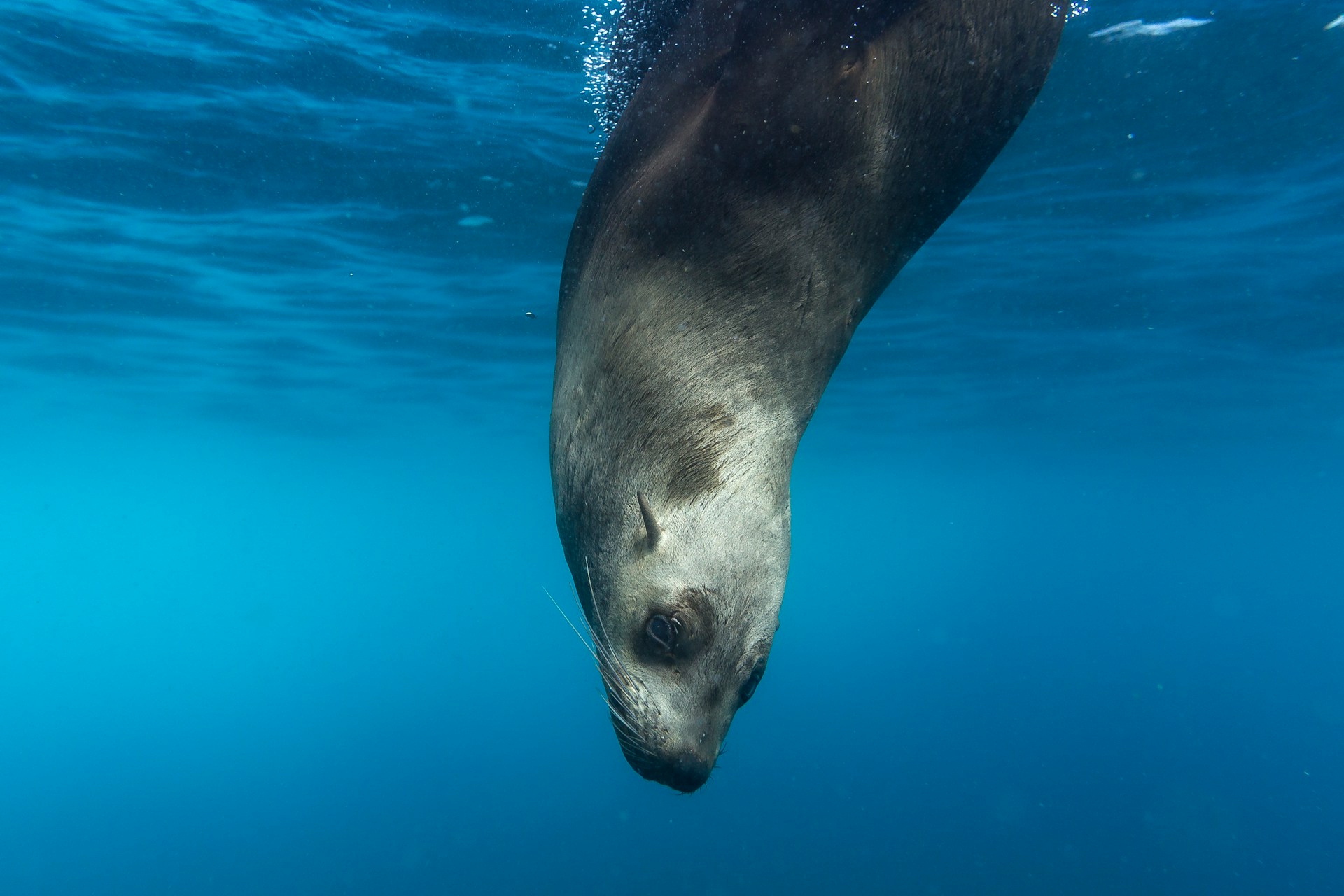
We knew to slaughter the seal swiftly, with one true blow, and to give thanks for its meat. We dried its skin and chewed it until it was soft from our enzymes. And we retired our bloody dagger, which had served its term, into the refuge of the hide. It was the first treasure we placed in that cavernous hold. We had to tie it down with ropes to prevent it from hurtling around and smashing itself against the walls.
The younger of us often visited the weapon and, drawing it from its wrapping, pressed its edge to the scar on her palm. Often, she was tempted to clean its crusted blade. Often, she was tempted to reopen the wound and let the bad blood flow out of her.
The elder of us remained on the ship we had stolen years ago, while the younger and more nimble of us crossed that precarious bridge across which there was burning and confusion, great heat and life. It was those most precious treasures—the pearls, the idol, the dagger—which the elder of us passed first across the plank into the hands of the younger.
The men were about us shouting, and the sharks swam below, but we paid them no mind as the elder of us ferried our treasures from that familiar hold and the younger of us took them and carried them down into the belly of the sinking ship, its close warmth and unfamiliar scent. The younger of us had never feared burning or drowning, for her skin had been protected from burning, and she had never fought for air.
We passed across our rubies, our diamonds, bars of gold and silver, fine carpets and coins. The angle of our rough bridge deepened gradually as one ship sank and the other floated, and eventually a gap appeared across which the conveyance of treasure became impossible.
The elder of us was left finally on her weathered ship among objects of little value, old careworn garments and instruments we had never learned to play.
The younger of us took the dagger from its sealskin hide and filled her empty and unbloodied scabbard with it. The sealskin, she draped across her shoulders and pulled tight over her chest, firm over her legs.
We held our gaze together as long as we could, until the deck of the burning ship passed below the surface, until the mouth of the younger filled with seawater, until her eyes saw deep green, until even her long hair disappeared under the waves.
She was a selkie, as unknowable as a daughter. From her birth, I knew with every tender treasure I passed to her that the weight of it would carry her faster down and away. I saw her again of course, but only ever in her sealskin. She made her home in the deep, a realm I could not enter, though for the rest of my life, when I visited the sea, I pressed my eyes to its surface and, widening them, peered into its depths until they burned.

