

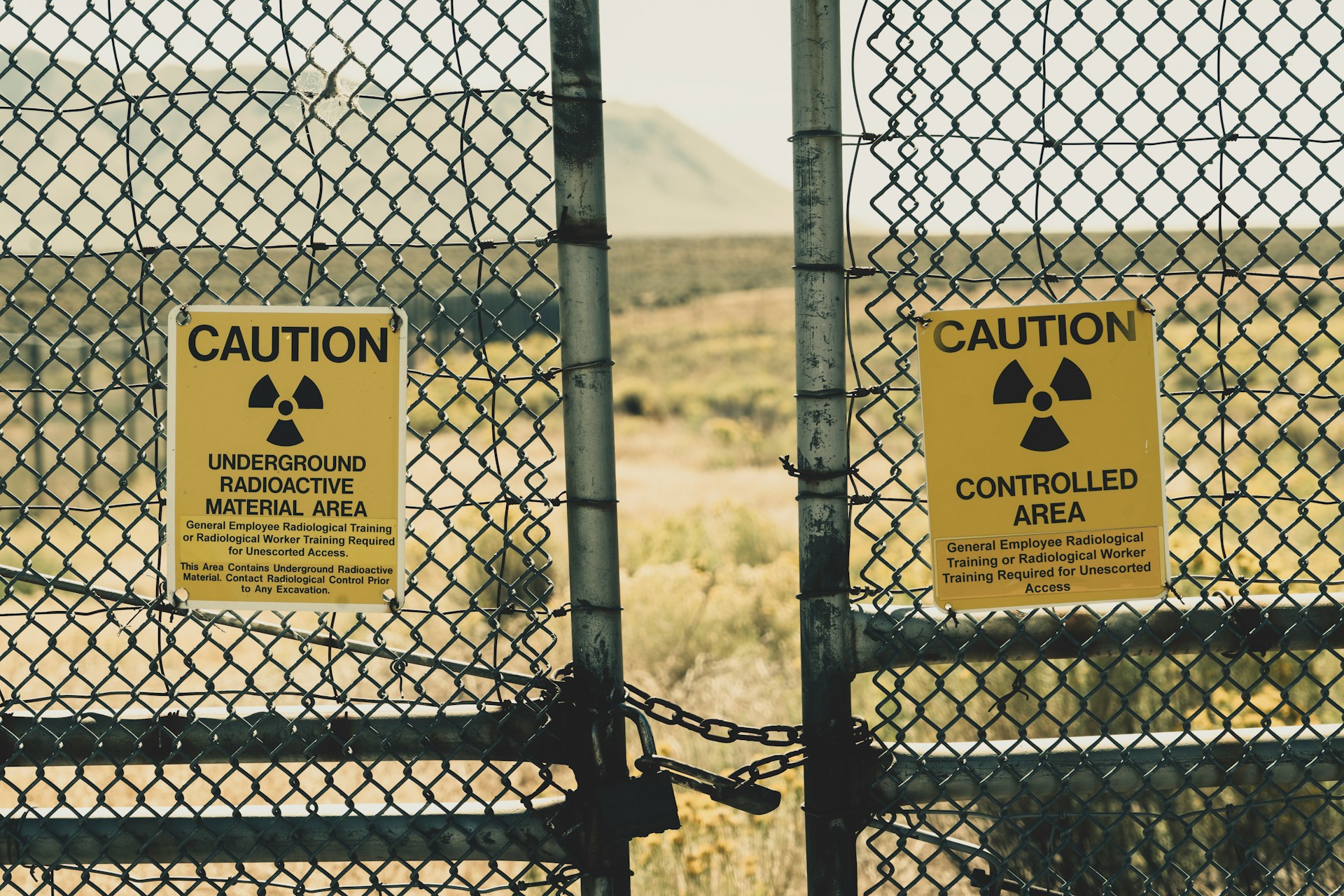
The Chief Reactor Dynamics Analyst for the Molten Chloride Fast Reactor Prototype Unit at Idaho National Laboratory is a prudent man. He is a pensive man. He is a hardworking and fastidious man. He is not the sort of man who should be dreaming the dreams he’s dreaming. He collects Indian arrowheads and maintains closed system terrariums. He files his taxes in January and he does so himself, without paying for a private accountant or utilizing a self-filing system like TurboTax. He enjoys cooking and baking, and he takes great pleasure in planning and preparing meals for himself and his two Labrador Retrievers, Jake and Elwood, named after the eponymous brothers in The Blues Brothers, which is one of his favorite films.
In school he achieved a 4.00 GPA when he graduated with his Bachelor’s in Nuclear Engineering, and subsequently another 4.00 GPA when he graduated with his MEng in Nuclear Reactor Design and Infrastructure at UC Berkeley, which is where he met his ex-wife. They separated in 2021 when he’d decided to take the job at INL, among other reasons. She had attended school to be a clinical psychiatrist, and from what he understands she now runs her own practice in Austin, and is dating or has already remarried. He does not think of her especially often, as he is preoccupied with his work.
But that does not mean he never thinks of her. When he thinks of her it is most often incidental, a random recollection striking like a viper to evoke some memory he thought he’d forgotten. When he thinks of her it is most often in the following ways: he will recall a joke she’d told him—he will recall a dinner they had together or an event they’d attended together—he will recall a distinctive mannerism of hers (saying human bean instead of human being; walking a mazelike path to bed in order to “confuse bad spirits“; pushing her glasses up her nose like some sort of anime character whenever she would make a salient point in an argument; etc.)—and he will recall the sex they’d had, or, more generally, her body.
She was very fun, and she loved with her whole heart, and he had loved her likewise in his own way. He was (and still is) mildly confused at how they’d ever ended up together in the first place. He remembers that the news of their relationship was met with befuddled looks when he’d been introduced to her friends—he was introverted and serious, while she was outgoing and convivial. They’d dated for two years before she suggested they elope. He surprised himself (and her) by agreeing, which was very uncharacteristic of him. And so that’s what they did. At the time he could not imagine a world where this decision could be for the worse. They’d stayed married for a year and a half while she was finishing her B.S. in Psychology. Then he was offered the job in Idaho Falls, and he told her he was very interested, that he was seriously considering it—she’d strongly dissented, suggesting they move anywhere else—anywhere but Idaho, she’d said. I won’t be happy there—and I know you. You won’t be, either.
But he had felt differently. It’d been a struggle finding a place he felt excited to work at, and the innovations in molten chloride fast reactor technology were sensational, yet still rooted in some semblance of reality (he was (and still is) a skeptic of fusion research, and considers it a waste of time). And so he took the job without asking her if she’d go with him.
While his marriage hadn’t worked out, his work is everything he’d hoped it would be. His work is technically complex and rich with minutiae, best suited for one with the propensity to discern minor incongruities from a sea of information. He enjoys it greatly. The nature of his work subsumes the entirety of him, requires absolute concentration for hours on end, and for the duration of his time spent working it’s as if he’s barely even there—some piece of him is there, but it is not truly him, or at least it does not feel that way—he feels more computer than man—or, rather, when he works, he does not feel at all—he is caught up in the data’s whirling volute, and by the end of the day he is exhausted, completely drained, and possesses only enough energy to do the bare minimum at home (take the dogs for a walk, prepare dinner, wash the dishes) before heading to bed.
On his weekends he maintains a log of the activities of his terrariums and takes occasional hikes to Idaho Falls’ circumambient forests and national parks to scout for more arrowheads, which he labels and subsequently exhibits in humidity-controlled display cases in the living room of his two-bedroom house. He also reads for pleasure: Asimov, Clarke, and Heinlein are his favorites. He masturbates infrequently and dispassionately to whatever videos are trending on the front page of PornHub. Some weekends, when the weather is poor or when he feels especially bored, he will head into the laboratory and work until he’s tired. He does not have any friends who live in Idaho Falls—his college friends had scattered across the country upon graduating, many to Los Alamos, a few to Oak Ridge, some to miscellaneous startups peppered throughout the major metropolitan centers, and the rest to various power generating stations. His family lives in Pennsylvania, which is where he grew up, and they frequently implore him to find work at Susquehanna or Beaver Valley or Three Mile Island so he can be closer to home—whenever they say this, though, he expresses a polite but feigned interest in their wishes and then does nothing to follow it up. The work at INL is too important to him—he’d given up too much as-is in order to be there in the first place.
He has no friends at work, although he maintains a productive working relationship with all of his co-workers and superiors. Admittedly, it is hard for him to make new friendships due to the reclusive and uncollaborative nature of his work—as the Chief Reactor Dynamics Analyst, his job is largely solitary, and the majority of his time is spent alone at a computer modeling power excursions and transient events, analyzing nil-ductility values in plant components, and writing operational procedures for various evolutions. It’s a very Think-Tank type of job which requires long hours spent in almost absolute silence. He tasks his subordinates with their requisite work, and he will occasionally work interdepartmentally to solve some unique problem or achieve some abstruse task, but in these instances his collaborations are short-lived and are almost always completed via email.
He’s on the big three dating apps: Hinge, Bumble, Tinder. He rarely uses Tinder, but he’s had some success with the other two. Generally he will go on a few dates before something seems to give, some pretense or facade. Then interest will wane from one or both parties, and for one reason or another it won’t work out.
He feels, at times, that he is incapable of loving. Not of being loved, but of loving. That whatever framework had been set in the past with his wife had somehow faulted his ability to create new and meaningful connections. Ever since his divorce, the women he’s met have felt fungible, alien. But he continues to try.
He has thought about trying to meet someone at a bar, but he doesn’t like drinking, doesn’t like the feeling of inebriation—he’s a sad and remorseful drunk. He’s also considered joining some kind of adult recreational league, or book club, or cardio kickboxing class—to develop a regular commitment to some sort of extracurricular activity where he’d be given the opportunity to meet not only potential romantic interests, but, more generally, to find and make new friends. He’s held off on this, though. Something about it feels mildly degrading—it would be like admitting a vague sort of defeat.
And then there is the matter of his dreams. As if he did not have enough existential baggage hanging over his head, he has recently started having these horrible dreams, which strike early during his first or second REM cycle and leave him subsequently sleepless for the coming day.
In his dreams he is him, and yet he’s not. It’s as if he retains the memories of his current life as a dream in and of itself—they are a conjectured past disjoined from the actuality of the dream, which is real. And this knowledge imbues in him a sort of power, not unlike the power vouchsafed unto saints, unto superheroes: a holy gift. There, in the distance, manning the front desk, is his ex-wife. But she is not his ex-wife yet. His dreams are set in some imitation of the past, some alternate universe. Always, without fail, he approaches her the same way he’d approached her in life—she is sitting at the front desk of the university’s gym, where she’d worked—this is where he’d met her and where they’d started talking. He can see her very clearly, and in all of his dreams he’s walking slowly towards her, and she does not see him yet, and his pace is controlled by some motive force outside himself. There are no other directions in which he can choose to walk. In this fixed path his eyes move over her, and as if she knows he is watching she turns and smiles at him faintly—the smile of acknowledgement one gives to a stranger, a polite smile void of any real meaning or warmth. Then she says: Hello.
It becomes clear to him that she is unaware of his power. It becomes clear to him that although he is changed, she is not. She is just herself, unchanged. In this dream she does not know him and does not know of their shared past, and he realizes that in this recreation of their meeting he now possesses the foresight to avoid the mistakes he’d made before, in his past life, when he was a lesser man. And maybe this knowledge is the wellspring from which my powers are derived, he thinks. He has faith in the idea that this play-by-play recollection of their past problems will be sufficient to prevent their recurrence. He then considers this faith and questions whether his logic is sound—whether it was the conflicting element of their very natures, the galvanic stress of souls in close proximity, from which their problems had arisen—whether the relationship was doomed to fail regardless of if he’d taken the job at INF.
As his confidence falters, he finds that he’s halted on his path. He is no longer walking towards the front desk of the gymnasium. He’s standing at some uneasy midpoint on the checkered tile and is staring at her disaffectedly as if in a fugue. And he finds that for all his newfound powers, he cannot make himself move towards her anymore. His mind reels—he battles for control over his own oneiric body. But the laws of this dream are such that the harder he fights to regain control, the further his dream fades into delirium—the details blur, and his wife’s confused face stretches until he can no longer recognize her, and then she is lost to him.
As he begs, begs to God, or to himself, to his own subconscious, for another shot, for another blind-faith chance to fix things for himself, he is foiled, and foils himself—he realizes that he is dreaming, and this realization is enough to drag him, kicking and screaming, back to haywire consciousness, and then it’s the noise of his scrabbling fingers searching for his bedside lamp, the feverish muttering of a madman in the dark, the staring blankly at an eggshell ceiling, the tears pooling on silken pillowsheets. And he reconciles to himself this grievous truth: that he thinks about her every day—not once in a while, not here and there, but every day, every day’s waking hour, these endless hours set like stacked dominoes, serried to the distant sightless horizon of his eventual death—and how could he not. How could anyone not think of what they’d left behind, if they’d left it in exchange for Idaho Falls.

