

She said, “I love your skin.”
I almost thanked her.
Instead— “My rape-colored skin?”
I meant it lightly, but my tongue felt heavier than it should have.
I wanted her to flinch—to feel how heavy that compliment was to carry.
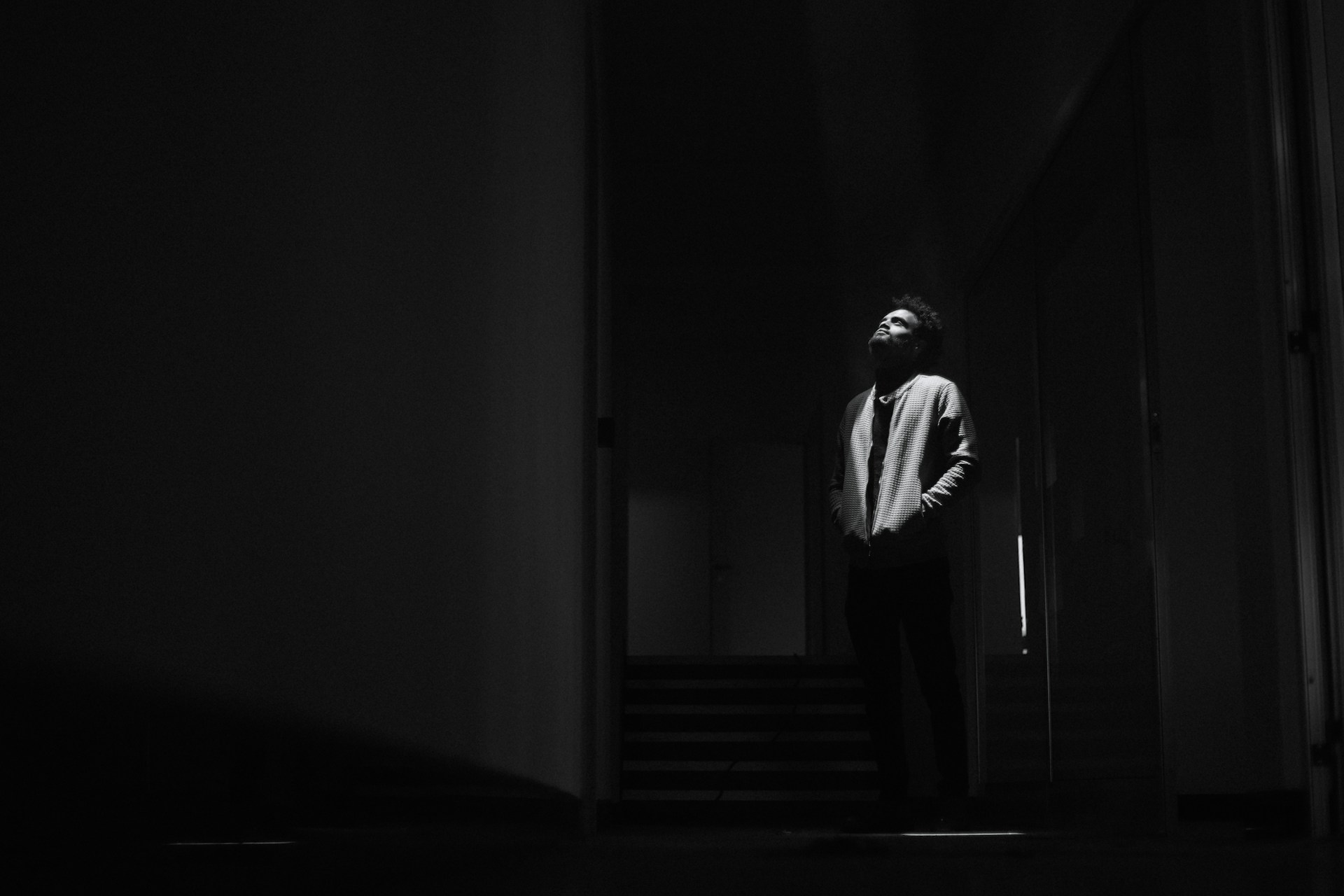
Sunlight knifed through the window blinds—slits across my arm, light sketching the history she’d just unknowingly brushed.
The music thinned; laughter blurred at the edges.
The air turned heavy with stories that never learned to rest.
I was new there, my Southern vowels still betraying me, charm the only thing keeping me from being out of place.
We had passed each other in the hall, trading soft good mornings that hinted at possibility.
We finally had more than a passing moment—the New Student Welcome Party, in a glass wall conference room, undergrads rushing past outside.
Her words carried good intentions, a spark trying to catch, though she didn’t know the ash I came from.
Her warmth was genuine.
So was her hesitation.
But her curiosity—that carried hope.
The attraction between us was obvious—and still, part of me knew better.
The quiet between us thickened—history and inheritance in the same breath.
I’d felt that hush before, when past came knocking
My great-grandmother survived incessant rape.
My great-grandfather raised its reflection.
Trauma doesn’t skip generations, it just changes clothes—passed down like the red velvet cake recipe, sweetened to survive.
Still, for a moment, I let myself imagine that maybe—for once—history could be quiet.
But then her smile shifted—and in that small collapse, my great-grandmother’s silence stepped forward, uninvited but never far.
The playful curve softened, straightened.
Folded into something uneasy.
The look someone wears when they realize the water they’ve been wading in runs deeper than they thought.
I watched her eyes search mine, and in that search, I saw generations staring back—the living trying to read the dead.
Confusion crept across her face, thunderstruck by what she hadn’t meant to awaken—but enthralled.
I am my mother’s son.
The same tilt of the head, the same guarded softness, the instinct to soothe even when I am the one unraveling.
She once told me men like me are born already carrying too much—we learn to hide it behind laughter, behind work, behind muscles and ambition.
But weight shows itself, even in a way a man stands still.
In that stillness, she looked at me again, really looked, as if trying to see where the story ended, where I began.
And I realized my expectation was unfair.
How could she know the weight stitched into my complexion—the ghost history taught to keep quiet?
The nights they touched my great-grandmother weren’t called a crime, weren’t seen as sin—just more lines of property transfers.
History favors the ones who write with gunpowder and lead, who bend morals to fit their cause, who call cruelty necessity and ambition divine.
I wanted her to know.
But I also wanted her innocence to stay intact.
Maybe both couldn’t survive the same truth.
Her silence lingered long after the moment passed.
Her quiet felt familiar—their silence returning.
I folded back into the safer corners of thought, where memory could do the speaking for me.
It’s easier there, where faces blur and history softens its edges, turning from a wound to a whisper.
Then the hum of fluorescent lights pulled me back—faint, like the world was waiting for me to exhale.
But even whispers can ache when they sound too much like home.
I think often about my great-grandparents—two souls bound by something they never chose, yet still found the strength to make tenderness out of ruin.
I imagine them—begrudgingly, keeping the house in perfect order.
Hands worn from endless service—floors, fires, meals for a family not their own.
Rarely could they steal a moment; the overseer’s eyes were never far away, the air too owned.
I can almost hear the floorboards creak beneath their rhythm—the music of endurance mistaken for routine.
Her body carried the memory of a man’s violence.
His soul carried the ache of raising its reflection.
Between them, love had to mean something different—a kind of forgiveness, the kind that never got to forget.
They loved their children fiercely, quietly, as if each embrace might rewrite the story.
Maybe that’s how survival sounded back then—the soft hum of two broken people teaching a child that love could still exist inside the wreckage.
Their story, never written down, lived in glances, in the hush between sentences, in the patience passed down like a secret prayer.
Time softened the edges, not the weight.
It still hums beneath my skin—old grief, new disguises: pride, distance, the restless urge to outgrow what can’t be escaped.
That moment in the party didn’t end there; it keeps unfolding in me—a lesson I’m still learning about how beauty and history share the same complexion—even when the world keeps trying to erase it.
Now, in the quiet hours of my own life, I feel the echoes more clearly.
They live beneath the surface, in the startle of my reflection, in the way I pull close and push away all at once.
Sometimes, when the light hits just right, I see more than my face—I see theirs, waiting—patient, unblinking.
I carry my greats inside me—their silence shaped my voice, their fear my caution, their endurance my guilt, and his malice—my hate.
Some days, I almost convince myself love has won—that I have learned to cherish this skin.
This body, this complexion.
Other days, I wake with a taste of ash and apology, hating the very thing I’m told to celebrate.
That’s the trick of generational trauma—it doesn’t scream, it whispers through doubt, through desire, through the tremor between wanting to heal and not knowing who you’d be without the hurt.
I love myself because they couldn’t afford not to.
I hate myself for the same reason.
I’m both the prayer and the curse, the reason they survived and the reminder of what that survival cost.
Maybe that’s what it means to inherit both the wound and the salve: to keep living in a body that remembers everything, even when the mind begs to forget.
And yet—some mornings, grace finds me anyway: in the steam rising from my coffee, in the way light catches my skin before I’m awake enough to judge it.
Some mornings I catch myself upright—unflinching—the posture you earn after building something that holds, shaped by calloused hands and patient hours, by all the names I’ve carried and refused to break beneath, until even the quiet learns to stand beside me.
Maybe grace isn’t the end of the pain, but the pause between it—the space where love remembers how to breathe, even with the bruise still showing.
I don’t need forgiveness to feel whole—only honesty.
When I look closely, I can almost see them there—my greats, standing just behind the mirror, proud of the skin that once carried their sorrow, proud of the hands that still reach for light.
Later that week we passed again in the hallway, her smile smaller but still kind.
I wondered if she still saw my complexion—or now only what it carried.
As classmates hurried by, she slowed her pace, parted her lips—and for that fleeting moment, history is quiet again.
The same light slants through the windows—gentler now, but still carving reminders across my arm.

