

The southwestern wind toyed with the high school that lay on its wide north-Texas runway, whipping along the earth’s surface toward the brownstone building, gaining speed until the last instant, when it veered around and over the cube.
Beside the school lay a large asphalt pond with a huddle of cars in its middle, four young men beside a refurbished ’94 Chevy pickup smoking cigarettes in the February cold.
Jody stood with his back to the others, his open denim jacket flapping in the wind. He stamped out his cigarette and, turning to the other three leaning against the pickup, addressed the blonde one, who also wore a denim jacket, buttoned closed.
“What’s going on, Lammy? Y’ain’t saying much.”
“I gave Cindy a hard time last night for no reason,” Lam said. “I don’t know, just feeling uneven.”
Jody gazed at him, focusing on his contorting face as he sucked the cigarette, eying the neat lines of combed-back hair, looking for the spot that caused the unevenness.
“What’s that bullshit doctor telling you?” he said.
“Waiting to see if the medication shrinks it or if they need to take it out.”
“You know they’re going in after it,” Jody said.
“Knock it off, Jody,” Lam said.
Jody bent forward to light a cigarette in cupped hands. “Hey,” he said, straightening, waiting for Lammy to meet his eyes, “long as Cindy’s still bowing down before your Jesus.”
The other two laughed, and Jody turned to gaze out over the empty playing fields beside the school.
“Ain’t no doctor going to fix nothing,” he said.
“What they’re saying now is good,” Lammy said.
“Don’t matter what they’re saying.”
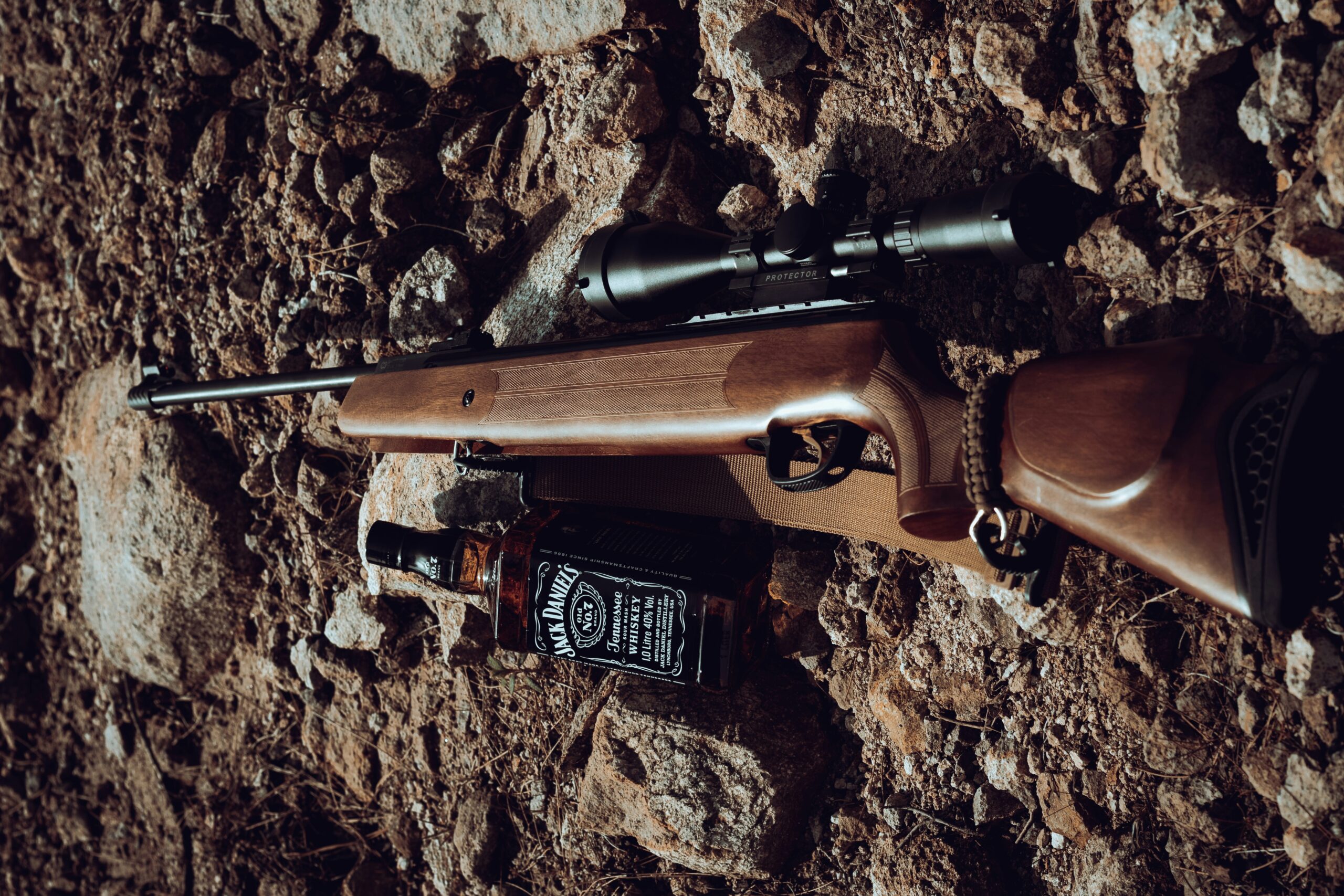
Lammy turned away with a sigh, ducked down to light a cigarette, and Jody moved to the cab of the truck, opened it, and removed a 12-gauge shotgun from the rack behind the seat, held it out before him. He pulled a bandanna from his jacket pocket and buffed the wooden stock.
Lam turned to the other two. “Bout that time,” he said, stamping out his cigarette, stooping gingerly, bending at the knees, to stash the butt in a pocket.
“You’re coming to The Hole, right?” Jody said to him.
“Just let me show my face in math.”
Jody stood by the pickup and watched Lammy and the other two move off toward the building leaning into the wind, ascending the walkway to the main entrance. As if cued by the feint chiming of a bell, Jody returned the rifle to its rack and slid in behind the wheel.
When Jody had turned eighteen and quit school the year before, he’d done so without remorse. Then, when he’d gotten arrested for armed robbery and his parents had kicked him out of the house, saying they could not abide the path he had chosen, what had always been a hunch hardened into firm knowledge, the very idea of paths, of one thing leading to another, being nothing more than something folks concocted to make themselves feel better, nothing more than puffery.
After spending 30 days in the county jail, he had moved in with his fellow parolee, his older cousin, Bartley, not because of any path or plan, nor even in defeat or resignation, but as an act of mute acceptance.
Jody started the truck, lowered his window, and sat there squinting at the school, squeezing it with his eyes, until the side door opened, and Lammy’s slim figure emerged and jogged toward him.
Lam got in the truck, breathing heavily.
“Bullshit medication,” Jody said.
Lam shook his head and rolled down the window but, feeling a rush of cold air suck through the cab, quickly raised it, Jody immediately using the button on his arm rest to lower it.
“If you ain’t gonna feel the cold,” Jody said, “ain’t no sense being in it.”
Lam turned up his collar, relit the saved half-cigarette, and placed an arm on the back of the seat. Two years earlier when he’d started smoking, Jody had tried to talk him out of it, but the effort had had the opposite effect, making Jody, whom Lam was emulating in the first place, seem even more grown up.
Lam drew heavily on the butt, exhaling smoke for two breaths. “My house first,” he said.
“Better have something to eat.”
“There’ll be something,” Lam said.
“Shit,” Jody said, smoothing back his hair with his left hand, gripping the wheel with his right.
They reached Lam’s house, an aluminum-sided ranch with a waist-high chain-link fence around the property. Lam hopped out, Jody following at a distance, reaching Lam in the kitchen where he was removing items from the refrigerator.
Jody stepped past him to the sliding doors, through which he could see the circular half-above-ground pool, its green plastic cover partly blown off, revealing a few feet of standing water. As behind him Lammy lay slices of bologna and cheese on bread, Jody lit a cigarette and stared out at the pool before the small yard with its single birch tree standing bare beside the metal fence.
“We should go in,” Jody said.
Lam huffed, returned to the refrigerator for the mustard.
“I’m serious. That water ain’t even froze.”
“Go ahead,” Lam said. “Lay out there and get a suntan.”
“It’s got to be both of us,” Jody said, Lammy spreading mustard on two slices of bread.
“It’s the middle of February,” Lammy said.
He flipped the bologna and cheese from one piece of bread to the other, spread mayo on the bare side, and closed the sandwiches.
“Like when I’m driving,” Jody said, peering out at the empty yard, “sometimes at the last second I’ll turn left instead of right, just to see.”
Lam placed the sandwiches in a paper bag, turned back to Jody, eyed him a moment.
“They do say cold water’s good for your immune system,” Lammy said, and he began unbuttoning his shirt.
They each stripped off their clothes and as Jody pulled open the sliding door, Lammy raced past him hooting, leapt in feet first, sliding beneath the surface and popping up to stand in the thigh-high water, gasping and grinning.
Jody splashed in beside him, sank beneath the surface for a good fifteen seconds, coming up red-faced but breathing evenly.
“You are definitely leaking some oil,” Lam said, lifting himself from the pool. “Let’s get inside.”
Jody hoisted himself from the pool and strolled across the deck, the wind blowing dry his pallid body.
Lam set the bag of sandwiches on the seat, placed his 12-gauge in the rack beneath Jody’s, tugged his door closed, and Jody accelerated onto the road, tires spinning in sand, chirping as they gained traction.
“I do believe,” Lam said, “you ain’t got no oil left to leak.”
“You’re right there with me,” Jody said.
They left the gridded streets of the development and headed up Route 136, then north onto 207, with each rise crested, another longer, straighter stretch appearing before them. Lam pushed through the radio presets, settling on WKMG-Amarillo, the disk jockey reading an ad for a gentlemen’s club, Linky’s Undercover, the ad ending with a squeaky-voiced Linky offering, “the most generous pours in the panhandle and the most sumptuous dancers. Night or day,” he concluded, “it’s always dark at Linky’s.”
“Now that dude is terminal,” Lam said.
With the truck’s added suspension, Jody having replaced the coil springs, 65 miles per hour felt like a crawl, and both Jody and Lam repeatedly checked the speedometer, the needle trembling, dropping on the inclines to 60, then releasing to 70, 75, before they began to climb again, reaching the highest point and beginning the gradual descent into the Canadian River Valley.
Jody slowed and turned onto a dirt road that continued at an angle down an escarpment, leading to an isolated depression separated from the general valley by rising land on one side and a series of small buttes on the other. They squeezed between a wash of boulders, entered a circular clearing of crusted earth peppered with scrub, and pulled off of what was now barely a track.
In The Hole, the sky was smaller, the sun hovering just above the ridge, a growing lake of shadow encroaching from the west. The wind had lightened to a gentle breeze.
“So how’d you get out of math?” Jody asked.
“Said I had to go to the bathroom. Just didn’t say where.”
“I believe you do get it,” Jody said. “About being free in the meantime.”
“Like having a fistful a fifties in a whorehouse,” Lammy said, grinning.
“Ain’t no joke,” Jody said.
“What the hell is wrong with you?”
“It’s about letting go.”
“How bout we let go some buckshot?” Lammy said.
Jody lifted his rifle from the rack and slid out of the truck. He removed a bag of shells from the toolbox in the back, threw two to Lammy, and they loaded the guns and walked out into the open.
Jody pinned the rifle against his shoulder, tilted back until he aimed straight up at the sky, and squeezed the trigger, the shot reverberating against the surrounding protrusions of land. He turned back as Lammy raised his rifle and fired into the open air. Jody again took aim, squinting at the precise center of the sky, and shot.
After a dozen or so rounds, a car appeared on the opposite bluff, its chrome bumper glinting in the rays of the hidden sun.
“Who’s that?” Lam stood still, watching as a black SUV descended the slope and cut toward them.
“Sheriff,” Jody said, recognizing the gold lettering across the front and bull bar over the grill.
Jody took Lammy’s shotgun, stepped around the Chevy’s far side, and leaned both rifles against the driver’s door.
Dressed in a khaki shirt and grey pants with a confederate stripe, the Hutchinson County sheriff removed himself from the vehicle a leg at a time, and placed his hat on his head.
“Afternoon, boys,” he said.
“Something wrong?” Jody said.
The sheriff squinted at Lammy. “You’re the Wilson boy,” he said.
“Yes sir,” Lam replied.
“How you feeling today, son?” the sheriff asked him.
“Not bad.”
“There’s been some trouble at the Gulf station in Pringle,” the sheriff said. He shifted his eyes from Lam to Jody. “Looks like a robbery gone bad. Old man Corback’s dead; his boy’s in the hospital.”
“We come out here to eat lunch,” Jody said.
The sheriff held his eyes on Jody, who shifted his weight, gazing away, toward the bluff that blocked the sun.
“Do I know you?” sheriff said.
“Couldn’t say,” Jody said.
“Well, y’all see or hear anything, give us a call.”
“Yes sir,” Lammy answered.
The sheriff stood a moment. “Probably be a good idea to head on home,” he said.
“Free country, last I checked,” Jody said, still gazing at the crease the sun had slipped into.
“Ain’t demanding, just suggesting,” sheriff said.
He stepped back to his car, installed himself behind the wheel, backed around in a tight half-circle, and rumbled back up the trail.
“Old man Corback,” Lammy said.
“This place,” Jody said, pausing until Lammy met his eyes. “It’s nothing more than a dot.”
“My old man knows, knew, Corback,” Lam said.
Jody exhaled, turned away, and turned back. “I’m saying there’s more.”
As Lammy stood there processing Jody’s words, another vehicle appeared on the bluff. Windows sparking orange in the hidden sun, it descended into the shadow and emerged into the dusky half-light of The Hole—a tow truck, letters across its side spelling out the word, CORBACK’S.
Jody turned and faced Lam. “We’re nothing but ants,” he said, peering into Lam’s eyes. “You hear me?”
The truck roared up and shut its motor, a single helix of dust looping up above the shaded hills toward the pink sky, heavier dust settling around the truck’s wheels.
“Wait here,” Jody said.
He walked over to the driver’s half-lowered window, exchanged some words, and returned.
“Said for us to follow him over to that patch of brush.” Jody gestured toward a stand of dwarf piñon and creosote. “So he can ditch the truck.”
“Then what?” Lammy asked.
“Said he wants to get it over with.”
“What’d you say to him?”
Jody attempted a smile but his lips barely moved. “Told him it’s easier once the sun goes down.”
“Goddam,” Lammy said, “you talked him into it.”
“I believe I did,” Jody said.
The two returned to the pickup and followed the tow truck over the dirt and brambles to the far side of The Hole.
“Come with me,” Jody said, opening his door.
Lam hesitated, then pushed his door open with both hands and followed Jody toward the tow truck.
Several paces before the truck, Jody touched Lam on the shoulder, stopping him, and tilted back, gazing up at the sky, clouds at the edges but clear in the center.
“You see the bull’s-eye?” Jody said, his voice a hard whisper.
Lammy leaned back to see.
“Clouds swelling up with pink,” Jody said, “but straight up there’s nothing, just a window.”
Jody took a step away, then another, nodding at the driver as Lammy gazed up, a report bursting from the window of the tow truck, Lammy falling on his hip, then dropping back, his head snapping against the ground.
Jody peered into the dark cab of the truck, then turned back to Lammy who lay motionless, eyes open, reached down, grabbed a heel in each hand, and began dragging him toward the truck, blood streaming from the wound in the chest.
After a few steps, Jody stopped. “Bartley,” he called, “come hold his head!”
“What the hell for?”
“The tumor,” Jody said. “Hold it off the ground while I drag him.”
They dragged the body to the tow truck, lowered themselves to the ground, and shoved Lammy’s body beneath it with their feet, a dust-edged puddle of blood working its way back into the open.
They drove Jody’s truck back up the trail the way they had come, turning north at the highway, away from town. Slumped in the passenger’s seat, Jody lifted his collar and stared out the lower corner of his window as they headed toward the Oklahoma panhandle beneath a darkening sky.
“Wasn’t supposed to be trouble,” Jody said.
“Old man pulled out a pistol,” Bartley said. “Good thing the register was full, cause I never saw no safe. Got enough to get us to Topeka, anyway.”
The truck crawling along the flat earth at 70 miles per hour, Jody peered out at the passing land, faint shapes of hills rising up between darkened gulches. His eyelids growing heavy, he lowered his window to bathe in the icy wind, saw Lammy standing there in the rushing air combing his hair back over his uneven scalp.
Jody released a long stream of air and rolled up the window.
“Least your buddy ain’t gonna suffer no more,” Bartley said.
“He wasn’t suffering,” Jody said.
“You said the tumor was malig—”
“Said it might be,” Jody said. “Which was just as bad, maybe worse—kept him hoping.”
“Bullshit hope,” Barley said. “Does nothing but fuck you over.”
“Not now it don’t,” Jody said, and he lowered his head against the passenger window, his eyes sagging halfway closed.
“Shoot,” Bartley said, “I almost forgot,” and he reached forward to flip on the headlamps, which bore a tunnel before them into the night.

