

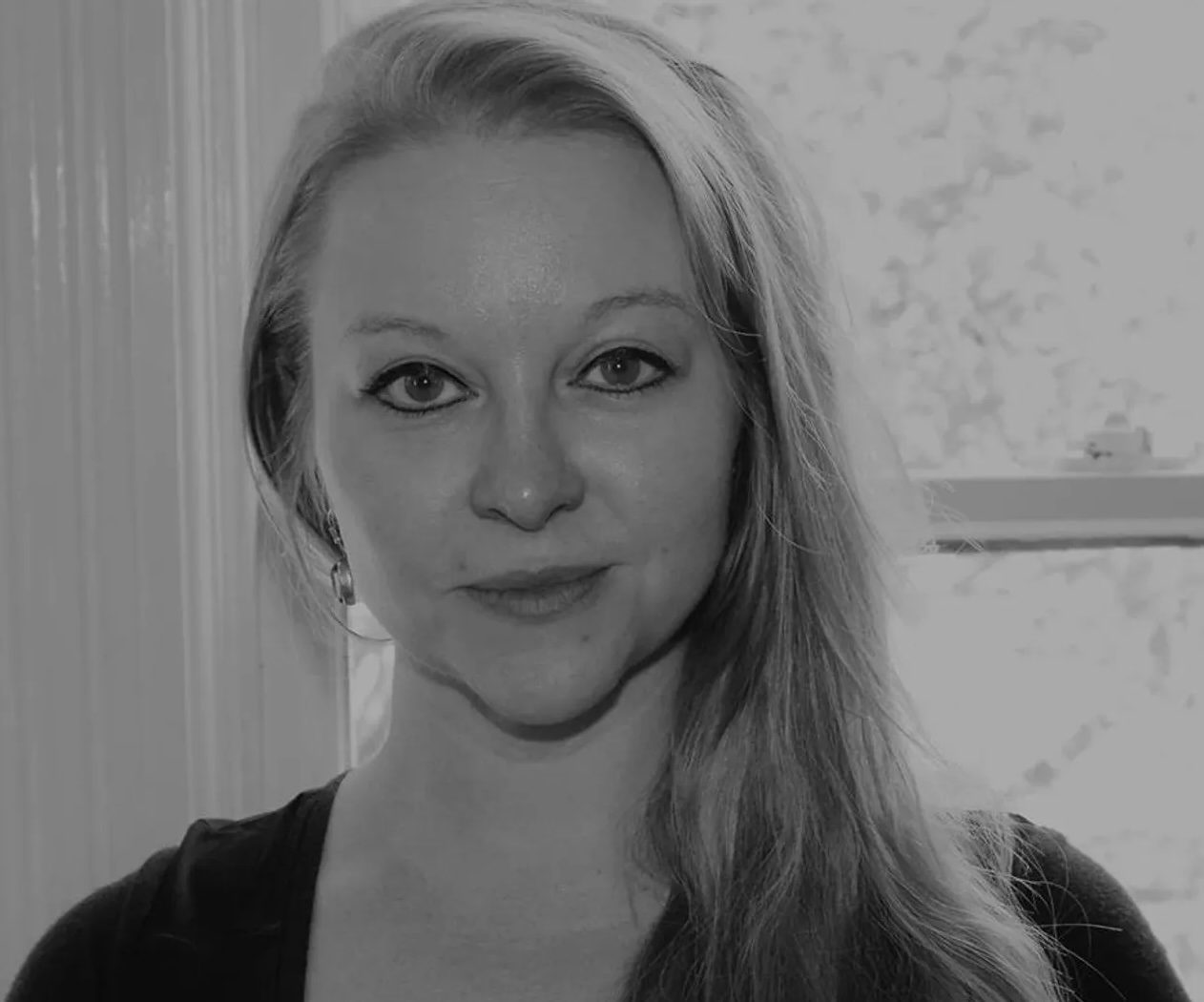
Laurel Hightower is a bourbon loving, pitbull snuggling native of Lexington, Kentucky. She is the Bram Stoker-nominated author of WHISPERS IN THE DARK, CROSSROADS, BELOW, EVERY WOMAN KNOWS THIS, SILENT KEY, SPIRIT COVEN, THE DAY OF THE DOOR, and THE LONG LOW WHISTLE, and has more than a dozen short fiction stories in print.
FR: I’m going to dive right into your latest release, THE LONG LOW WHISTLE. I really enjoyed the book. Give us some insight into the character, Patricia. Did you take from any real-life person to create her? What’s her drive, fascination, with the mine?
LH: Thank you! Patricia is her own creation, not based on anyone in particular. It was more that I needed an anchor, a driving force for what happens during the book. The idea of the lurking VHS with such explosive content, the question of whether I’d want to watch something like that—I put myself in Trish’s place, created her back story of loss and regret. The trajectory of her life was altered forever with the sound of that whistle, and as humans often do, she’s fixated on it, on knowing exactly what happened to her father. I’m fascinated by the way we latch onto an event or a desire to the exclusion of living our lives fully, as a way to avoid sitting with unpleasant feelings. For Trish, every disappointment or regret she has is tied up in that mine, and she can’t see a way through to the next stage of her life without getting inside it.
FR: You are a prolific writer. Often working on novellas, short stories, and have teamed up with others to put together anthologies. Where do the creative juices come from? Is horror the lens in which you see the world around you? What about the horror vehicle most interests you to tell your stories?
LH: Creativity is a habit, one which can grow rusty with disuse, but that also means it’s never really gone, it just needs to get cranked back up sometimes. I’m an avid reader, and I think that lifelong habit feeds directly into the desire to write. The media I consume fills me with a desire to create as well, to bring a story to the page. Some of it is me working through experiences or traumas or worries in my own life—working it out on the page has become a major form of therapy. But it’s also a desire to elicit a feeling from people. Commonly fear, as horror is my chosen genre, but also grief, hope, anger, and recognition. I’m immersed in horror, via reading, film, music, all of it. Growing up I wanted every story I read or show I watched to include at least one ghost, so now that I’m wielding the pen, they’re everywhere.
Horror is the perfect vehicle for my stories because of how far you can stretch the imagination. Anything is possible, nothing is off the table and that’s both what garners so much fear, as readers’ expectations are torn away, and also expands its reach. Social issues, personal fears, deep-seated dread about ourselves and our futures. It’s all there, and there’s an endless trick or treat bucket to rummage through for new ways to do it.
FR: If I had to guess, your most well-known and popular book is CROSSROADS. Not long ago the publisher of the book closed its doors. Now it’s making a comeback with a new publisher. Tell us about that process, how the book started out on a piece of scrap paper one day in your life, then turned into a novella, taken by one publisher, and now is being reissued by a new publisher. It sure has been on one hell of a journey.
LH: I respect the commitment it took for you to use that word, Reardon. The journey started on a drive from my home in Lexington (your home now, too!) to see my sister—I noticed one of those roadside crosses you see on the highway all the time. It’s a route I drive several times a year and I started wondering how I’d feel passing a memorial like that for a loved one over and over through the years. Would it be a distraction, or a welcome reminder? From there I built out the character of Chris, exploring how she’d deal with grief and what could go wrong. At the end I had a slim little tale I was happy with, and as my agent at the time didn’t believe novellas sell, I shopped it myself. Samantha Kolesnik had just announced she was opening her own press, Off Limits, and I subbed to the open call. She loved the story and chose it to launch the press, something I still feel incredibly honored by. It’s a story that’s connected me with so many readers—people with moms like Chris’s, people processing grief, people who dealt with fertility struggles. I treasure those connections, and when Off Limits closed their doors, I was happy that Alan at Shortwave was willing to pick up the torch. I’m excited to see it given new life, especially with that wicked cover he designed. I guess in the end, the message is, don’t stop believing.
FR: A question I ask everyone. Four dead authors you love. Four living authors that you love. And one writer you read that your readers wouldn’t think you’d like.
LH: I love this question—I follow your column and interview series and I love reading people’s answers. For dead authors, Shirley Jackson is Queen—she managed to pen the first jump scare I ever saw on the page, and I wanted to emulate her ever after. I love the themes she tackles as well, in such a universal way we still reference stories like THE LOTTERY and WE HAVE ALWAYS LIVED IN THE CASTLE as shorthand for certain subgenres and societal wrongs. I love Oscar Wilde, his irreverence and humor make reading his work a helluva lot of fun. Georgette Heyer was my comfort read for many years, though I’m not blind to the problematic nature of some of her work. Her character creation sparkles from the page and I loved getting lost in her romances and detective novels. Shout out to Josephine Leslie as well, who penned THE GHOST AND MRS. MUIR. A charming ghostly love story, but her pen name will forever amuse me—in a time when women wrote under masculine names, she chose “R.A. Dick.” I think we’d have been friends.
For living writers, it’s so hard to narrow it down so I’ll throw off ones from the top of my head. I love the work of Stephen Graham Jones—he’s incredibly multi-talented and immersive, and I’ve enjoyed everything of his I’ve read, with AFTER ALL THE PEOPLE LIGHTS HAVE GONE OUT being a particular favorite. I devoured the work of Neal Stephenson, and Tananarive Due is an unrivaled storyteller. THE GOOD HOUSE is one of my favorite haunted house novels of all time, and that’s saying a lot. Lastly, my friend S.H. Cooper likely gets tired of me touting her name, but she writes so smoothly, so gorgeously, in a relatable way. Her work runs the gamut of fantasy and horror, and every story is a joy. INHERITING HER GHOSTS is Gothic perfection.
As far as an author folks might not expect, Cathy Yardley. I adore a well-done romance and her contemporary takes are perfect.
FR: Back to THE LONG LOW WHISTLE, first off, I love the cover art. It reminds me of being a kid in the 1980s and going to the corner video store and picking out a movie based on the VHS cover alone, which is the point of the covers, I think. On the inside we get cryptids, extreme claustrophobia, looking for the dead. The book also has a cinematic feel to it. What went into those ‘colors’ you bring to the page? When you daydream about the work when not at the keys, do you see them like a movie, or simply just words coming together? Expand.
LH: Yes, that’s exactly what Shortwave is going for on those covers, aren’t they a blast? I miss those corner video stores. As far as bringing something cinematic to the page, TLLW is more action-driven than some of my other work, and I definitely saw the events unfolding more visually, just trying to transcribe the feel of the cave system and the tight and dangerous spots the characters find themselves in. Caves are so claustrophobic and so impenetrably dark in the absence of artificial light, which sounds obvious, but I wanted to convey that fear, the helplessness of knowing you’re one failed flashlight away from certain doom. And I’m a skittish horror author, so I’m convinced that every umplumbed depth contains unimaginable monsters. I wanted my readers to feel that fear.
FR: Another book that you are quite known for is BELOW. I have seen you walking around with a BELOW hoodie on. You’ve told me your favorite horror is paranormal, but you work so well with creatures too, are the creatures an extension of your own horrors within, be it stress, anxieties, anger? Do the creatures appear in your mind as an artistic representation of those feelings? As for the paranormal, ghosts just about all of us, how about you?
LH: Thank you for not judging me for wearing my own book cover as a hoodie—I love Trevor Henderson’s art and love to share it far and wide. Working with creatures as I did in BELOW and THE LONG LOW WHISTLE gave me scope for a horror that stepped well outside the bounds of human. It’s the alien nature of cryptids and critters, the fact that we can’t know their motivations, their limitations, what they’ll do from one moment to the next. There’s no reasoning with them, no séance or exorcism. They simply are, and they make for horror tales that aren’t tied quite so much to location. Who needs a haunted house when you can terrorize all of West Virginia?
FR: Like myself you are a big fan of movies and going to the movies. For me, if done right, they are a great way to get at the grit of human emotions, whether told through the horror vehicle, noir vehicle, or even the kung-fu vehicle. Outside literature what other art forms inspire you? Movies? Artwork? Music? Maybe you are a big fan of needlepoint? Tell us what inspires Laurel? And if you had to pick three of your favorite movies THAT are NOT horror, what would they be?
LH: Absolutely all of the above. Art inspires art, creativity drives from one medium to the next. Certain songs make me want to figure out how to convey the exact feeling of them onto a page. There can be such nostalgia, such emotion behind a three-minute track, and I love trying to harness that power. Other times I will study certain artwork and do the same—work to convey the feeling of that art in another medium. Another shoutout to Trevor Henderson, whose artwork directly influenced THE DAY OF THE DOOR. I fell in love with that cover and knew without a doubt I needed a story with dread to match. And you’re right, film absolutely does the same. It’s not about wanting to simply transfer the film’s story onto the page, though I am working on a novelization as a collaboration right now. Instead it’s the same vein as everything else—what was effective about what I saw on the screen? Why did it work so well, and what can I learn from it?
Oo, three fave non-horror films—that’s a tough one. The answer probably changes regularly, but I love Feast of the Seven Fishes, Once Upon a Time in Hollywood, and The Muppet Christmas Carol.
FR: You’ve written novellas, novels, and short fiction. Tell us what your favorite form to work inside of? And why is that?
LH: I vacillate between the formats, as novels were my first love and give such lovely scope for expansion, while a well-crafted short story is like a perfect gut punch, in and out and capable of painting with a broad brush that doesn’t make room for or allow too much explanation. But if I had to choose, I’ve settled into the novella as my favored form. There’s enough space for character development and expansion of a theme, even a little romance if the story calls for it, but less winding path for me to get lost on. I like carrying the single note from start to finish, saying what I meant to say and getting back out again. There’s also something more freeing for me in that form, like I’m less concerned with reader opinion and more interested in crafting the tightest story with the greatest impact.
FR: You are a master of taking the reader on a path, putting us in a place we least expect it. What I like about reading you is there is a bit of Thomas Ligotti in your work, meaning, I’m not so terrified while reading it, but later in my thoughts, dreams, I become terrified, like you planted a ghastly thought that appears later in the day. How does this process work for you? Do you plan that out or does it most often happen that way?
LH: Ooo, that might be one of my favorite compliments, thank you! I don’t necessarily plan out for an element to be a slow burn of horror, I think it has a lot to do with what the reader brings to the art itself, but I do tend more towards slow burn types of horror. The most effective scares to me are the ones that disturb deeply, rather than make you jump at an unexpected sound. We’re at our most vulnerable in the dark in our beds, with nothing to distract our minds from what might be lurking. I try my best to tap into what curls through our half-asleep brains, sowing unease as I go.
FR: What’s next for Laurel Hightower? You dropped LONG LOW WHISTLE, the reissue of CROSSROADS is coming, but what’s next? A novel? A novella? Tell us a little about what you are working on now and in the future? What’s Hightower 2026 look like?
LH: As you noted, CROSSROADS is being rereleased later this year, and I’m working on a novelization collaboration with my friend Brian Keene. I also have several short stories coming out in anthologies throughout the year, and an essay with Reckon Review. Mostly I’m looking forward to diving back into a longer work—last year was a little nuts for me, as you may have heard, so I’m excited to shake the dust off and get back to the keys.
BONUS QUESTION:
FR: You can change the course of history for the better. You have the three of your most hated people on the planet all tied to different poles. It’s simple, you are making a better future for the world because you are going to kill them. What creature, or what ghost, what horror from one of your books will you chose to destroy them? Oh yes, there will be suffering.
LH: Ah, I love this. I’m going to cheat a bit and choose one not from one of my books, but from one of my short stories—the unnamed anti-hero of SANCTITY, which appeared in the Bishop Rider anthology put together by Beau Johnson. She has so many plans for the deserving shitheels of the world, and isn’t afraid to get her hands dirty—up to her elbows in viscera, that girl is.

