

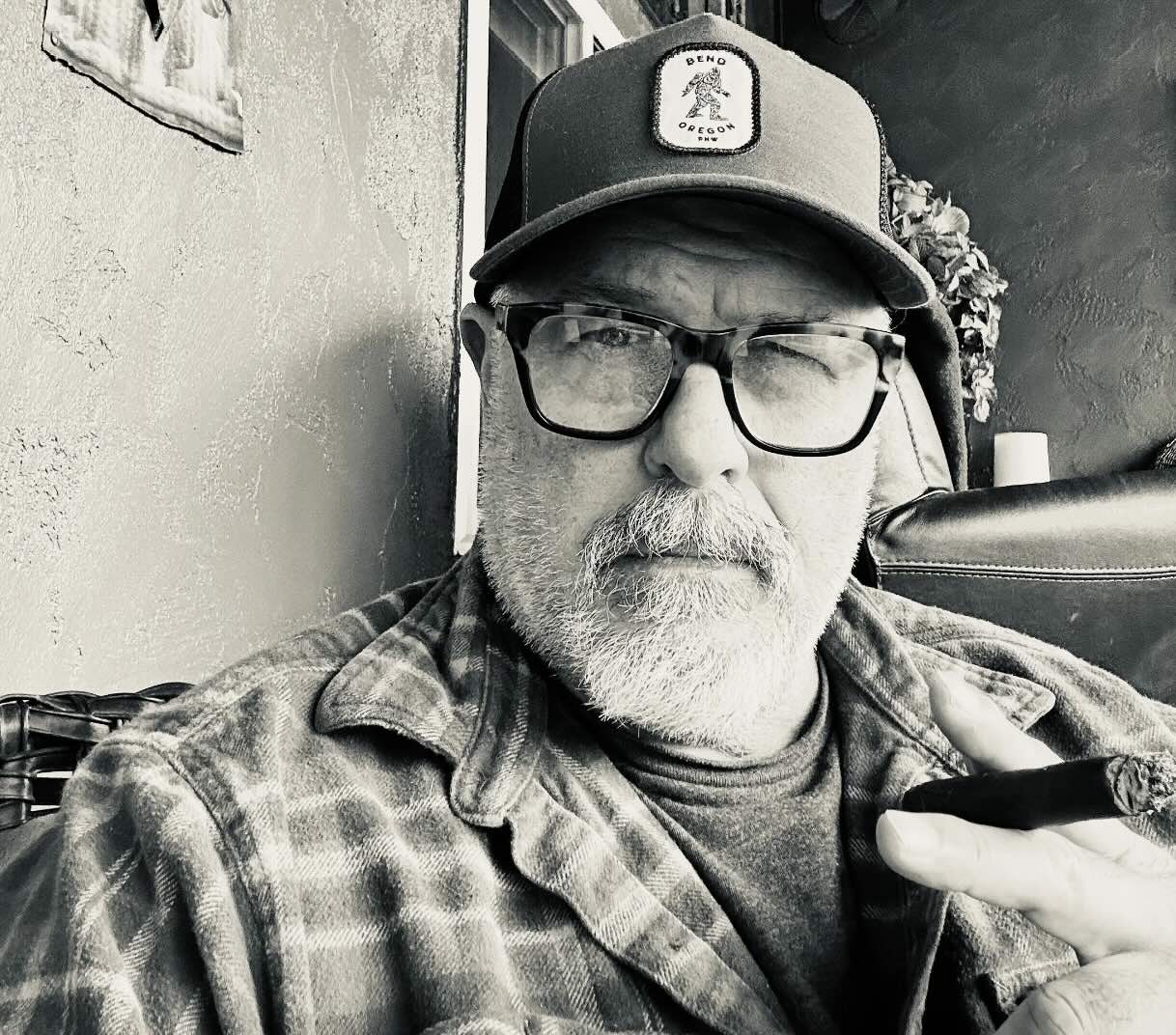
Based in San Diego, CA, JD Clapp writes fiction, poetry, and creative nonfiction with a gritty slant. JD’s writing has appeared in over 60 different literary journals and magazines including Cowboy Jamboree, The Dead Mule, trampset, and Punk Noir. His work has been nominated for several Pushcart Awards, the Best Small Fictions, and Best of the Net.
FR: I really enjoyed your collection, POACHERS and PILLS from Cowboy Jamboree Press, and A MAN GOES SOUTH from Anxiety Press. They’re wide-open collections with a ton of heart, the voice’s are unfiltered. You draw on themes like violence and addiction, but the stories are also human. Do you research your work at all? Have you met any of your banged-up characters?
JDC: Thanks for the kind words about my collections! It’s always gratifying when other writers read and enjoy your work. I’ll send you a copy of my newest one, ALTERATIONS from Quilt Square Press. It has new stories with similar themes.
As for formal research, I rarely do any unless I’m setting a story in time I didn’t personally experience. For instance, in my new collection I wrote a story called Patsy’s Last Gig which is set in the 1940s in Rochester, New York. I wanted to get the contextual details correct so I did some research on jazz clubs and street names in Rochester during that period. That story was about my great uncle, who was a semi-famous jazz violinist who played with some of the jazz greats during the 1940s.
So, I do draw on people I’ve met for a lot of my characters. Some have been family or friends, or people I grew up with. Others are folks I’ve met over the years.
As you mentioned, I write a lot about addiction. That comes from a few places. Like most of us, I have a bunch of family and friends who’ve struggled with alcohol and drugs. I know their stories and struggles and understand the complexities of their world. While I’ve never been addicted myself, I’ve also had my own misadventures with substances.
More unique to me, I’m a social scientist by trade and have spent three decades doing field research related to alcohol and drug use. That experience is invaluable when writing about addiction. For example, I spent a bunch of time in rural Southeast Ohio during the time the opioid epidemic was transitioning to heroin. But because I also hunted down there, I became friends with some folks who were living through pill epidemic. Combined, that helped me craft a fictional world that reflected what people were experiencing. It made writing the novella portion of POACHERS AND PILLS possible and authentic.
FR: When I read your stories, such as “One Last Drop” and “Tangled Lines” there’s unexpected grace in your world. Can you talk a little about that? Is there a bit of what Elmore Leonard said, “I don’t see my characters as bad people, just people who want joy too”? I’m often dragged a bit into Flannery’s world with your work, no matter how fucked up and murderous and downtrodden they can be, there’s grace floating around in there. Where does it come from?
JDC: That’s a great question. On the most basic level, I think it comes from a place of non-judgmental acceptance of people. When writing about characters who do some fucked up things or are struggling, it’s important to understand those behaviors and struggles are rooted in a context. People’s behavior is seldom as simple as some moral failing or being evil. Things like family, poverty, oppression, tradition, values and culture influence the situations people find themselves in and how they react to them. Like you note with the Leonard quote, with very few exceptions, even the worst characters want the same things we all want—joy, peace, love, and dignity. Without that grace or the potential for it, I think stories lack authenticity, which is the foundation of good grit lit.
FR: There’s an overlap in crime/noir and grit-lit, although often grit-lit dives more into the literary pond. They are cousins. Tell us your fascination about exploring your worlds and characters through those lenses?
JDC: That’s an interesting question. I should probably note I don’t have any formal training as a writer and making clear distinctions between genres is difficult for me to get my head around. The handful of straight-up crime/noir stories I’ve written were part of my self-education in creative writing and often in response to a themed call. While I enjoyed writing those stories, I don’t see myself as a noir or crime writer per se. To me, the more interesting space for me is a character-based story where there is a crime or some violence that’s a by-product of the character’s fucked up situation. Carpenter’s A HARD RAIN FALLING is prime example of what I mean.
FR: A question I ask everyone: Give us four dead authors you love? Four living authors you enjoy reading? And one writer you enjoy reading outside you comfort zone?
JDC: For dead authors I love Jim Harrison, Hemingway, Larry Brown, and Carver. Given what I write, that is a predictable list! But not only have I enjoyed these authors’ work, I’ve learned a lot about craft re-reading them.
Living authors is harder because I read a lot of different stuff but in the last year I’ve read and enjoyed work by David Joy, Bonnie Joe Campbell, Thomas McGuane, and Sheldon Lee Compton.
Outside my comfort zone, I’m currently reading BUCKEYE by Patrick Ryan. My sister gave it to me this Christmas. It’s something that I probably would not have picked up myself, but I am enjoying it, especially because I’ve lived in Ohio twice in my life.
FR: You write poetry too. Is it something you write that weaves in between the stories. Myself, I pretty much write what I feel like when I wake up if I have a poem to write I write it, even if I’m working on a story. How does the process work for you? Do you need to separate them? You are also prolific; you seem to always be writing. Is there a time that works best? Maybe you have all the time in the world?
JDC: I consider myself an accidental poet! I always liked reading poetry (I like Harrison and Bukowski) but never considered writing it until I was struggling to write a couple stories and realized my notes read like poems. I started playing with language and following a line and fell in love with writing them. Now it’s a mood thing for me. Like you, I’ll wake up some mornings with an inkling of an idea or a phrase stuck in my head and rather than a story, a poem comes out. I don’t separate them at all. It just kind of happens.
On process and being prolific… I try to start writing at 5:00 am each morning for at least an hour or two. I wrote several hours a day in my day job, so I’m used to sitting down and hammering things out. Being older and at the tail end of my career, I tend to have plenty of time to write creatively. When people ask me how I produce so much, I tell them it’s thirty years of repressed creativity. The shit I wrote for work was so damn boring it hurt. This is fun.
FR: Tell us a little bit about your backstory as a writer? How did you come into all of it out there in San Diego? Did you come from a different part of the world? Or maybe literature from other parts of the country turned you onto certain styles of writing? I feel the south in your work, even the upper Midwest.
JDC: Another great question. I’ve always wanted to write fiction but never had the time. When I was into my academic career, I read fiction to escape all the technical writing I had to do and read for work. I never had the time or thought I could do it. When I finally got the time to give it a shot, I went all in.
Although I’ve lived in San Diego most of my life, I’ve lived in Ohio twice (a total of a decade). I was born in Rochester, New York and spent my childhood there. Ohio is an interesting state because you have three distinct cultures in a small geographic area. Columbus feels like the Midwest, northern Ohio has rustbelt vibe like Rochester, and southern Ohio is very much like south. I spent a lot of time in all three regions of the state. Beyond that, my hunting and fishing has taken me to dozens of rural places all over the country and Canada. I’ve been to Alaska numerous times and have spent a lot of time there as well. Together, that gives me a lot of different regional voices to draw from.
FR: The lives of your character in POACHERS AND PILLS are often tragic, the wisdom is hidden, then acquired by the fact that they can’t bring life together, they can’t make ends meet. There’s more to be learned from a blackeye than there is from learning how to do it by going through the traditional steps to live the ‘American Dream.’ These people can’t get it together, but they keep trying to get that record contract at 55 years old, so to speak, even though they are still playing at the corner dive bar. Tell us about these people? Tell us about their worlds? And what drives you to put pen to paper?
JDC: Although POACHERS AND PILLS is fiction, as I mentioned earlier, I got to know several folks in rural southern Ohio on a personal level. I became friends with a guy who was a lot like the main character in the novella. I was always struck by how open he was about the shit he and his family were going through. He had this stoic quality to the way he approached life. He lived in a cabin with now power or running water. He was my age but dropped out of school in 8th grade. He lost a kid and his wife to pills but his hard scrabble life had given him the dignity and fortitude to keep living. I really wanted to write something that honestly explored that world but didn’t rob the people who lived there of their dignity.
FR: Besides books and a life lived, where else do you draw inspiration from? Movies? Music? Art? A boxing match? As writers we can’t live our lives through literature only, even though I’ll never read a writer who says, “I don’t read.” We often find things through our own lives and experiences, and of course imagination. What wells do you draw from and why?
JDC: I listen to a lot of bands who write songs like the stories I write—Lucero, Drive by Truckers and several alt-country, Americana artists. In a lot of ways, bands like Lucero grind it out like indy writers. There’s an honesty to what they do that speaks to me.
FR: I love Adam over there at Cowboy Jamboree Press. I published a handful of short stories with him over the years, and he’s a big supporter of his writers, just a great guy all around. Tell us about your experiences working with Cowboy Jamboree. They truly are one of my favorite Indie Presses out there.
JDC: I love working with Adam and Cowboy Jamboree! I was first drawn to his press by the musician-themed anthologies he put out. I’ve published several stories with his press along with Poachers and Pills. I’m super excited he took my debut novel, GRIT BEFORE GRACE which will come out in late 2026.
FR: As I mentioned earlier, you are prolific and versatile, and I’m sure when you get this interview you’ll be working on a story or poem. But are you working on something new? Maybe a new collection of stories? Collection of poems? Maybe taking a dive into a novella or novel?
JDC: I have a full poem collection coming out this spring with Quilt Square Press that I’m putting the finishing touches on. I’m also working on a second novel I hope to finish up this year. And I’ll keep doing short stories and poems in between working on the novel.
BONUS QUESTION:
FR: You are heading to a bowling alley bar to meet up with Jim Harrison, Thom Jones, Lucia Berlin, and Harry Crews. You are in charge of bringing the booze. What type of booze are you going to bring? You are also in charge of bringing those authors out to have some fun in San Diego. Where to you bring them? What sort of food do you give them? Will you supply the cigars? Harry Crews gets drunk and starts a fight, who wins you or him?
JDC: Ha! I’m bringing boiler makers. I’d take them out for cheap Mexican food at one of the taco stands I grew up eating at. I have several local watering holes—places that open at 6:00 a.m. and cater to people who enjoy throwing them back. I got two fucked up shoulders from years of powerlifting… The knockout artist Crews would kick my ass!

