

At one of the million places my father had me living in we didn’t have a stereo system. The only time I could listen to music was in the car. I didn’t want to watch television. I didn’t want to read. I spent long hours pacing the tiny room attached to a kitchen or sitting on my makeshift bed across from the kitchen sink, waiting out the hours. One day I noticed a neighbor had thrown what looked like a speaker in the trash. I picked it up and noticed the dials. It was a tiny wooden, boxed radio with one speaker. I looked at my surroundings out of fear of being called a trash picker. When it felt safe, I took the radio inside. I plugged it in, prayed, and turned it on. It worked!
I put on the oldies station. I heard Elvis and Mop Top era Beatles. The sound drifted out into my soul and hugged me. I wrapped my arms around my body and rocked back and forth like a rusted-out oil drill to the sounds pouring out of the little discarded radio. They comforted me, held my heart in its open hands. I began to weep because I could hear music again. I played the oldies channel, the classical music channel, and the classic rock channel. I put myself underneath the covers and rested my head on the one speaker and let the vocals and instruments hold me, tell me that they loved me. I was seventeen when I found that radio in the garbage, and it took me back to a time in Boston when I was a kid, during a time when I discovered music in my Uncle Billy’s room.
Like any six- or seven-year-old I listened to what was popular at the time, some of it was good but most of it was bad. Bands that were here today, then gone the same day. Being eleven years older than me, the closest thing I ever had to a sibling was Uncle Billy. My grandmother had purchased me a cassette tape of the Oak Ridge Boys to try and turn me on to the popular country music of the day. Billy, sweaty from the boxing club, snatched the cassette out of hand and told me to follow him into his room.
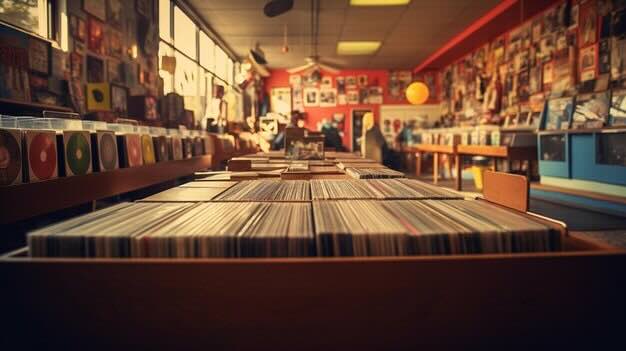
I followed him, took a seat on a bean bag and he opened a large chest. Inside the chest I noticed hundreds of albums. His hand motioned across the vinyl as if he was a game show hostess beholding the audience to the precious prize, and what a prize it was, I read the spines: Led Zeppelin; The Allman Brothers Band; The Stooges; ACDC; Black Sabbath; The Kinks; The Beatles; Aerosmith; The Beach Boys; David Bowie; Pink Floyd; The Rolling Stones, and a thousand other bands, both of the time and older than the both of us.
Billy snatched a record out of the sleeve and placed it on the turntable. The slight scratch when he put the needle on the record was a gorgeous sound, the hiss and crack, followed by a pop.
“Listen to this,” he said.
I listened to the first song in his room for the first time in my life. It was Led Zeppelin’s ‘The Rain Song.”
The sounds of the song transported me to places nothing else in my short life had ever taken me to before. Chills torched my soul when I heard the song, especially the last two minutes. When it ended, I told him to play more to “do it again,” like my uncle had performed a magic trick. He played it again, we both sat there and listened to the song again. And like all future music fans I couldn’t help but ask, “Who is this? Who are they?”
I’m middle-aged now, but I’ll never forget it, he said, “Frankie, when in doubt, always run towards Jimmy Page and John Bonham. They’ll never let you down.”
Whenever I saw him, he was sweaty from the boxing gym, muddy from coaching a little league team, with one of the many different women he was dating, or drunk, but on that day, he changed my life forever by sitting with me and giving me an ear and heart for art. He turned on the mechanism of creation, a seedy and sleezy mechanism that wouldn’t show up until decades later.
After Led Zeppelin we listened to Black Sabbath’s MASTER OF REALITY, followed by Jimi Hendrix’s ARE YOU EXPERIENCED. I never wanted the moment to end; I kept telling him to play more. My mother abandoning me at birth; my father always working and being a crook somewhere in the United States; kids in school making fun of me all the time, none of it bothered me. The sounds: guitars, drums, pianos, vocals, brass; flipped a switch and ripped out the pain, rolled it up, and kicked it to the curb. I felt strong, invincible, human, real, my love for everything intensified into levels of eccentric and silly joy.
I don’t remember the woman’s name as it seemed like he had a new girlfriend every other day, a brunette with Farrah hair, gooey lip gloss, and flared jeans showed up. She sat next to me, lit a cigarette, and pinched my cheek. “What the fuck?” I said to myself, “How dare she ruin rock n roll between brothers.”
“Who’s the kid?”
“Frankie.”
“Frankie’s a cutie.”
Cute! Cute? She brought cute into a rock n session. Billy and I were on an adventure through years of insane sounds, and this chick brought cute into it?
“You ready to go?” She asked him.
Billy grabbed his jacket. I wanted to cry because the sounds had to end. Billy saw my face and snatched up chunky orange headphones and plugged it into the stereo.
“Music is cool when you’re alone, too, Frankie.”
I didn’t understand the concept of headphones but since Billy said music was cool to listen to alone, I wanted to try.
“Spin ‘Toys in the Attic’ that’s my favorite,” the girl said.
I waited until they left so she didn’t see me pulling the record from the sleeve. She wasn’t wrong, whatever her name was, “Sweet Emotion,” “No More No More,” I loved the songs so much, but I had no idea what the song, “Big Ten Inch Record,” was about but I liked that one too. I loved Aerosmith, but you must remember this was back before they became the epic sellouts that they are now. I haven’t liked any album they put out since 1980, but those first few albums, and Billy had them all, kicked me in the nuts repeatedly.
Billy joined the army not long after. Much like my mother and my father, it felt like he was leaving me too, but he promised he’d be back, and he left me in charge of his albums and, told me to watch over them until he returned. Before I went to school I started every single morning with a couple of songs. Roy Orbison, The Beatles, The Doors, The Ramones, it didn’t matter, I played the songs, and I listened to them as if he was going to walk through the door and quiz me. I needed to be prepared. He wrote me letters from boot camp, and after wherever he was stationed, and in each letter, he’d ask me, “Are you listening to my records?” Also, “Don’t let anyone touch them,” followed by, “You find a girlfriend yet? Music makes you cool. Chicks dig good music.” The last part always made me cringe. I was seven, a young man of rock n roll, I had no time for girls, although I did discover his Playboy stash in the back of his closet. I leered at the bodies of centerfolds listening to T. Rex, Bowie, and J Geils. At the time I’m not sure why I liked the magazines, but I loved looking at them. It felt like I was part of a secret club, a club that told me about the joys of the universe: nudie mags and rock ‘n roll.
No one ever questioned why I spent so much time in Billy’s room. Why I spent hours with the headphones strapped to my head. Unless I had to eat food or one of my friends came to the door. The music had become my emotional support system, a trusted friend. A way for me to deal with complicated emotions. After being bullied at school, I’d go home and listen to records. If my mother popped up in my head and twisted up my stomach, I listened to the records. If my dad came home for a couple of days and left me behind again to go off to Montana, San Diego, Oklahoma or wherever, I listened to the music. The perfect mixologist to express my feelings. The perfect magician to take me away from tears and agony.
The year I turned eleven in 1985, my sell-out of a mother popped back into my life and demanded that I see her every other weekend. I didn’t even know who she was, never met her. I think I may or may not have dreamed of the red-headed witch, but I had no memory of her. She had a little radio, and I spent the entire weekend station surfing, stopping at songs I listened to in Billy’s room to get me through a weekend I had to spend with a stranger. She tried to get to know me, I watched JAWS with her on television, then I went straight back into the room and listened to the radio again.
When she dropped me off at my grandmother’s house on Sunday night, I wondered why there were so many cars at mt grandparents. I wondered why my father was there to greet me, before I left, he was in Baltimore.
“I have some bad news for you, Frankie,” Dad said. “Your uncle Billy died in a car accident.”
My entire being, my entire self, bottomed out and blended in with the ground. He had returned from the Army months before. He learned how to be a medic, and he wanted to become an EMT, he was only twenty-three. It didn’t seem right to me. I wanted to cry, but I didn’t. I ran into the house. I ran by my weeping aunt; I rushed by my uncles gathered around the television watching the Red Sox in silence. I ran by my drunk grandparents and ran straight into my uncle’s room and shut the door, and took LED ZEPPELIN THREE out of the sleeve, plugged in the headphones, and I closed my eyes and listened like reality was a complete lie. A lie created by my mother and father to get my attention.
I cranked “Since I’ve Been Loving You,’ and near the end when Robert Plant screams out in heartache, “SINCCEEEE I’VEEE BEEEN LOVVING YOU,” I wailed every emotion and feeling I had bottled up for eleven years. Screamed along with Plant out into the void and the nothingness that beat the shit out of me daily. It felt human to scream. It felt real because I could express everything all at once in one large musical shout. And that’s when I discovered the power of expression. A primal need and urge I’d use all my life and still do. No need for grifting. No need for bells and whistles. No need for a mid-life crisis in the distant future complete with studded earrings and shitty sports cars. No need for a bloated ego. I only desired to scream at everyone and everything with a gut-punching shout into the universe. I still do it daily.
Six years after Billy died, when I found the little radio in the garbage can and listened to it in my makeshift kitchen bedroom, whenever a song stirred emotions in me, I rocked back and forth. As I write this column, I’m cranking Led Zeppelin, rocking back and forth to sooth my soul with the music Billy introduced me to, remembering my big brother, who died this week, forty years ago. The deed of his memory is the guitar solo alive in the song, “Tangerine,” drifting far away in a time that feels so long ago but lives to float in the moment of my everyday life. It tells me to tune out the sounds of the world, raise the middle finger, plug in the headphones and electrify

