

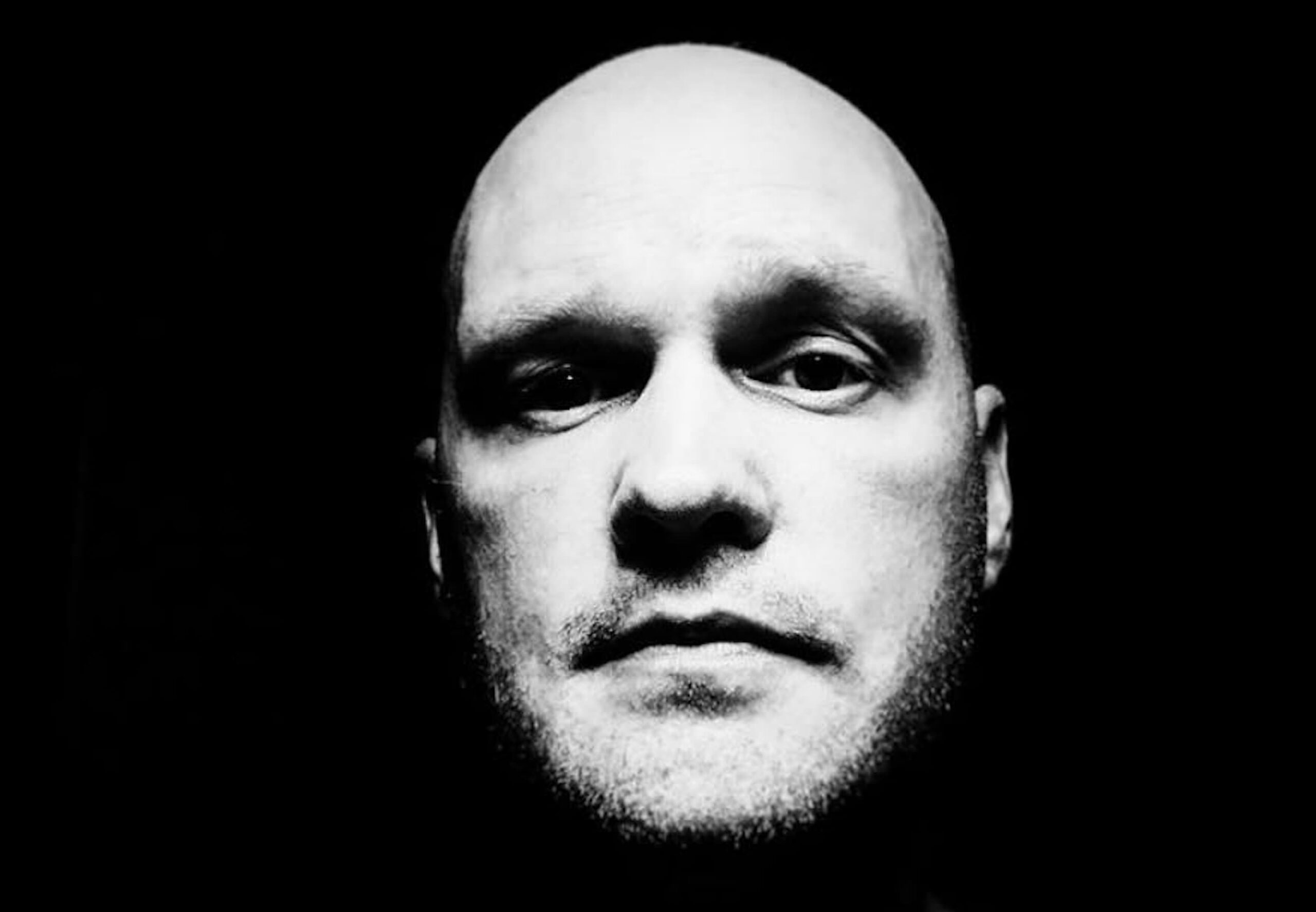
David Tromblay is the real fuckin’ deal. If you want to know his credentials as a writer of gritty crime fiction, go read his memoir As You Were. Or at least go back and read our last interview about it.
When Moses Kincaid, the main character of his book Coydog, gets the shit beat out of him, you just know that Tromblay knows what the blood tastes like, knows what it’s like to have a mashed-up face and to get knocked out and come to in various seedy places.
When Moses Kincaid speaks of his time in the military, you know Tromblay’s speaking the truth. Same as when Kincaid speaks of the shit he’s put up with as a Native American.
But it’s not just authenticity that makes David Tromblay stand out from the pack of crime fiction writers. It’s his ability to write the total package. It’s his ability to mix in social commentary about race and class and the criminal justice system mixed in with kickass banter and fight scenes and also nuanced psychological motivations and portrayals of people that’ve been kicked to the curb.
People often talk about crime fiction as if it’s only “genre” fiction, escapist “fun” pulpy noir writing. Tromblay is proof that you can have your cake and eat it, too. Coydog is fun and kickass but also layered with deeply troubling and complicated questions that linger with you long after reading it.
– drevlow
BD: Last we spoke, your memoir As You Were was just about to come out. It was also just a few months into COVID. It feels as if you’ve come a long way from where you were at that point. I know you were just coming out of a dark time in your life and about to publish your first book about a lot of other dark times in your life. And now here we are with Coydog, which, if I remember correctly, you had already written large chunks of before you published your memoir.
Can you give us the abridged version of how we got from there to here?
DT: So much subtext for an abridged answer, but I’ll try. The memoir came out almost a year after the pandemic started, and I was greeted with the greatest loss of my life on the first day of the lockdown. The next few years got foggy. The first half of Coydog was written in the summer of 2019 and published in the spring of 2021 as Sangre Road, a few months after As You Were. The second half came out the following spring as Money the Hard Way. Both were highly praised, but they garnered very few reviews and fewer readers. Lots of stuff got lost in the noise surrounding COVID. Bigger shit was afoot. Hollywood had an interest in the story, however. When the publisher later reorganized,I asked them to pull the books. They felt unfinished to me. A few things got away from me during the pandemic. They were originally written as punchy pulp fiction stories, but Moses was biting his tongue, thematically. Hollywood has played hot potato with the story for a few years now, which is flattering. But I’m constantly reminded of a director who told me producers are full of shit until they aren’t. After I got over Hollywood flirting with me and Moses, I went back into the book, slowed down Moses a few times, let him speak his mind instead of powering through the predicament. Then, when the world thought me dead, a few folks reached out to my publisher inquiring as to my well-being. And I thank them. The publisher got me on the phone and by the end of the conversation, she agreed to look at the story–despite Coydog not being (L)iterary on the surface.
BD: In your acknowledgements page you talk about starting Coydog as a personal assignment to write short stories before you entered your PhD program, which then turned into two novellas and then turned into this novel. You are at heart a novelist.
Can you take us through the writing process from short story to novella to novel? I was particularly interested in the pacing of it all–the challenge of stretching a plot without making it feel like there’s a bunch of filler, and then working with two novellas and now to the novel form? Did you make changes to the novellas to make them flow or were they already written that way?
DT: The book started as a collection of character sketches. My daughter and I explored Oklahoma together that first summer. We would people-watch and tell each other stories about passing strangers. I started it with her when she was seven, so she would take the time to consider other people in the world around her, and to be present when out in public. My ADHD brain organizes information in a way that simply cripples my brain when it comes to relaying the information in a linear fashion. I’m paraphrasing my grad school mentor, Stephen Graham Jones, who commented that I lost him in every chapter of As You Were, but by the time he finished each chapter, he realized how much he’d missed, how many seemingly innocuous things he thought I could cut were actually perfectly laid bricks and demanded a reread. That, coming from him, made me realize there was no set way of doing things when it came to storytelling. His blurb for the memoir is stamped onto the front cover of As You Were for good reason. He’d probably agree that it applies to everything I write. I hope. I never concern myself with plot. I create characters, give them something to do, and put shit in the way. At the keyboard, I’m both the Lord and Lucifer, and my characters are all Job. When the novellas got turned into a novel, chunks had to be removed, echoes deleted, and I wanted to say a few things that only got whispered the first time. The blurbs that came in for the novellas are amazing, so I was very careful to not add anything that might offend those who endorsed the book(s).
BD: You talk about having Moses bite his tongue in the first two novellas and letting him speak more in the novelized version, which is funny to me because Moses never seems to bite his tongue in the book.
In fact, I think that’s probably my favorite part and the part I’m most in awe of: your ability to come up with the right line over and over. Not necessarily a punch line, but a line with punch.
That’s probably the hallmark for me of great crime fic, the “punch lines.” The hardassed, smartassed, deadpan delivery. Your ability to hit a line, in not only in dialogue, but in the exposition and also to do it without ever feeling forced–that’s what put Moses over the top for me.
Can you talk about this idea of “letting Moses speak” about bigger things but also balancing that with the deadpan acerbic wit in his delivery–the pressure to always hit the right note without it coming off as trying too hard?
DT: Thank you. I pride myself on my work at the sentence level. I am obsessive. Moses is an outsider. If there was a plot, it would be: a man comes to town. Simply by setting this novel in what is legally known as Indian Territory makes it a Native novel. I have Native ancestry, but I am not enrolled. My Native ancestors came from elsewhere; not Oklahoma. I did not have the Native experience growing up. But those who raised me did. The way their tribes count someone as one of their people differ from those in Oklahoma, so I included it in the novel.
“…Pretty much anybody who’s been here for three generations or more is an enrolled Indian,” he says.
I furrow my brow.
“That’s not how it works where I’m from,” I say.
We count coup and quantum.
The book is peppered with things that are not meant to have Moses (and therefore the reader) question his identity or perspective of identity, but deepen and broaden the working definition of his evolving world. In the earlier versions, I bit my tongue, because I never want to appear representative in my work. I’d rather present things as: “here’s a fun fact” simply because I am aware I don’t have all the puzzle pieces.
BD: While we grew up about an hour away from each other across the border of northern Wisconsin and Minnesota, you’ve settled in Oklahoma now for a bit and you base Coydog there. You talk about traveling Oklahoma and looking for Oklahoma authors during COVID when you first got there.
Obviously, Jim Thompson from Oklahoma looms large over Coydog as he does for most crime fic/country noir writers.
What is it about the red dirt roads that pulled you in and inspired you?
DT: As I mentioned in the acknowledgements, learning Jim Thompson isn’t given any love in his hometown did not sit right with me. Once upon a time, the city accused his father, the sheriff, of extortion. He escaped to Mexico, became certified in tax law and proved the city owed him $30,000 for out-of-pocket expenses. Oklahoma got embarrassed. My books are largely holding up a mirror to the world and asking if they are okay with what they’re “seeing,” what they are accepting as quotidian. That’s something I saw in Chuck Palahniuk’s books and strive to sew as a silver thread in mine. This book is largely a commentary on the for-profit elements of the judicial system, merely set in Oklahoma, which is arguably the center of the Venn diagram that is America. It seems like Oklahoma has always been the testing grounds for bad shit by the government and its agents. Anytime I move somewhere, I become a tourist, see the sights, and learn the history. Getting to know Oklahoma and Oklahomans took more time than usual. I’ve been here five years now. There are secrets buried everywhere. There are mass graves of murdered Black people that were once hidden amongst a white settler cemetery plopped atop what is essentially an Indian burial ground in what is now known as Tulsa. I moved there in 2020 after the world became a ghost town. Lots of closed businesses and empty parking lots got the wheels turning. Lots of blanks needed to be filled. I drove around a lot with the sound off and simply took in the place. I was also grieving and driving allowed me to not feel trapped. I found a CD of Hank Williams the Roy Orbison Way at a thrift store and that became the soundtrack. That album seemed the most Oklahoma-esque album I’d ever heard. But it is Oklahoma-adjacent. It’s like a mix of the Tulsa Sound and the Texas Swing Bob Wills perfected at Cain’s Ballroom in Tulsa. Coydog, too, is Oklahoma-adjacent in that it is set largely in Anadarko County, which only exists in my head. The things that happen in it are things I’ve noted as not normal but unremarkable to an Okie. There are characters in the nightly news that you’d swear walked out of a Jim Thompson novel. But we don’t have the Sunshine Law like Florida. Something I gleaned from JT’s books, which I’ll call tragedies, is treatment of character. When a reader picks up my books, they’ll soon learn there are no good guys. By the time they are done they should understand that there are no bad guys. It’s just everybody doing their best with what the universe flings at them. Like Okies. Like Americans.
BD: I’ve heard you mention the significance of specifically Oklahoma in 1995 and its connection to McVay and your own life. What was it about this era that inspired/influenced Coydog?
DT: I set the book in 1995 because it was a pivotal time for me. It was the last year of school. The next year I would be off to the military where I was largely cut off from the world. While I was in Minnesota at the time of the Oklahoma City bombing, it left me with a haunting memory as well. I took a bus between different high schools during the school day for a two-hour-long class. The bus cut through the downtown area and past the federal building. Outside the building was a playground for the daycare. After that Wednesday, the swings and teeter-totters never budged again until they got bulldozed. I remember watching the news story sitting on the foot of my mom’s bed after school. I remember the news became nonstop afterward. Or that’s when I first took note. I joined the military the next summer and every building I entered had breaking news story after breaking news story on the tv. Nonstop horrible, looped in case you missed something. The news, public information, became about who was first. That spawned a lot of retractions. They eventually stopped. Then came eyewitness news. “Send us your footage” begged every news outlet. People started filming everything. People stopped stepping in and helping their fellow man. People started acting like nature photographers and forgot their humanity. People wanted their fifteen minutes of fame for viral footage. They sought it out with apathy. Searching instead for the perfect filming angle. That bred World Star Hip Hop and Bum Fights and getting famous for fucking a basketball player. Now every person on the planet is live-streaming their life. I wanted to set Coydog before that all unravelled, but also at a point you know the cheese is already sliding off the pattie, echoing Oklahoma’s adopted son, Mr. Merle Haggard asking “Is the best of the free life behind us now? Are the good times really over for good? Are we rollin’ down hill like a snowball headed for hell?”
BD: As someone who has spent a lot of time in ERs over my life, I very much identified with Moses being such a glutton for punishment. To a John McClane Die Hard levels of getting the shit beat out of him over and over.
It feels like you have to be somewhat acquainted with pain and hospitals and looking for rock bottom. What types of “research” have you done in your life on all this and that mentality? On all sides of it–as witness, victim, and executioner? Am I projecting, or are you not just making all this stuff up as you go? What is it that makes guys like Moses (and me) look for hurt over and over?
DT: The only research that happened came in the form of closely listening to an ex, who worked as a psych nurse and volunteered on an opioid intervention street team, simply trauma dump. Anyone who read the memoir knows I grew up in a brutally violent home. Moses is stuck in the headspace I was at when I got old enough to know the beatings were coming if I was good or bad. They were alcohol-fueled, not logic-based, so I’d run my mouth. So at least I’d deserve it.
The hospitals are made up. They’re purposely vague. I rarely went as a kid, except for when I got hit by a car in high school. My father once hit me so hard I was out for three days. There was no hospital visit. I woke up in a blown-up raft in a back bedroom in the cabin, so I know what it’s like to be left for dead. And anyone who has read the memoir knows I know what it’s like to be in a situation when violence is the only answer. Life informed me. I often argue that As You Were could be sold as True Crime.
BD: So crime fic and pulp noir often get the label of “genre fiction” which has a lot of baggage tied to it versus “grit lit” that these days people seem to associate with more “literary” fiction.
These labels are always evolving and everybody has their own version of what “crime fic” is versus “grit lit” versus working class “literary” fiction and of course these labels are mostly bullshit–used by publishers but also by academic elitists to separate “serious” writing from “escapist” writing (as if we can’t have both).
The other day you posted online:
For those of you forgoing Coydog because it’s a crime novel. Maybe, just maybe it’s an absurdist novel serving as a cautionary tale about the for-profit judicial system, including bail bonds agents, fugitive recovery agents, private prisons, incentivised police and politicians. Perchance.
Especially with you having some experience in a PhD program and then choosing to go your own way outside of academia as well as your experience publishing your memoir with DZANC about a lot of similar experiences as are explored in Coydog, I imagine you’ve had a lot of annoying interactions with people on various sides with all these labels.
On top of that, then there’s the whole can of worms about writing books that will “pay the bills” versus writing books that will be “literary” but probably not sell very well.
Where do you come down on all this bullshit? And how much of it filters into your writing? Do you set out to write a “fun” book sometimes versus a “serious” book other times? Or do you just write what you wanna write and fuck the rest of it?
DT: I can and have spoken for an hour concerning all the literary themes at work in Coydog. But storytelling is all I care about. Stories entertain while planting seeds. People who care about genre and literature can have their passions and conferences. I want to stay out of it. I like what I like. I don’t like reading lazy writing, and a lot of formulaic stuff is filling the storefronts of bookstores around the world. I want a story that will haunt me in a slurry of ways. There is a comment on Literary fiction and their rules in the book. Moses never fires a gun. But when asked what he carries, it’s Russian-made, a Chekhov pistol. I do not have goals or delusions of becoming Stephen King rich and famous. Folks get disappointed when they finally figure out I’m not Paul Tremblay. And I laugh. I write stories that entertain all of my mental illnesses simultaneously. I won’t force a 25k word story to be a 40k word novel, or whatever the publisher requires. I’ll find another publisher. Like I tell my students/mentees. Always have multiple irons. When the fire pitters out on one, work on something else. Writing is like a fart. If you have to force it; it’s probably crap.
BD: Who are the current crime fic/pulp noir writers that we should be reading that not enough people know about? If we like Jim Thompson, who else should we be reading who’s toiling away outside the ivory d-bag tower (of course I say this as somebody who teaches college)?
What do these writers do that we need more of in our life?
DT: My head has been in the clouds for a while. I spent last fall writing The Lowdown alongside Lou Berney and Walter Mosley, and a few tv writers. Ever since we wrapped, I have mostly been taking care of final edits for and promoting Coydog. While writing the show, I read about a third of JT’s catalog. Since we wrapped, I’ve been reading the entire thing in order of publication just because. But let me out my publisher as a crime publisher. Here’s a handful of their books I keep in my library. Read these soon:
Not For Nothing by Stephen Graham Jones
A novel written in second person. The town is Stanton, Texas, population three thousand; the private investigator is disgraced Midland homicide detective Nicholas Bruiseman, who’s so down on his luck that he’s forced to take a job as a live-in security guard for the town’s lone storage facility. This is his new life—starting over with nothing in the town he grew up in.
Jordan is a country musician living in the shadow of his father, bluegrass legend Walker Bayne. A man who has made a lifetime of poor decisions, Jordan bounces between dive bars, accruing women and drinking himself to the brink of disaster. When he returns home to the Ozarks for his twin brother’s wedding, Jordan discovers a curse that has haunted the Bayne family for generations. As old tensions resurface and Jordan searches for a way to escape his family’s legacy, a mysterious hill dweller and his grotesque partner stalk the brothers’ every move, determined to see the curse through to its end. Praised by Donald Ray Pollock as “one of the best debuts of the year,” Middleton’s debut establishes him as a novelist in good company with Brian Panowich and Smith Henderson, yet in a category all his own.
A River Closely Watched by Jon Boilard
When seventeen-year-old Bobby Dubois’s father is arrested, it looks like Bobby is headed into the system, too—that is, until Uncle Thaddeus rescues him. They take to the backwoods, managing to stay one step ahead of the law. Thaddeus teaches bobby how to drink, fight, and fornicate—how to be a right Dubois. But when hurricane rains ravage Franklin County and swell the Swift River, Thaddeus and Bobby are flushed from the hills and the dark Dubois legacy of violence catches up with them. Sown through with bristling language, this intense first novel was a finalist for the Northern California Book Award and established Jon Boilard as heir to James Elroy and Elmore Leonard.
A breakneck tour of a brokedown city littered with ruptured families, missing mothers, busted bowling alleys, and neon motels. Larkhill, Ontario. 1989. A city on the brink of utter economic collapse. On the brink of violence. Driving home one night, unlikely passengers Jamie Garrison and Moses Moon hit a lion at fifty miles an hour. Both men stumble away from the freak accident unharmed, but neither reports the bizarre incident. Haunted by the dead lion, Moses storms through the frozen city with his pathetic crew of wannabe skinheads searching for his mentally unstable mother. Jamie struggles with raising his young daughter and working a dead-end job in a butcher shop, where a dead body shows up in the waste buckets out back. A warning of something worse to come. Somewhere out there in the dark, a man is still looking for his lion. His name is Astor Crane, and he has never really understood forgiveness.
Cold Country by Russell Rowland
Montana, 1968: The small town of Paradise Valley is ripped open when popular rancher and notorious bachelor Tom Butcher is found murdered one morning, beaten to death by a baseball bat. Suspicion among the tight-knit community immediately falls on the outsider, Carl Logan, who recently moved in with his family and his troubled son Roger. What Carl doesn’t realize is that there are plenty of people in Paradise Valley who have reason to kill Tom Butcher. Complications arise when the investigating officers discover that Tom Butcher had a secret—a secret he kept even from Junior Kirby, a lifelong rancher and Butcher’s best friend. As accusations fly and secrets are revealed one after another, the people of Paradise Valley learn how deeply Tom Butcher was embedded in their lives, and that they may not have known him at all. With familiar mastery, Russell Rowland, the author of In Open Spaces and Fifty-Six Counties, returns to rural Montana to explore a small town torn apart by secrets and suspicions, and how the tenuous bonds of friendship struggle to hold against the differences that would sever us.

